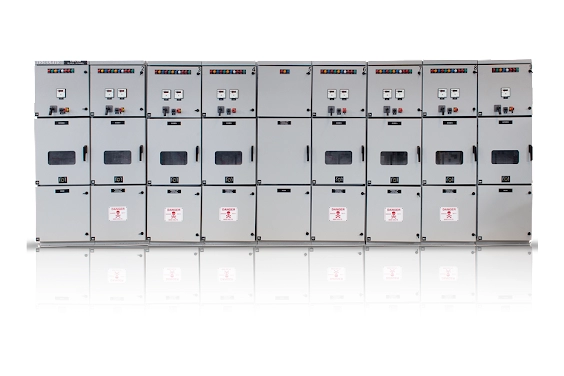
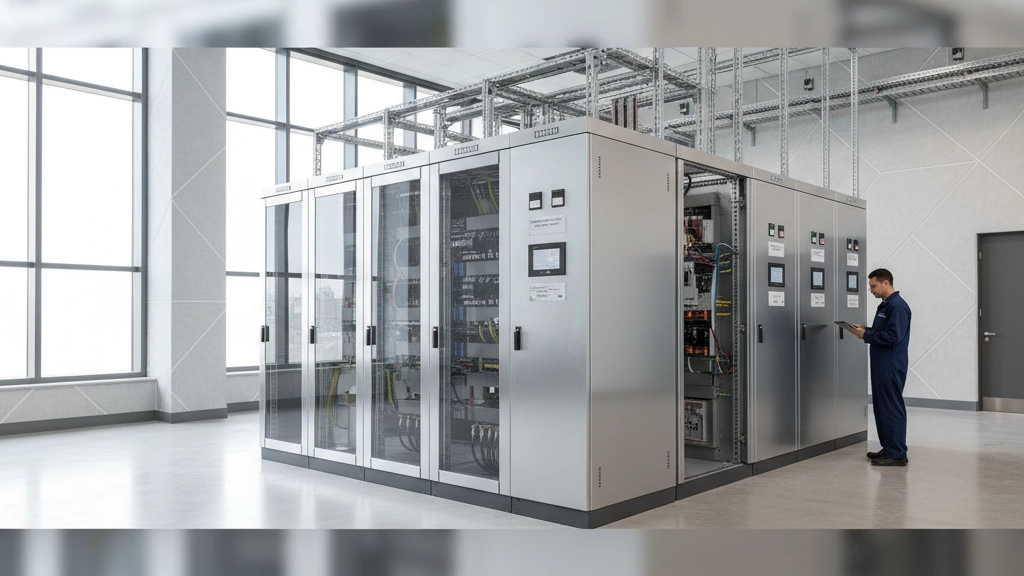
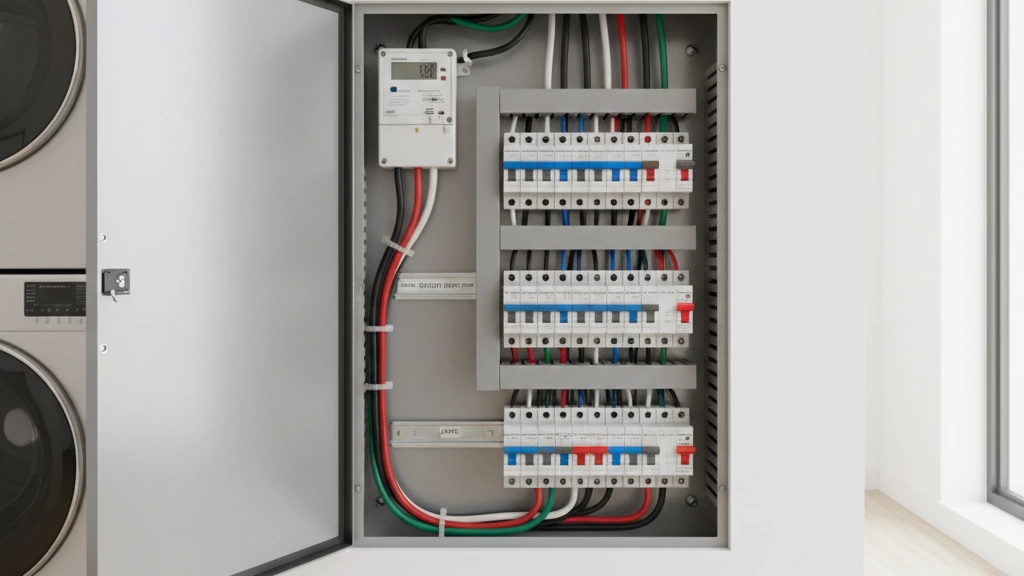
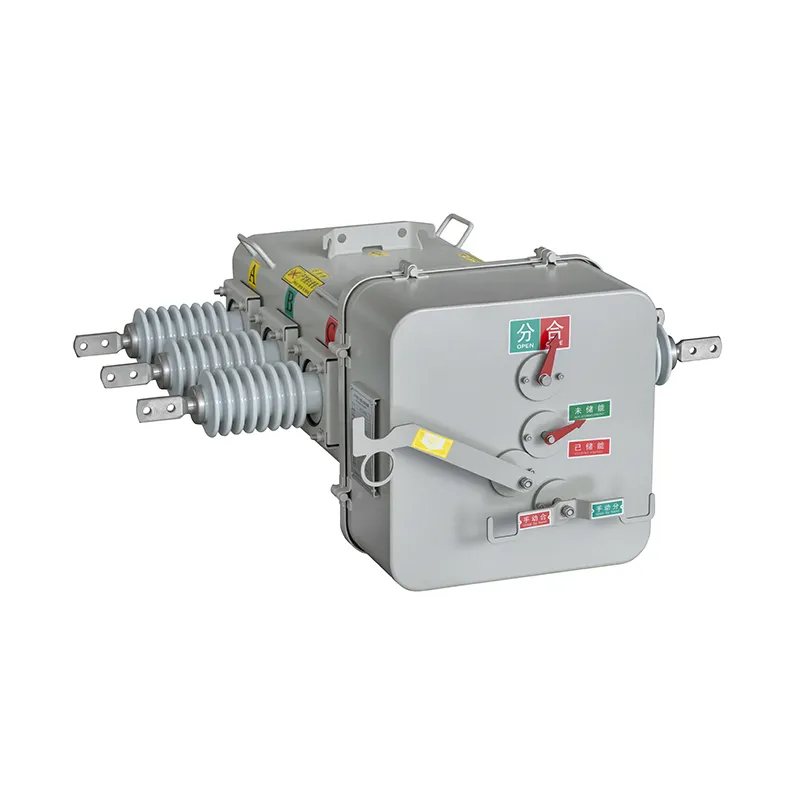
A medium voltage circuit breaker (MV CB) is a switching and protection device designed to safely interrupt electrical currents in the 3.6–40.5 kV range.
In plain terms, it’s the safety valve of a medium voltage network: it detects faults, cuts power in milliseconds, and allows you to switch and isolate equipment without putting people or assets at risk.
Core Functions in MV Networks
In every substation or medium voltage switchgear panel I design or specify, the breaker has three main jobs:
Protection
Detects short circuits, overloads, and earth faults (via relays and CTs).
Opens the circuit quickly to limit thermal and mechanical damage.
Switching
Connects and disconnects feeders, transformers, motors, and capacitor banks.
Handles normal load current and certain inrush or switching transients.
Isolation (with associated isolators)
Creates a clearly defined safe working zone.
Provides visible isolation (via disconnectors) so maintenance teams can work confidently.
Key Components of an MV Circuit Breaker
A modern medium voltage circuit breaker is a compact system of mechanical, electrical, and insulating parts working together.
Component
What It Does
Interrupter
Opens and closes the current path; quenches the arc (vacuum, SF₆, air, etc.)
Operating mechanism
Spring or motor mechanism that moves the contacts quickly and reliably
Insulation medium
Ensures dielectric strength between live parts and earth (vacuum, gas, air)
Current transformers
Measure current and feed protection and control relays
Enclosure / housing
Provides mechanical support, safety, and environmental protection
A few quick notes:
The interrupter is the heart of the breaker; in most new MV switchgear, this is a vacuum interrupter.
The mechanism determines how fast and how often the breaker can operate (critical for reliability).
The insulation system defines the voltage rating and environmental robustness (indoor vs outdoor, pollution level).
MV vs LV vs HV Circuit Breakers
To understand where medium voltage circuit breaker types fit, it helps to compare them with low and high voltage devices:
Voltage Class
Typical Range
Typical Applications
Key Breaker Features
Low voltage (LV)
Up to 1 kV
Final distribution, panels, building loads
MCCBs, ACBs, simpler insulation and mechanisms
Medium voltage (MV)
~3.6–40.5 kV
Distribution feeders, MV motors, transformers
Vacuum or gas interrupters, insulated switchgear panels
High voltage (HV)
Above ~52 kV
Transmission lines, large substations
Complex gas or air-blast designs, large clearances
Why this matters in practice:
LV breakers focus on compact size and high breaking capacity at low voltages.
MV breakers must deal with stronger arcs, higher insulation requirements, and more complex switching duties (motors, capacitor banks, cables).
HV breakers are large, outdoor, and optimized for long-distance transmission and very high fault levels.
When I specify equipment, I treat MV circuit breakers as the backbone protection and switching element between the LV world inside facilities and the HV world of the grid. They carry the responsibility for both safety and continuity of service in modern electrical networks.
Main Types of Medium Voltage Circuit Breaker
When I design and supply medium voltage circuit breaker types, I group them mainly by the arc‑quenching medium. Each has a clear role depending on voltage level, grid design, and maintenance strategy.
Vacuum Circuit Breakers (VCB)
Vacuum circuit breakers are the clear market leader today in the 3.6–40.5 kV range (typical 11–33 kV distribution networks).
Use sealed vacuum interrupters to extinguish the arc
Ideal for 12 kV, 24 kV, and 40.5 kV switchgear panels
Very low maintenance, no gas handling
Long mechanical and electrical life, suitable for frequent switching
Widely used in utilities, industry, data centers, and renewables
In my portfolio, compact outdoor devices like the ZW32‑12G 12 kV outdoor vacuum circuit breaker show how VCBs combine reliability, simple maintenance, and flexible mounting for global customers.
SF6 Gas Circuit Breakers (Legacy MV Technology)
SF6 gas circuit breakers were the standard for many years in medium voltage and high voltage grids.
Use SF6 gas as insulation and arc‑quenching medium
Strong dielectric strength and high interrupting capability
Require strict gas handling, leak checks, and environmental controls
Still used in some existing substations and GIS systems
Facing pressure from SF6 phase‑down and eco‑design rules
Air-break and air-blast breakers are older technologies, now mostly found in legacy installations.
Use air at atmospheric or high pressure to quench the arc
Bulky, noisy, and maintenance‑intensive compared to VCB
Often replaced by vacuum or SF6‑free medium voltage switchgear
Still encountered in older substations and some industrial plants
Solid-Dielectric and CO2-Based Breakers
New eco-friendly MV protection solutions focus on solid insulation and alternative gases.
Solid-dielectric breakers: epoxy or polymer insulation around the interrupter
CO2-based breakers: use CO2 or clean air mixtures instead of SF6
Target SF6-free medium voltage switchgear for 12–40.5 kV networks
Reduce environmental impact while keeping similar performance to SF6
Often combined with vacuum interrupters for arc interruption
Quick Comparison of MV Breaker Types
Type
Arc / Insulation Medium
Typical MV Range
Maintenance Level
Lifespan & Reliability
Cost Level*
Typical Use Today
Vacuum circuit breaker (VCB)
Vacuum + solid insulation
3.6–40.5 kV (11–33 kV)
Very low
Very high, long service life
Medium
New indoor/outdoor switchgear, retrofits, renewables
SF6 gas circuit breaker
SF6 gas
3.6–40.5 kV and above
Medium–high
High, but needs gas management
Medium–high
Existing substations, GIS, high-duty feeders
Air-break / air-blast breaker
Atmospheric / compressed air
Legacy MV ranges
High
Lower vs modern designs
Low (legacy)
Old substations, being phased out
Solid-dielectric / CO2-based CB
Solid insulation + CO2/air
12–40.5 kV
Low
High, eco-focused design
Medium–high
SF6-free and eco‑design MV projects
*Cost level is indicative and depends heavily on rating, options, and local market.
For most modern 12 kV, 24 kV, and 40.5 kV applications, I prefer vacuum circuit breakers because they balance performance, safety, and lifecycle cost far better than legacy SF6 or air-break designs, while supporting global moves toward SF6-free and digital‑ready medium voltage switchgear.
Why Vacuum Medium Voltage Circuit Breakers Dominate Today
How a vacuum interrupter clears medium voltage fault currents
In a medium voltage circuit breaker, the vacuum interrupter is the heart of the device. Here’s what happens during a fault:
When a fault occurs, the protection relay sends a trip signal to the breaker.
The operating mechanism opens the contacts inside the vacuum interrupter at high speed.
As the contacts separate, an arc forms between them, but it is inside a sealed vacuum bottle.
In a high vacuum (very low pressure), the arc has almost no gas to sustain it, so it collapses quickly right at the next current zero crossing.
Metal vapor from the contacts condenses back on the contacts and shields, restoring full insulation almost instantly.
Because the arc is controlled inside a sealed vacuum, the interruption of 12 kV, 24 kV, or even 40.5 kV fault currents is fast, stable, and repeatable.
Key technical advantages of vacuum MV circuit breakers
Vacuum circuit breakers (VCB) in the 11–33 kV range have become the default choice because they offer strong technical performance:
High breaking capacity:
Short-circuit ratings typically 16–40 kA (and higher for some designs)
Strong making capacity for inrush and fault duties
Long electrical and mechanical life:
Class M2, E2 endurance under IEC 62271-100
Very high number of mechanical operations with minimal wear
Excellent insulation and dielectric strength:
Stable performance for 12 kV, 24 kV, and 40.5 kV circuit breaker ratings
Reliable performance under overvoltage and switching surges
Safe and clean interruption:
No open arc in air
No risk of internal combustion products leaking into the switchgear room
Compact design:
Smaller clearances than air-break designs
Easier to integrate into modern medium voltage switchgear panels
For users, this means reliable fault clearing, fewer nuisance trips, and stable performance across the full life of the equipment.
Commercial and operational benefits in utilities and industry
For utilities, industrial plants, data centers, and infrastructure projects, vacuum MV breakers deliver clear business value:
Lower operating cost:
Very low routine maintenance needs
Fewer outages for inspection and servicing
High uptime:
Fast fault clearing reduces equipment damage and improves network stability
High reliability helps maintain power quality to sensitive loads
Flexible application:
Suitable for feeder, transformer, motor, and capacitor bank switching
Works in indoor switchgear, ring main units (RMU), and compact substations
Easy retrofit:
Vacuum breakers can often be engineered as retrofit medium voltage circuit breakers into existing metal-clad or metal-enclosed switchgear
If you run a plant or network with heavy loads and critical processes, these operational gains directly translate into reduced downtime and better asset protection.
Environmental benefits versus SF6 medium voltage breakers
Compared with SF6 gas circuit breakers, vacuum MV breakers are clearly more eco-friendly:
Zero SF6:
Vacuum interrupters do not use SF6, a greenhouse gas with a very high global warming potential
Lower leakage risk:
No gas monitoring, refilling, or leak checks needed
Easier compliance:
Future SF6 phase-down rules and environmental regulations are easier to meet with vacuum-based, SF6-free medium voltage switchgear
For global customers under growing environmental pressure, vacuum circuit breakers are the straightforward path to an eco-friendly MV protection solution.
Real-world adoption of MV vacuum technology
Vacuum interrupter technology is now standard in:
Utility distribution networks:
12 kV, 24 kV, and 36/40.5 kV feeders and reclosers
Industrial and commercial facilities:
Steel, mining, oil and gas, manufacturing, and large commercial buildings
Renewables and infrastructure:
Wind and solar collector systems
Data centers, hospitals, airports, and transportation hubs
Most new indoor VCB specifications for 11–33 kV now favor vacuum, and SF6 medium voltage breakers are increasingly reserved for legacy systems or niche use cases.
cnsovio vacuum interrupter and embedded pole technology
At cnsovio, we build our medium voltage vacuum circuit breakers around advanced vacuum interrupter and embedded pole technology:
High-performance vacuum interrupters:
Optimized contact design for high short-circuit rating and low chopping current
Stable performance for capacitive switching (capacitor banks, cables) and inductive loads (motors, transformers)
Embedded pole construction:
Vacuum interrupter, main conductor, and solid insulation molded into a single pole unit
Enhanced dielectric strength and mechanical robustness
Better protection against dust, moisture, and contamination
Compact, modular breaker design:
Suitable for 12 kV, 24 kV, and 40.5 kV switchgear lineups
Easy integration with protection relays and digital MV switchgear monitoring systems
We combine this interrupter technology with proven know-how in high and medium voltage equipment, similar to our high-voltage switchgear solutions shown in our high voltage switchgear portfolio at cnsovio (for example, our advanced high-voltage switchgear solutions). This gives global customers a medium voltage circuit breaker platform that is:
SF6-free and future-ready
Reliable under demanding grid conditions
Optimized for long service life and low total cost of ownership
This is why vacuum medium voltage circuit breakers are not just a trend—they are the practical, long-term standard for modern MV applications worldwide.
Key Technical Specifications and Ratings for Medium Voltage Circuit Breakers
When you choose a medium voltage circuit breaker, ratings are everything. If any key value is wrong, protection fails or equipment ages fast. Here’s the short, practical view of what really matters.
Rated Voltage Range (3.6–40.5 kV and above)
Medium voltage circuit breakers are usually defined by their rated voltage:
If you get these technical ratings right, your medium voltage circuit breaker will run safely, last longer, and keep your network stable even under tough fault conditions.
Standards and certifications for medium voltage circuit breaker
When I choose or design any medium voltage circuit breaker, I treat international standards and independent certifications as non‑negotiable. They prove the breaker is safe, reliable, and compatible with global grids, not just “good in theory”.
IEC 62271-100 circuit breaker standard
For most global projects, IEC is the baseline. IEC 62271‑100 defines how a medium voltage circuit breaker (typically 3.6–40.5 kV) must be rated, tested, and marked.
Under IEC 62271‑100, a compliant MV breaker must clearly state:
Rated voltage range (for example 12 kV, 24 kV, 40.5 kV) and insulation level
Rated normal current (630–2,500 A and above) and short‑circuit rating (kA, kA2s)
Making, breaking and short‑time withstand ratings for fault conditions
Endurance class (M2 mechanical, E2 electrical, C2 capacitive switching if applicable)
My own IEC‑tested vacuum circuit breakers are designed to drop straight into IEC switchgear and medium voltage switchgear panels, including compact 10kV ring main unit (RMU) switchgear panels.
ANSI / IEEE medium voltage standards
In North America and some export projects, I work to ANSI / IEEE instead of (or in addition to) IEC. Key references include:
IEEE C37.04 / C37.06 – ratings for AC MV circuit breakers
IEEE C37.09 – test procedures for MV breakers
IEEE C37.20.x – metal‑clad and metal‑enclosed switchgear
ANSI medium voltage breaker ratings are expressed with:
kV class (e.g. 4.16 kV, 13.8 kV)
Continuous current (A)
Short‑circuit current and duty cycle (e.g. 40 kA, 5‑cycle or 8‑cycle)
BIL / impulse withstand level
If a customer runs mixed fleets or exports equipment, I often recommend dual‑rated designs that reference both IEC 62271‑100 and key ANSI / IEEE clauses.
Regional and national MV standards (GB/T 1984, etc.)
Local standards still matter for approvals, especially in Asia and the Middle East:
China: GB/T 1984 for AC HV/medium voltage circuit breaker types
Europe: EN standards harmonized with IEC, plus national add‑ons
Other regions: utility tender specs often reference local grid codes and testing rules
For global projects, I align the breaker design with IEC/ANSI first, then confirm compliance with GB/T 1984 or the relevant national documents so there are no surprises during type testing or factory audits.
Environmental and SF6 regulations
Environmental rules are changing how we build SF6-free medium voltage switchgear:
Many regions restrict new SF6 equipment or demand leak‑tight designs and reporting
Investors and utilities often specify “eco‑friendly MV protection solutions” as a policy
SF6 alternatives (vacuum + clean air or solid insulation) are quickly becoming the default
Because of this, I focus on vacuum interrupter technology and solid or air insulation to cut greenhouse gas risk while still meeting the same IEC 62271‑100 performance levels.
Type tests, routine tests, and special tests
A compliant medium voltage circuit breaker does not rely on design claims; it must pass structured testing:
Type tests – once‑off, full design validation (short‑circuit breaking, making, TRV, dielectric tests, mechanical endurance, temperature rise). These prove the design is sound.
Routine tests – done on every unit before shipment (basic dielectric, mechanical operation, functional checks). These ensure each breaker leaving the factory is safe.
Special tests – done on request (seismic, internal arc, altitude, customized duty like capacitor bank switching). I use these when a project has unusual risk or regulatory demands.
I always ask for the complete type test report set when I evaluate a new MV breaker design or a retrofit medium voltage circuit breaker option.
Third‑party certification and independent labs
To avoid “self‑certified” claims, I rely on independent labs and cert bodies. Typical names include KEMA, DEKRA, CESI, and accredited national labs.
Third‑party certification matters because it:
Confirms short‑circuit rating and endurance claims are real, not marketing
Speeds up utility approvals and grid code compliance
Reduces project risk for EPCs, OEMs, and end users
Supports financing and insurer due‑diligence for critical assets
In my own portfolio, every core medium voltage circuit breaker platform is type‑tested at independent labs, and associated devices like switch isolators (switch isolator range) are tested to matching MV standards. That way, when you deploy a breaker for medium voltage protection and control, you know it is backed by recognized standards and verified performance, not just a datasheet.
How to Select the Right Medium Voltage Circuit Breaker
Choosing the right medium voltage circuit breaker isn’t about picking a catalog item. If you get it wrong, you pay later in faults, downtime, and maintenance. Here’s how I look at it step by step for 3.6–40.5 kV systems and typical 11–33 kV networks.
1. Define system voltage, insulation level, and network type
Start with the basics of your medium voltage network:
Always choose a breaker whose rated voltage is equal to or higher than your system voltage.
Insulation level:
Check basic insulation level (BIL) / impulse withstand level according to IEC 62271-100 or ANSI ratings.
Consider pollution level, altitude, and overvoltage conditions.
Network configuration:
Is it radial, ring, or meshed?
Is the neutral solidly grounded, resistance grounded, resonant grounded, or isolated?
Different earthing systems impact required short-circuit rating and transient behavior.
Once I know these, I can shortlist the right medium voltage breaker range (for example a 12 kV or 24 kV vacuum circuit breaker for indoor switchgear panels).
2. Check short-circuit level, fault duration, and protection coordination
The next step is making sure the breaker can safely interrupt the worst fault you might see:
Short-circuit breaking current:
Get the maximum three-phase fault current from your system study (utility or consultant data).
Choose a short-circuit rating above that value (e.g., 25 kA, 31.5 kA, 40 kA at 3 s).
Making current:
Verify the peak making current rating (often 2.5 × to 2.7 × the RMS breaking current) for inrush and first peak.
Fault duration:
Match breaker thermal withstand (e.g., 1 s, 3 s) with your protection clearing time.
Protection coordination:
Confirm time-current curves coordinate with upstream HV breakers and downstream protection relays.
For medium voltage recloser applications, confirm duty cycle and reclosing operations are within breaker limits.
I never select a medium voltage circuit breaker without a proper short-circuit study and checked coordination.
3. Determine load current, duty cycle, and ambient conditions
Then I make sure the breaker can handle the real-life load and environment:
Rated normal current:
Typical MV breaker ratings: 630 A, 1250 A, 1600 A, 2000 A, 2500 A, 3150 A, 4000 A.
Choose a rating above your maximum continuous load, including overload margin and future expansion.
Duty cycle:
How often will the breaker operate? Only for faults, or for frequent switching?
For heavy mechanical duty, look for mechanical endurance class M2 (per IEC 62271-100).
Ambient conditions:
Temperature range (e.g., –25 °C to +40 °C or wider for some markets).
Humidity, vibration, altitude (above 1000 m requires derating).
Corrosive or coastal environments may need higher protection class enclosures.
Local conditions matter. A breaker in a dry inland data center is not the same as one on a humid offshore platform.
4. Match the breaker to switching duties (motors, capacitors, transformers, lines)
Different loads stress the breaker in different ways. I always match the breaker type and rating to the main duty:
Motor switching:
Check the breaker’s motor switching capability and making/breaking duty for high inrush currents.
Pay attention to contact wear and mechanical endurance.
Capacitor bank switching:
Use breakers suitable as capacitor bank switching breaker (C1/C2 class).
Look for low switching overvoltages and controlled restrike performance.
Transformer switching:
Confirm inrush handling and limited switching transients.
For frequent transformer switching, mechanical endurance and contact design are important.
Line switching:
For overhead line feeders, check for line-charging current switching capability and insulation coordination.
Vacuum circuit breakers (11–33 kV) are usually my first choice here, as MV vacuum interrupter technology handles these duties very well with low maintenance.
5. Decide between indoor and outdoor MV breakers
Where and how you install the breaker changes the entire specification:
Indoor medium voltage circuit breaker:
Usually installed in metal-clad or metal-enclosed medium voltage switchgear panels.
Ideal for substations in buildings, industrial plants, data centers, hospitals.
Focus on compact size, racking mechanism, and integration with protection and control.
Outdoor medium voltage breaker:
Used in pole-mounted or yard substations, renewable plants, and rural networks.
Needs robust housing, higher IP rating, UV and corrosion resistance.
Mechanical constraints:
Check dimensions, weight, and footprint in existing switchrooms.
For retrofit medium voltage circuit breaker projects, make sure the new VCB or embedded pole breaker fits the old panel or matches the truck and shutter system.
In many upgrade projects, I use retrofit vacuum circuit breakers to replace old oil or SF6 medium voltage circuit breakers without changing the whole switchgear.
6. Compare lifecycle cost, maintenance, and spare parts
Upfront cost is only part of the story. I always look at total cost of ownership:
Maintenance:
Vacuum circuit breaker:
Very low maintenance, long inspection intervals.
No gas refilling, no oil handling.
SF6 or air-break breakers:
Higher maintenance, gas monitoring, more periodic checks.
Lifespan and endurance:
Check electrical endurance class (E1/E2) and mechanical endurance (M1/M2).
Look at typical operations before overhaul (often 10,000–30,000 operations for modern indoor VCBs).
Spares and service:
Confirm local availability of critical spare parts.
Check presence of service partners or authorized workshops in your country/region.
Lifecycle cost:
Include downtime cost, labor, testing, and any gas handling or environmental fees.
A slightly more expensive vacuum breaker often pays back quickly in heavy-duty industrial and utility applications.
For most global customers, a vacuum medium voltage circuit breaker offers the best balance of CAPEX and OPEX.
7. Future-proof with SF6-free and digital-ready MV breakers
Regulations and grid operations are changing fast, so I always try to protect the investment:
SF6-free medium voltage switchgear:
Prefer vacuum circuit breakers with solid-dielectric or clean air insulation.
This avoids SF6 leakage risk and future SF6 phase-down restrictions.
It also supports corporate ESG and sustainability goals.
Digital medium voltage switchgear:
Choose breakers that can integrate:
Digital protection relays (IEC 61850, Modbus, DNP3).
This makes medium voltage protection and control more reliable and reduces unplanned outages.
Upgrade path:
Make sure the design allows future retrofits (relays, communication modules, sensors) without replacing the whole breaker.
With our own vacuum interrupter and embedded pole vacuum breaker designs, I focus on SF6-free, digital-ready medium voltage circuit breakers that match real field conditions: compact for indoor 12 kV and 24 kV switchgear panels, rugged enough for outdoor 33 kV feeders, and easy to maintain for utilities and industrial users worldwide.
If I sum it up: define your system, know your fault levels, understand your loads, respect your environment, and then choose a vacuum-based, SF6-free, digital-ready medium voltage circuit breaker that will still make sense 20 years from now.
Medium Voltage Circuit Breaker Applications and Industries
Utility substations and distribution feeders
Medium voltage circuit breakers sit at the core of modern utility grids. They:
Protect primary and secondary substations in the 3.6–40.5 kV range
Switch and protect distribution feeders supplying cities, towns, and industrial zones
Enable sectionalizing and automatic recloser functions to minimize outage time
Handle fault isolation so only the faulty section trips, not the whole feeder
In most new medium voltage switchgear panels, utilities now prefer vacuum circuit breakers 11–33 kV for high reliability, low maintenance, and SF6‑free operation.
Heavy industrial plants and process industries
If you run a heavy plant, your medium voltage circuit breaker is your main line of defense. Typical uses:
Incoming MV incomer breakers for steel, mining, cement, oil & gas, and chemical plants
Motor feeder breakers for large MV motors, pumps, compressors, conveyors
Capacitor bank switching breakers for power factor correction
Protection for large transformers and MV distribution boards across the site
Here the focus is on high short‑circuit rating, strong mechanical endurance (M2 class), and easy maintenance shutdown windows.
Renewable energy projects
Medium voltage breakers are key in connecting renewables to the grid:
Wind farms: switching and protecting 12 kV / 24 kV collection systems and export lines
Solar PV plants: feeder and transformer protection at 11–33 kV
Battery energy storage systems (BESS): fast isolation for fault protection and grid support
Hybrid renewable hubs: coordinating multiple sources through MV switchgear
Global customers are moving to SF6‑free medium voltage switchgear with vacuum interrupters and clean air insulation for greener projects.
Critical infrastructure: data centers, hospitals, airports
For critical sites, downtime is not an option. Medium voltage circuit breakers support:
Tier III / IV data centers with redundant MV incomers and backup generators
Hospitals and medical campuses where any supply loss is a safety risk
Airports and transport hubs needing stable power for terminals, lighting, and control systems
Key needs here: high reliability, fast fault clearing, remote monitoring, and a clear MV breaker maintenance schedule to avoid surprises.
Railway, traction, and transportation
Rail and transit systems depend heavily on medium voltage protection:
Traction substations for metros, trams, and mainline rail
Medium voltage feeders for signalling, stations, depots, and tunnels
Recloser-type MV devices for overhead line and catenary protection
These applications demand robust, vibration‑resistant breakers with strong inductive switching performance and high mechanical endurance.
Marine and offshore protection
On ships and offshore platforms, space is tight and reliability is everything:
Medium voltage switchboards for propulsion, drilling, and auxiliary systems
12 kV / 24 kV circuit breakers for generators and main distribution
Compact embedded pole vacuum breakers that handle harsh marine conditions
Here, operators value compact size, corrosion resistance, and long-life vacuum interrupter technology with minimal service needs.
If you’re planning or upgrading any of these applications, choosing the right medium voltage circuit breaker type and configuration is critical. You can explore compatible vacuum interrupters and MV protection solutions in our product range and get more technical insights from our latest posts on the cnsovio engineering blog.
Installation, Operation, and Maintenance of Medium Voltage Circuit Breakers
Receiving inspection and storage
When a medium voltage circuit breaker arrives on site, I always treat it like a critical asset, not just a shipment.
On receipt
Check nameplate: rated voltage (12 kV / 24 kV / 40.5 kV), short‑circuit rating, control voltage.
Inspect for transport damage on the enclosure, racking mechanism, and embedded pole vacuum interrupters.
Verify all accessories, drawings, and test reports are included.
Storage
Keep the MV breaker in a clean, dry, vibration‑free room.
Maintain original packing until installation; protect secondary terminals and racking parts from dust.
If storage exceeds 6–12 months, cycle the mechanism a few times by hand and check anti‑corrosion protections.
If you need a site‑ready checklist tailored to your project, you can always talk with our MV breaker specialists via the cnsovio contact portal.
Pre‑commissioning checks before energizing
Before I allow any medium voltage circuit breaker into service, I focus on simple but strict steps:
Mechanical checks
Racking in/out is smooth; no abnormal friction or noise.
Open/close operations correct in local and remote modes.
Interlocks, shutters, and earthing switches operate as designed.
Electrical checks
Verify control wiring against schematics for protection and control circuits.
Confirm trip coil and closing coil voltages and polarity.
Measure insulation resistance of primary circuits and secondary circuits (IR test).
Confirm CT and VT connections for protection relays and metering.
These checks are valid for both indoor VCB panels and outdoor medium voltage circuit breaker types.
Safe operation of medium voltage switching
Medium voltage switching needs discipline more than complexity. I recommend:
Always apply proper lockout/tagout before any work on the switchgear.
Maintain safe clearances; never stand in front of the breaker during manual closing on fault investigations.
Use correct PPE for medium voltage protection and control work (arc‑rated clothing, face shield, insulated gloves).
Follow a written switching program for complex networks (ring main, double busbar, or radial feeders).
Do not use the MV breaker as a frequent manual disconnect switch unless it is designed and rated for that duty.
Preventive maintenance for vacuum MV circuit breakers
Vacuum circuit breakers (VCB) need less maintenance, but not zero. A practical MV breaker maintenance schedule I use:
Every 1–2 years or 2,000–5,000 operations
Visual check for dust, corrosion, and contamination inside the medium voltage switchgear panels.
Operate the breaker several times; check mechanical indicators and latches.
Every 3–5 years or as per IEC / manufacturer guidance
Check contact wear indication on vacuum interrupters.
Lubricate moving parts with approved grease.
Verify correct operation of spring‑charging motor, trip and close circuits.
For embedded pole vacuum breakers, the primary circuit is sealed, so focus shifts to the mechanism, control wiring, and functional testing.
Diagnostic tests for in‑service MV breakers
For critical feeders, I rely on periodic diagnostic tests to keep risk low:
Contact resistance test
Measures milliohm values phase by phase; identifies loose joints, bad contacts, or overheating risks.
Timing test
Checks open and close times, pole synchronism, and reclosing sequences; key for medium voltage recloser devices and high‑duty breakers.
Insulation tests
IR and, when needed, dielectric withstand tests to confirm insulation health of 12 kV, 24 kV, and 40.5 kV circuit breakers.
These tests are essential for capacitor bank switching breakers, motor feeders, and high‑duty industrial lines.
Service life and refurbishment options
A quality medium voltage circuit breaker, especially a vacuum type, is typically designed for:
Mechanical endurance up to M2 class (high operation count).
Electrical endurance aligned with duty E2 for frequent fault clearing.
In real plants and utilities, that often means 20–30 years of service life, provided the MV breaker maintenance schedule is followed.
When performance starts to drop, I usually evaluate:
Mechanism overhaul (springs, bearings, latches).
Replacement of trip/close coils and auxiliary switches.
Retrofit medium voltage circuit breaker solutions that reuse existing panels but upgrade to SF6‑free, vacuum‑based, eco‑friendly MV protection solutions.
This approach keeps capital cost under control while giving you a safer, digital‑ready and sustainable medium voltage installation.
Future Trends in Medium Voltage Circuit Breakers
Global SF6 Phase-Down and MV Equipment
Regulators worldwide are tightening rules on SF6 because of its very high global warming potential. For medium voltage circuit breakers, this means:
New SF6-filled switchgear projects are being questioned or delayed.
Utilities and industrial users are rewriting specs to “SF6-free only”.
Retrofit and replacement demand is shifting toward vacuum-based and dry-insulated solutions.
If you’re planning new medium voltage switchgear or a long-term asset strategy, assuming “no SF6” is the safest path.
SF6-Free Medium Voltage Switchgear
The market is moving quickly to SF6-free medium voltage switchgear built around:
Vacuum interrupters for switching and protection
Clean air or solid insulation for dielectric strength
36–40.5 kV systems combining vacuum interrupters with optimized air or solid-dielectric designs
This approach cuts greenhouse gas risk, simplifies end-of-life handling, and matches the technical performance of traditional SF6 panels.
Digital Medium Voltage Switchgear and IoT
New digital medium voltage switchgear is built to connect:
Sensors on temperature, partial discharge, and operating cycles
IoT gateways feeding data into SCADA, cloud, or asset platforms
Digital control and protection relays for fast, remote operation
Benefits:
Better visibility of breaker health and loading
Faster fault location and recovery
Less manual inspection, more remote supervision
If you run multi-site operations or large networks, specifying “digital-ready” MV panels is already standard practice.
Predictive Maintenance and Data-Driven Asset Management
Instead of fixed-interval maintenance, the next wave is condition-based and predictive maintenance:
Track mechanical operations, contact wear, and coil performance
Use trend data for contact resistance, opening/closing times, and insulation health
Trigger service only when indicators show real degradation
This cuts unnecessary outages, extends medium voltage circuit breaker life, and helps you plan spares and upgrades with data, not guesswork.
How cnsovio Supports the SF6-Free Transition
As a manufacturer, I focus heavily on vacuum interrupter technology and embedded pole designs that fit directly into SF6-free MV switchgear lines. Our approach:
Use vacuum interrupters and solid insulation instead of SF6
Design 12 kV, 24 kV, and 40.5 kV vacuum circuit breakers for both new and retrofit switchgear
Offer digital-ready options that integrate with modern monitoring systems
We use cookies to enhance your browsing experience, serve personalised ads or content, and analyse our traffic. By clicking "Accept All", you consent to our use of cookies.