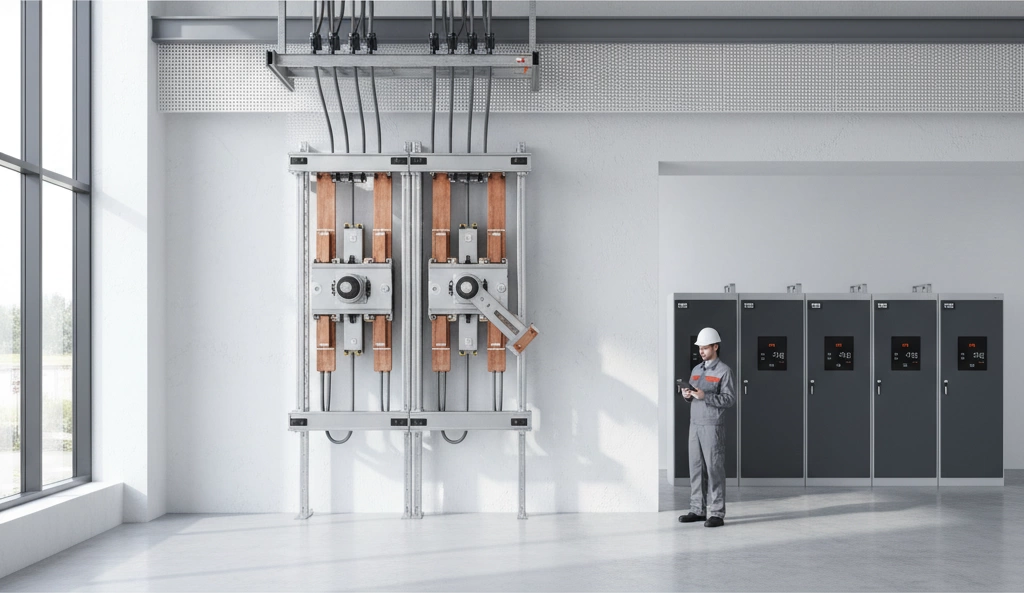
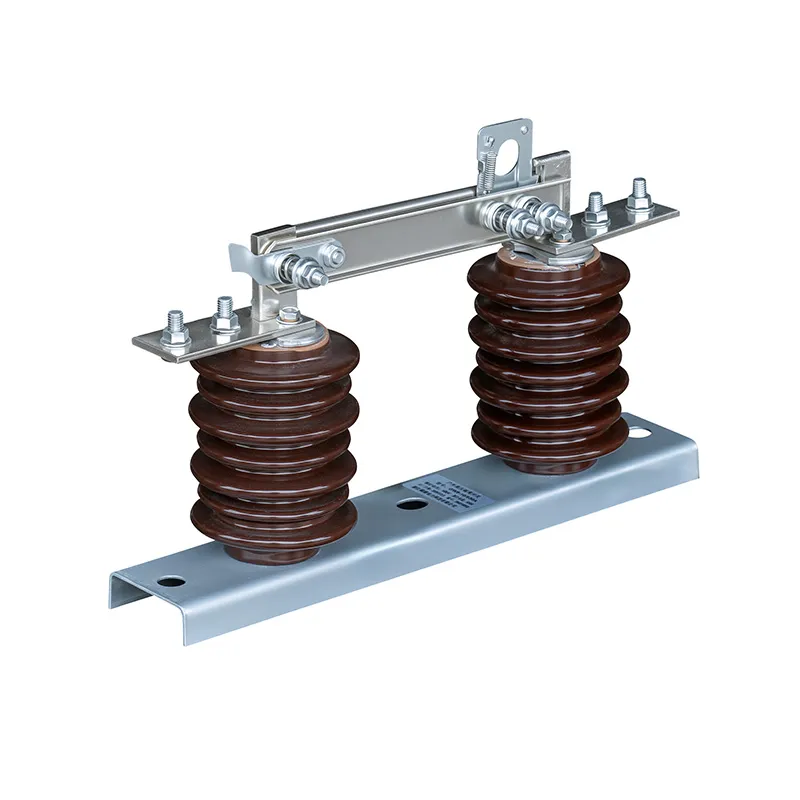
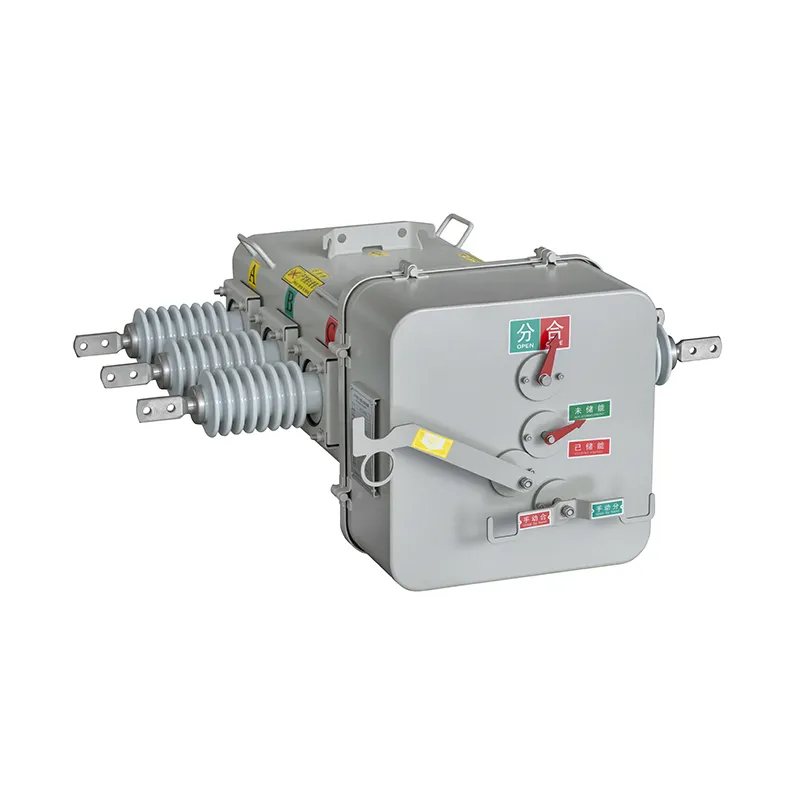
A switch disconnector is essential for safely isolating electrical circuits, providing a visible and positive break to ensure zero energy flow. This isolation meets strict LOTO (Lockout-Tagout) compliance under OSHA 1910.147 and NFPA 70E, protecting personnel during maintenance by preventing accidental re-energisation.
You’ll find two main operation types:
Manual disconnectors require physical handling to open or close the circuit, ideal for straightforward, low-frequency applications.
Motorized disconnectors allow remote, automated operation, improving safety and efficiency in complex or hazardous environments.
A critical safety benefit is arc flash energy reduction. Switch disconnectors can achieve a Category 0 stop, eliminating arc flash risks during isolation by interrupting load current without generating hazardous arc energy.
Consider this real-world case: An anonymized industrial facility suffered a major injury incident when a non-visible isolation switch failed during maintenance. Lack of a proper switch disconnector with positive isolation led to unexpected energisation. This incident underscores why investing in certified switch disconnectors is vital for safe, reliable circuit isolation.
Technical Specifications Decoded
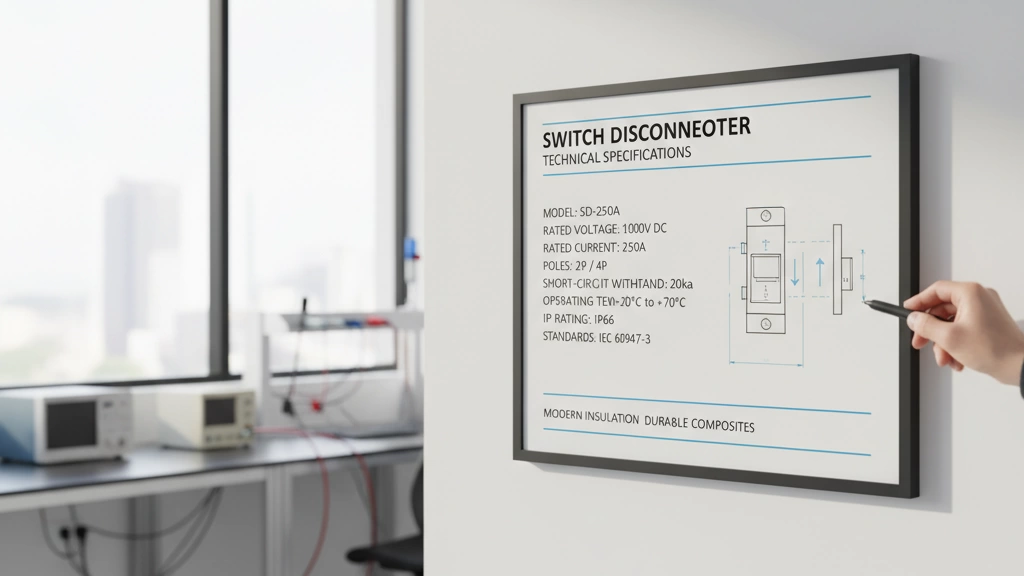
Understanding switch disconnector specs helps you pick the right device for your needs. Here’s a quick breakdown:
Parameter
Details
Rated Operational Voltage (Ue)
230V to 1000V AC/DC — covers most industrial and commercial setups. Perfect for mains or DC switch disconnector needs up to 1500V in special applications.
Rated Current (Ie)
16A to 4000A — from compact panel board disconnectors to heavy-duty switch disconnectors like the SDX Series.
Poles & Utilization Categories
– Poles: 1, 2, 3, or 4 poles depending on phase requirements. – Utilization Categories: AC-21A: Switching resistive loads. AC-22B: Switching mixed resistive & inductive loads. AC-23A: Heavy motor load switching. Knowing this ensures the disconnector suits the load type—critical for motors or complex circuits.
Short-Circuit Withstand Current (Icw)
Defines the max current the switch disconnector can safely interrupt for a short time. Helps prevent failure during faults. Conditional short-circuit current also factors in the upstream devices’ constraints.
IP/IK Ratings
– IP Ratings: IP20 indoor panel installations, IP65 for harsh/outdoor environments with dust and water protection. – IK Ratings: Indicates impact resistance—important in industrial or outdoor setups.
For practical use, selecting the right rated current and utilization category ensures safety and longevity. For example, a motorized switch disconnector designed to handle AC-23A loads offers reliable operation when controlling motors.
For tough outdoor or industrial applications, consider switch disconnectors with high IP65 or greater ratings. You can explore robust enclosed disconnect switches suited for challenging environments, similar to outdoor low voltage power distribution boxes that protect critical components.
Clear knowledge of these specs guarantees that your chosen main switch disconnector meets operational and safety demands without overspending or risking failure.
Standards & Certifications Landscape
Switch disconnectors must meet strict standards to ensure safety, reliability, and global acceptance. The main international benchmarks include IEC 60947-3, which covers low-voltage switchgear and controlgear, offering detailed requirements specifically for switch disconnectors. In North America, UL 508 is the go-to standard, focusing on industrial control equipment safety. Meanwhile, GB 14048.3 is the Chinese standard aligning closely with IEC but tailored for local market needs.
On top of these technical standards, certifications like CE (European Conformity), UKCA (UK Conformity Assessed), and EAC (Eurasian Conformity) ensure products meet regional regulatory demands. For specialized markets such as marine and offshore, DNV approval is critical, verifying suitability for harsh and safety-sensitive environments.
At cnsovio, we back our switch disconnectors with thorough third-party test reports to guarantee compliance and performance. These reports help our customers confidently choose products that comply with the latest standards, whether it’s for industrial panels, renewable energy setups, or data centres.
For fully reliable system integration, pairing a certified switch disconnector with high-performance components like our RW12 high-voltage fuse ensures enhanced protection and operational safety.
Application Engineering: Matching the Right Disconnector
Choosing the right switch disconnector depends heavily on your specific application. Here’s a quick guide tailored to common sectors:
Photovoltaic systems: Look for DC switch disconnectors rated up to 1500V designed for string isolation. They ensure safe, positive isolation for solar panels and meet stringent DC voltage requirements.
Industrial panels: DIN rail disconnectors with modular designs and auxiliary contacts are ideal. They allow easy integration into panel boards, support remote signaling, and fit tight spaces.
Data centers: Here, remote operation features and early-break auxiliaries are key. These allow operators to control disconnectors safely from a distance while mitigating arc flash risks during switching.
EV charging stations: Type 2 disconnectors with padlockable handles offer enhanced security and comply with EV infrastructure regulations. These switches facilitate safe isolation during maintenance or emergency stops.
To simplify your selection, consider using a decision tree flowchart that matches operational needs with suitable switch disconnector types, ratings, and features.
Installation, Commissioning & Maintenance Best Practices
Proper installation and regular maintenance keep your switch disconnector running safely and efficiently. Here are key points to ensure a smooth setup and long-lasting performance:
Torque Values & Cable Cross-SectionsAlways follow manufacturer torque specifications to secure terminals correctly. Using the right cable size ensures proper current flow and avoids overheating. For example, cables must match the rated current (Ie) of the disconnector to maintain safety and efficiency.
Phase Barrier RequirementsInstalling phase barriers helps prevent accidental contact between live parts and avoids short circuits. These barriers are crucial when dealing with multi-pole disconnectors like those rated for AC-23A utilization categories.
Mechanical Interlocks with Upstream BreakersTo enhance safety, mechanical interlocks between the switch disconnector and upstream circuit breakers prevent unsafe operation. This setup avoids simultaneous closure of both devices, ensuring positive isolation.
Periodic Thermographic Inspection ProtocolRegular thermographic checks identify hotspots caused by loose connections or overloaded components early. This preventive maintenance step reduces downtime and extends the lifecycle well beyond the typical 10,000 mechanical operations benchmark.
For a hands-on guide, cnsovio offers a detailed installation video demonstrating best practices and tips to streamline commissioning. This resource is invaluable for local engineers and technicians aiming for reliable and compliant installations.
For related equipment, consider browsing the range of reliable switch disconnectors and components on the cnsovio products page.
Cost of Ownership Analysis
When choosing a switch disconnector, it’s essential to look beyond the initial purchase price (CapEx) and consider ongoing costs (OpEx) like maintenance and downtime. Investing in premium materials, such as silver alloys for contact points, might increase upfront cost but drastically reduces wear and electrical resistance, lowering the risk of failure and saving money in the long run.
Most high-quality switch disconnectors are tested to withstand at least 10,000 mechanical operations, ensuring a long service life even in demanding environments. This durability means fewer replacements and less downtime, which businesses can’t afford.
To make things easier, we offer a total cost calculator widget that helps you compare models by factoring in purchase price, expected maintenance, and downtime costs—giving you a clear picture of the true cost over the product’s lifecycle.
For more insights on optimizing your electrical panel components, check out our detailed low-voltage switchgear analysis at key components.
cnsovio Switch Disconnector Portfolio Spotlight
At cnsovio, our switch disconnector range covers a wide current spectrum to fit diverse industrial needs:
SDS Series: Compact design for 16–160A applications, ideal for space-saving panel boards and light industrial use.
SDH Series: Heavy-duty construction handling 200–630A, perfect for robust industrial panels and demanding environments.
SDX Series: Draw-out type rated from 800–4000A, offering easy maintenance and high current capacity for large-scale installations.
We also offer customization options like handle colors, engraving for clear identification, and shunt trip accessories to tailor safety and operation to your setup.
With strategic global stocking locations, cnsovio ensures competitive lead times and reliable availability, making it easier to source the right switch disconnector when you need it.
To explore our full product range and customization services, visit the detailed overview on the cnsovio official site.
FAQs about Switch Disconnectors
Can a switch disconnector replace a circuit breaker?
No, a switch disconnector is designed mainly for isolating circuits and providing visible break for safety, not for overcurrent protection. Circuit breakers interrupt fault currents automatically, while disconnectors do not. They often work together in electrical panels.
What is the difference between AC-22A and AC-23A utilization categories?
AC-22A is used for switching motor loads with occasional starting and stopping, while AC-23A is meant for frequent switching of heavy-duty motors and loads with high inrush currents. Choose AC-23A for tougher industrial environments.
Are cnsovio disconnectors arc-vented?
Yes, cnsovio switch disconnectors come with arc-venting designs to safely release arc energy during switching, reducing the risk of internal damage and enhancing operator safety.
How to size a switch disconnector for motor loads? Check the motor’s rated current and starting current. Select a disconnector that meets or exceeds the motor’s starting current (utilization category AC-23A is usually recommended). Consider short-circuit withstand ratings (Icw) and voltage requirements. Do you offer Ex-rated switch disconnectors for Zone 2?
Yes, cnsovio provides Ex-rated switch disconnectors specifically built for hazardous areas like Zone 2, meeting relevant ATEX and IECEx standards for safe operation in explosive atmospheres.
What Is an Electrical Fuse Box? If you’re worried about that old electrical fuse box in your home, you’re not alone. Many older houses still rely on fuse boxes instead of modern breaker panels, and it’s normal to wonder if they’re safe, legal, or overdue for an upgrade. Let’s start with the basics so you […]
What Is a Fuse Box and How Does It Work? A fuse box is an older style of electrical panel that protects your home’s wiring by using fuses instead of modern circuit breakers. You’ll usually find it in a basement, garage, utility room, or near the electrical meter. Visually, a fuse box is: Older panels from brands like Sylvania, Zinsco, and […]
What Is a Medium Voltage Circuit Breaker? A medium voltage circuit breaker (MV CB) is a switching and protection device designed to safely interrupt electrical currents in the 3.6–40.5 kV range. In plain terms, it’s the safety valve of a medium voltage network: it detects faults, cuts power in milliseconds, and allows you to switch and isolate equipment without putting people […]
We use cookies to enhance your browsing experience, serve personalised ads or content, and analyse our traffic. By clicking "Accept All", you consent to our use of cookies.