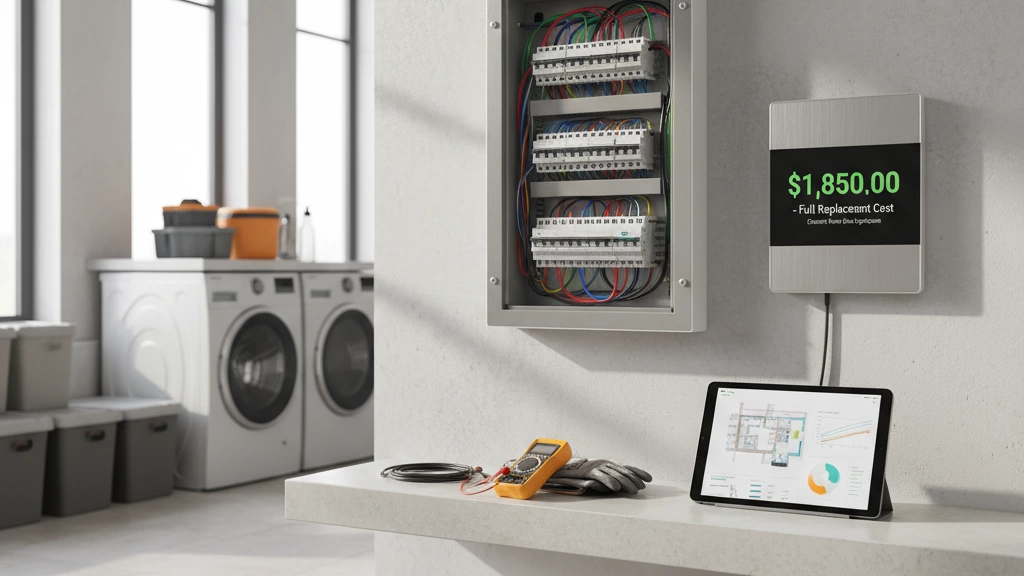
Average Cost to Replace a Fuse Box in 2026
If you’re wondering what the cost of replacing an electric fuse box really looks like in 2026, here’s the honest breakdown I give my own customers.
National Average Cost Range (2026)
For a typical home, the cost to replace a fuse box with a breaker panel in 2026 usually falls between:
- $1,500 – $4,000 total for most standard upgrades
- Most homeowners land around $2,500 – $3,200
This assumes a straight fuse box to breaker box upgrade with no major surprises.
Low-End Pricing – 100-Amp Fuse Box Upgrades
On the lower end, you’re looking at smaller 100-amp service in an easy spot (like a garage or open basement wall) with minimal extra work:
- Typical 100-amp panel replacement cost: $1,200 – $2,000
- Usually includes: new 100-amp breaker panel, basic grounding updates, permit, and labor
- You’ll see these prices more in lower cost-of-living areas or very simple swaps
Mid-Range Costs – Standard 200-Amp Panel Upgrades
Most modern homes upgrade to 200-amp service to handle HVAC, electric ranges, EVs, and general future load:
- 200-amp service upgrade cost (fuse box to breaker panel): $2,000 – $4,000
- This is the most common range I see for a full main breaker box replacement in 2026
- Often includes: new 200-amp panel, larger service entrance conductors, updated grounding and bonding, permit, and inspection
High-End Pricing – 400-Amp, Complex Setups, and Subpanels
If you’ve got a large home, workshop, ADU, or heavy electric loads, costs rise:
- 400-amp service upgrade pricing: $4,000 – $8,000+
- Complex layouts, long wire runs, outdoor meter moves, or multiple subpanels can push you to the high side
- Homes adding big loads (EV chargers, hot tubs, electric heat) often end up here
Cost Comparison Table – 100A vs 200A vs 400A (2026)
| Service Size & Upgrade Type | Typical 2026 Price Range* |
|---|
| 100-amp fuse box to 100-amp breaker panel | $1,200 – $2,000 |
| 100-amp to 200-amp service upgrade | $2,000 – $4,000 |
| Fuse box to new 200-amp breaker panel | $2,000 – $3,500 |
| 200-amp to 400-amp service upgrade | $4,000 – $8,000+ |
*Real-world pricing varies by region, access, and how much grounding, meter, and wiring work is needed.
If you’re trying to ballpark your fuse box replacement cost in 2026, start with the service size you have (or want) from this table, then expect your final number to land near the middle of each range unless your setup is unusually simple or unusually complicated.
Cost Breakdown – What You’re Actually Paying For
When you look at the cost of replacing an electric fuse box, you’re really paying for a bundle of parts, labor, and code-required extras—not just a new metal box on the wall.
1. Price of the New Breaker Panel & Main Materials
The breaker panel itself usually takes a big chunk of the budget. Pricing changes based on:
- Amperage: 100A, 150A, 200A, 400A
- Brand (Square D, Siemens, Eaton, etc.) and warranty
- Features: spaces for future circuits, copper vs aluminum bus, whole-house surge options
As a reference, a quality 200‑amp main breaker box with standard breakers often runs a few hundred dollars before labor. If you’re unsure about the differences between a fuse panel and breaker panel, I’ve broken it down in this quick comparison of an electrical fuse box vs circuit breaker panel.
2. Labor Cost to Replace a Fuse Box
The labor cost to replace a fuse box is usually the biggest line item. Expect:
- Licensed electrician rates: often billed hourly or as a flat project price
- 1–2 full days on site for a straight swap, longer if service changes or rewiring are needed
Complex layouts, tight spaces, or working in finished walls all push the labor cost up.
3. Permit Fees & Inspection Costs
You can’t legally do a panel replacement without a permit in most places. Your total will usually include:
- Permit fee charged by the city or county
- Rough and final inspections to sign off that the new panel meets local electrical code
These fees are non‑negotiable if you want everything insured and legal.
4. Meter Socket, Riser, and Service Mast Upgrades
If your meter socket, riser, or service mast is outdated or undersized, the electrician may have to:
- Replace the meter base
- Upgrade the conduit/riser and weather head
- Coordinate with the utility company to kill and restore power
These extras can add a noticeable bump to your electrical service panel replacement price.
5. Grounding and Bonding Upgrades (2026–2026 Codes)
Modern code (including 2026–2026 updates) wants your system properly grounded and bonded. That might mean:
- New ground rods and clamps
- Proper bonding of water/gas pipes
- Upgrading grounding conductors
If your home is older, the grounding and bonding upgrade cost can be significant—but it’s key for safety and passing inspection.
6. Wall Repair, Drywall, and Paint
Replacing an old fuse box often means opening up the wall. After the electrician is done, you may need:
- Drywall repair or patching
- Texture matching
- Painting to blend everything back in
Some electricians include basic patching; full finish work is often a separate cost or handled by a painter.
7. New Circuits & Partial Rewiring
If you’re already paying for a fuse box to breaker box upgrade, a lot of homeowners choose to:
- Add new dedicated circuits (kitchen, laundry, HVAC, EV charger)
- Replace old knob‑and‑tube or brittle wiring near the panel
These additional circuits or partial rewiring are typically priced per circuit or per hour and can push the total up—but they’re often cheaper to do while the panel is already open and permitted.
If you want a deeper dive into how older fuse electrical panels compare to modern breaker setups, I put together a quick guide here: [fuse panel electrical overview](https://cnsovio.com/fuse-panel-electrical/
Main Factors That Affect Your Fuse Box Replacement Cost
Several real‑world details drive the cost of replacing an electric fuse box with a breaker panel. Here’s what usually changes the price the most in 2026.
1. Existing Service Size (100A vs 150A vs 200A+)
Your current electrical service is a big factor:
- 100-amp to 100-amp swap: Cheapest, mostly a straight panel change.
- 100-amp to 150-amp or 200-amp upgrade: More labor, heavier wiring, bigger panel, possible meter and service upgrades.
- 200-amp to 400-amp: Premium pricing, often for large homes, EVs, or heavy equipment.
The higher the amperage, the more materials, permits, and labor hours you’re paying for.
2. Age, Brand, and Condition of Your Fuse Box
Old or unsafe gear takes more time and care to replace:
- Very old fuse boxes with cloth wiring or aluminum conductors can need extra repairs.
- Red-flag brands (like some Federal Pacific or Zinsco panels) usually require complete removal and careful rewiring.
- Corrosion, burns, or water damage raise labor time and may require new feeders or junction boxes.
If your system is messy or hacked together, expect the electrician to charge more to clean it up safely.
3. Panel Location and Access
Where the panel sits in your home affects labor cost:
- Easy locations: Garage wall, open basement, or utility room = faster work, lower cost.
- Tight or hidden spots: Closets, stairwells, behind finished walls or shelving = more demo and patching.
- Outdoor panels: Require weather-rated enclosures and proper sealing.
Any extra cutting, drilling, or relocation time increases the bill.
4. Distance From Meter & Utility Requirements
The relationship between your meter and panel matters:
- Panel near the meter: Shorter cable runs, simpler job.
- Panel far from the meter: Longer feeders, more conduit, more time.
- Service entrance changes: Moving the meter, adding a riser/mast, or upgrading overhead/underground service adds cost.
- Utility company rules: Some utilities require specific meter sockets or inspections that add fees and time.
5. Permits, Inspections, and Local Rules
Every area has its own rules and price tags:
- Permit cost to replace electrical panel can range from modest to steep depending on your city.
- Some jurisdictions require:
- Multiple inspections (rough + final)
- Detailed load calculations
- Utility coordination and disconnects
- Stricter code enforcement means more time on diagrams, photos, and corrections.
Always ask your electrician to itemize permit and inspection fees on the quote.
6. Timing, Emergencies, and After-Hours Rates
When you schedule the job also shifts the price:
- Normal weekday work: Standard panel replacement pricing.
- Emergency calls (burning smell, tripped main, no power): Higher rates, rush scheduling.
- Evening/weekend work: Expect after-hours premiums.
- Seasonal demand spikes (heat waves or cold snaps) can push labor rates higher.
If your old panel is still safe, booking in a slower season can save money.
7. Extra Upgrades (Surge, EV, Smart Features)
Modern homes often add upgrades during a panel swap:
- Whole-house surge protection
- EV charger rough-ins (50A+ circuits, dedicated breaker spaces)
- Generator interlock or transfer switch
- Smart breaker panels or monitoring systems
These are add-ons, but it’s almost always cheaper to install them while the panel is already open.
For more detail on how circuits and fuses are laid out, you can look at this practical overview of an electrical fuse box and wiring layout.
8. City, Region, and Cost of Living
Where you live is a major pricing factor:
- High cost-of-living areas (big cities, coastal markets) = higher hourly labor and overhead.
- Rural or low-cost regions may have lower labor rates but fewer contractors, which can still push prices up during busy seasons.
- Local material pricing, supply chain issues, and even weather all show up in your final quote.
In short, the cost of replacing an electric fuse box is a mix of your home’s electrical needs, panel condition, local codes, and when and where you get the work done.
2026 Regional Cost Guide for Fuse Box Replacement in the U.S.
Fuse box replacement cost in 2026 shifts a lot by region thanks to labor rates, permit rules, and local utility requirements. Here’s what most homeowners are actually seeing for a fuse box to breaker panel upgrade (full replacement, not just a few breakers).
Northeast (NY, MA, NJ and nearby states)
High labor rates and strict codes push prices up here.
- 100-amp panel: $1,800 – $3,000
- 200-amp panel: $2,800 – $4,800 (most common upgrade)
- 400-amp service: $5,500 – $9,000+
Old housing stock and tight basements often mean extra work for grounding and bonding. If you’re dealing with an older electrical fuse box in a legacy home, expect to be closer to the top of these ranges.
West Coast & California
California, Washington, and Oregon typically have some of the highest electrical panel replacement cost in 2026.
- 100-amp panel: $2,000 – $3,200
- 200-amp service upgrade cost: $3,500 – $6,000
- 400-amp service: $6,000 – $10,000+
Strong code enforcement, wildfire rules, and solar/EV readiness requirements all drive up the price.
Florida & the Southeast
Labor is a bit cheaper, but coastal and hurricane zones can add extra code requirements.
- 100-amp panel: $1,500 – $2,600
- 200-amp breaker panel: $2,500 – $4,000
- 400-amp service: $4,500 – $7,500
In humid and coastal areas, you’ll see more outdoor-rated main breaker box replacement and corrosion-resistant hardware, which bumps material cost.
Midwest (IL, OH, MI and surrounding states)
The Midwest sits near the national average cost to replace an electrical fuse box.
- 100-amp panel: $1,400 – $2,500
- 200-amp panel: $2,400 – $4,200
- 400-amp service: $4,500 – $7,500
Many cities here still have older fuse boxes, so old fuse box replacement price often includes extra grounding and sometimes partial rewiring.
Texas & South Central Region
Texas and nearby states are usually a bit lower than the coasts, with a big spread between rural and metro areas.
- 100-amp panel: $1,400 – $2,400
- 200-amp service upgrade cost: $2,300 – $4,000
- 400-amp service pricing: $4,200 – $7,000
High-growth suburbs upgrading for EV chargers and larger HVAC can lean toward higher-end quotes.
Mountain West States
Colorado, Utah, Idaho, and neighboring states see mid-range to slightly higher pricing, depending on how remote you are.
- 100-amp panel: $1,500 – $2,600
- 200-amp breaker panel cost: $2,600 – $4,300
- 400-amp service: $4,800 – $7,800
Rural areas can pay more just due to travel time and limited electricians. Outdoor installs or low-voltage distribution cabinet upgrades (similar to an outdoor power distribution box) add to material cost.
As a rule, if your quote is way outside these ranges, dig into the details: service size, trenching, meter upgrades, and code-driven extras can swing the final fuse box replacement cost fast.
Fuse Box vs Breaker Panel – When Replacement Is Really Necessary
If you’re looking up the cost of replacing an electric fuse box, there’s usually a reason. In 2026, most insurers and home buyers see old fuse boxes as a red flag, and some panels are now considered outright unsafe.
Key warning signs your fuse box needs urgent replacement
If you notice any of this, don’t wait:
- Frequent blown fuses or fuses constantly tripping even with normal use
- Burn marks, dark discoloration, or melting on the fuse box cover or around fuses
- Buzzing, sizzling, or crackling sounds from the panel
- Warm or hot metal around the fuses or main switch
- Loose, jury‑rigged, or doubled‑up circuits (more than one wire under a single terminal)
- Aluminum wiring, cloth‑covered wiring, or obvious corrosion in or near the box
- Lights dimming when big appliances start, or breakers/fuses that never trip even when overloaded
Any of these can mean the box is overheating or not protecting your wiring correctly.
Insurance company requirements and red‑flag panels
Many insurers now:
- Refuse coverage, raise premiums, or require replacement if you have:
- Original fuse boxes from the 1950s–1970s
- Federal Pacific Electric (FPE) or Zinsco/Sylvania breaker panels
- Panels with no main disconnect or obvious tampering
- Ask for an electrical inspection before binding coverage or after a claim
- Require proof that the main panel and grounding meet current code
If your policy mentions “obsolete electrical service” or lists specific brands, replacing the panel isn’t optional if you want full coverage.
How long a fuse box is safe to keep
Fuse boxes were never designed for modern loads like EV chargers
Ways to Save Money on Your Fuse Box Replacement
Keeping the cost of replacing an electric fuse box under control is all about timing, planning, and getting the right scope of work.
Bundle Work with Other Electrical Projects
If you’re already opening walls or touching the panel, stack projects to save on labor and permit fees:
- Add outlet/circuit upgrades (kitchen, bath, laundry) during the same visit.
- Rough-in for future needs like an EV charger or hot tub while the panel is open.
- Combine a panel swap with other upgrades like new AFCI/GFCI protection or replacing old fuse types you’re still relying on.
You pay once for setup, travel, and permitting instead of multiple times.
Choose the Right Amperage (Don’t Overbuy)
Most homes in 2026 are fine with a 200-amp service upgrade unless you’ve got heavy loads (multiple EVs, big workshop, full electric heating). To avoid overspending:
- Have the electrician do a load calculation instead of guessing.
- Avoid pushing to 400 amps unless you really need it—400-amp service upgrade pricing jumps fast.
- Ask for pricing on 100 amp to 200 amp service upgrade cost versus 400 amps so you can see the jump clearly.
Compare 3–4 Written Quotes (And Spot Overpriced Bids)
Get at least 3 written estimates for your breaker panel installation cost:
- Make sure each quote lists: panel brand, amperage, included breakers, permit cost, grounding, meter work, and patching.
- Be cautious of “cheap” quotes that skip permits, inspections, or grounding and bonding upgrades.
- Overpriced estimates often look vague—no brand listed, no clear labor breakdown, no line item for inspection fees.
Use Rebates, Incentives, and Financing
In 2026, a lot of areas offer rebates for electrical panel upgrades, especially if you’re supporting EV charging, heat pumps, or solar:
- Check your utility’s website for panel or “electrification” rebates.
- Look at local/state programs that reward modern, safer panels and energy-efficient upgrades.
- Ask electricians if they offer financing or payment plans to spread out your home electrical panel upgrade pricing over time.
Pick the Right Season for the Work
Demand affects fuse box replacement cost in 2026:
- Avoid peak summer and deep winter in extreme-climate areas—electricians are slammed with emergency calls.
- Spring and fall are usually cheaper and easier to schedule.
- If possible, avoid after-hours and weekend work; emergency panel replacement can add 25–50% to labor cost.
Plan it right, and your electric fuse box upgrade cost stays tight while still giving you a safe, modern system that’ll last for decades.
What Happens During a Fuse Box Replacement
When you’re looking at the cost of replacing an electric fuse box, it helps a lot to know exactly what happens on install day. Here’s how a typical upgrade to a modern breaker panel plays out.
Typical 1–2 Day Timeline
Most fuse box to breaker panel replacements take about 1–2 days:
Day 1 (main work):
- Utility shuts off power at the meter.
- Old fuse box is removed.
- New breaker panel, meter socket, and service mast (if needed) are installed.
- Circuits are moved over and labeled.
- Grounding and bonding are upgraded to current code.
- Power is usually restored the same day if inspections are quick.
Day 2 (if needed):
- Final inspection by the city or county.
- Utility comes back to permanently re-energize if they didn’t do it on Day 1.
- Any final adjustments and labeling.
How Long You’ll Be Without Power (and How to Prep)
In most homes, you’ll be without power for 4–10 hours during the main swap. To make it easier:
- Food & appliances
- Run the fridge/freezer cold the night before.
- Keep doors closed; food usually stays safe for 4–6 hours.
- Work & comfort
- Charge phones, laptops, and battery packs in advance.
- Plan to work from another location if you rely on Wi‑Fi and power.
- In extreme heat or cold, line up a backup place for kids, pets, and anyone sensitive to temperature.
- Medical needs
- If you have powered medical equipment, talk to your electrician first and plan backup power or alternative arrangements.
- Garage doors & security
- Park one car outside.
- Make sure you know how to open your garage door manually.
- Confirm how your alarm system behaves when power is cut.
Step‑by‑Step: What the Electrician Actually Does
Here’s the basic breaker panel installation process most licensed electricians follow:
- Site check & safety setup
- Verify permits and work order.
- Lay down drop cloths, cover nearby items, and set up lighting if needed.
- Shutoff & verification
- Coordinate with the utility to kill power at the meter.
- Confirm everything inside is de‑energized with a meter.
- Remove old fuse box
- Take out the old panel, fuses, and any unsafe wiring.
- Open the wall as needed to access cables and conduits.
- Install new panel
- Mount the new 100‑, 150‑, 200‑, or 400‑amp breaker panel securely.
- Upgrade or replace the meter socket, riser, or service mast if required by current code.
- Grounding & bonding upgrades
- Install new ground rods and grounding conductors.
- Bond the panel to the water line, gas line (if required), and other metallic systems to meet 2026–2026 standards. This step is similar in importance to proper protection components used in higher‑voltage gear like high‑voltage composite insulators—it’s all about safely managing fault currents.
- Move and tidy circuits
- Move branch circuits from the old fuse box into the new breaker panel.
- Replace damaged wires, add arc‑fault or GFCI breakers where code requires.
- Neatly route and secure all conductors, label each breaker clearly.
- Testing & temporary power restoration
- Test each circuit and the main breaker.
- Turn circuits on one by one to avoid surge issues.
- Confirm major loads (HVAC, range, dryer, EV charger, etc.) operate correctly.
- Inspection & final sign‑off
- Meet the inspector if they come the same day.
- Make any small fixes the inspector requests.
- Once inspector and utility sign off, the job is officially complete.
Utility Coordination, Inspections, and Approvals
For any main breaker box replacement, you can expect:
- Permits
- Your electrician pulls a permit before work starts. This is not optional in most areas.
- Utility involvement
- The power company usually needs notice to disconnect and reconnect service.
- Some utilities are quick (same day). Others book out several days, which can influence your schedule and labor cost to replace a fuse box.
- Inspections
- A local inspector checks:
- Panel size vs. service load (100‑amp, 150‑amp, 200‑amp, 400‑amp).
- Grounding and bonding.
- Breaker sizing and wire gauge.
- Proper labeling and clearances.
- Power may be temporarily restored pending final inspection, depending on your jurisdiction.
Checklist: Questions to Ask Before Work Starts
Use this list to keep your fuse box replacement cost 2026 project clear and predictable:
- Scope & price
- Is this a full fuse box to breaker box upgrade, or just a panel swap?
- What exact panel brand, model, and amp rating are you installing?
- Does the price include:
- New meter socket and service mast (if needed)?
- Grounding and bonding upgrades?
- Permits and inspections?
- Drywall patching/finishing, or is that on me?
- Scheduling & downtime
- How many hours will I be without power?
- What time will the utility shutoff happen?
- Are you handling all utility coordination?
- Code & safety
- Will my new panel meet current NEC and local code?
- Are you installing required GFCI/AFCI breakers where needed?
- Are there any existing wiring issues that might add to the old fuse box replacement price?
- Warranty & paperwork
- What’s the warranty on labor and on the panel itself?
- Will you provide a panel schedule (breaker labels) and permit/inspection documents?
- If my insurance company asks, will your paperwork satisfy their insurance requirements for fuse box replacement?
Getting these answers in writing before the work starts will protect you from surprise add‑ons and help you understand the true home electrical panel upgrade pricing for your situation.
DIY vs Hiring a Licensed Electrician for Panel Replacement
When we talk about the cost of replacing an electric fuse box, the biggest “hidden cost” is what can go wrong if you try to DIY. A panel swap isn’t like changing a light switch – it’s working directly with the main service that can kill you in a second if you make a mistake.
Safety Risks and Fire Hazards of DIY Panel Work
Trying to upgrade a fuse box to a breaker panel without the right training is dangerous:
- Live service conductors can stay energized even with the main off. One slip of a screwdriver can arc, flash, or cause severe burns.
- Loose lugs, wrong wire sizes, or overloaded breakers build heat over time and can start a hidden electrical fire inside the wall.
- Miswired neutrals and grounds can energize metal parts, making your panel, appliances, or pipes shock hazards.
Whatever you “save” on labor cost to replace a fuse box can be wiped out by one emergency call or fire claim.
Legal, Code, and Insurance Problems With DIY Work
Unpermitted DIY panel work often turns into a legal headache:
- Most cities require a licensed electrician and a permit for any main breaker box replacement or service upgrade.
- If there’s a fire and the inspector or insurance adjuster finds unpermitted panel work, your claim can be reduced or denied.
- When you sell the home, unapproved DIY panel changes can delay closing, trigger extra inspections, or force last‑minute repairs at premium pricing.
Before anyone touches your panel, confirm with your building department what permit cost to replace an electrical panel looks like and who’s allowed to pull it.
Common DIY Mistakes That Get Expensive
These are the issues I see over and over when homeowners try to cut corners:
- Using breakers that don’t match the panel brand or listing
- Installing oversized breakers on too-small wires “so it stops tripping”
- No proper grounding and bonding upgrades when replacing an old panel
- Overstuffing a panel with tandem breakers instead of using the right capacity
- Skipping required meter socket and riser upgrades when increasing to 200A
Every one of these can lead to failed inspections, rework by a pro, and a higher total electrical panel replacement cost than if you’d hired a licensed contractor from day one.
Why Licensed, Insured Electricians Are Required
A proper fuse box replacement or breaker panel installation is more than just swapping hardware:
- Pros follow the latest NEC and local codes (including 2026–2026 updates).
- They coordinate with the utility, pull permits, and schedule inspections.
- They size the service (100A vs 200A vs 400A), wire, and breakers correctly for your actual load and future needs (EV, heat pump, etc.).
- They carry insurance, so if something does go wrong, you’re not on the hook personally.
That’s exactly why utilities, inspectors, and insurers insist on licensed, insured electricians for any service or panel upgrade. Yes, your fuse box replacement cost 2026 quote includes professional labor and overhead – but it also buys you safety, compliance, and zero hassle with future inspections or insurance.
Frequently Asked Questions About Fuse Box Replacement Costs
Can I convert fuses to breakers without a full panel swap?
Technically, there are “fuse-to-breaker” adapter kits, but I don’t recommend them. In most cases, if you’re paying for any serious work, it’s safer and more cost‑effective long term to replace the entire fuse box with a modern breaker panel.
- Adapters can cause code issues and insurance problems.
- A full breaker panel replacement usually runs $1,500–$4,000+ depending on amperage and location, but gives you a clean, code-compliant system and better resale value.
How long does a new breaker panel last?
A quality breaker panel, installed to current code, typically lasts 30–40 years, sometimes longer if it’s kept dry and not overloaded. Breakers themselves may need occasional replacement, but the panel enclosure and bus bars should be good for decades if the install is done right and sized correctly.
Does a panel upgrade help home value?
Yes. A new 200‑amp breaker panel is a strong signal to buyers and home inspectors that the electrical system is modern and safer. It can:
- Make appraisals smoother and reduce “repair credit” requests.
- Help you avoid last‑minute deal breakers tied to old fuse boxes or recalled panels (like Federal Pacific or Zinsco).
- Boost buyer confidence, especially if you’re also planning high‑demand loads like EV chargers or heat pumps.
What permits do I need for a fuse box replacement?
In most U.S. cities, a permit is mandatory for panel and service upgrades. To confirm what’s required in your area:
- Call your local building department or check their website under “electrical permits.”
- Ask if they require a service upgrade permit, utility coordination, and a final inspection.
Skipping the permit can get you fines, failed inspections later, or insurance headaches after a fire or electrical issue.
How do I know if I still have a fuse box or outdated panel?
Look where your main shutoff is (basement, garage, utility room, or exterior):
- Fuse box: round screw‑in fuses or pull‑out blocks; often a small metal box with a hinged door.
- Breaker panel: rows of switch‑style breakers you flip on/off.
If you see brand labels like Federal Pacific, Zinsco, or a very rusted/cloth‑wired panel, plan on replacement. For industrial or higher‑voltage systems, modern solutions like an outdoor vacuum circuit breaker or medium‑voltage breaker assemblies are the safer upgrade path.
Is 100‑amp service enough for a modern home in 2026?
Sometimes, but it’s tight.
- 100 amps might be okay for a small home or condo with gas heat, gas water heater, and no EV or big electric appliances.
- Most detached homes today are better off with 150–200 amps, especially if you have: central AC, electric range, dryer, hot tub, or plan to add an EV charger or heat pump.
If you’re already tripping fuses/breakers or limiting what can run at the same time, upgrading to 200‑amp is usually the smart move.
How can I finance or spread out fuse box replacement costs?
If the cost of replacing an electric fuse box strains your budget, you’ve got options:
- Electrician financing: Many contractors offer in‑house payment plans or partner with third‑party lenders.
- Credit union / bank loan: Personal loans or home improvement loans with fixed rates.
- Utility or government programs: Some areas offer rebates or low‑interest financing when you upgrade electrical capacity to support EVs or energy‑efficient equipment.
Always get 3–4 written quotes for your electrical panel replacement cost in 2026, compare terms, and read the fine print on interest and fees before signing.