Fuse Box vs. Circuit Breaker Panel
When you hear “fuse panel electrical,” you’re really talking about the heart of your home’s power system. Knowing whether you have an old fuse box or a modern circuit breaker panel isn’t just trivia—it affects safety, insurance, and what you can run in your home.
Quick Visual Comparison
| Feature | Fuse Box (Old Style) | Circuit Breaker Panel (Modern) |
|---|
| Typical Age | 1940s–1970s | 1980s–present |
| Main Capacity | 30–100 amps (often 60 amps) | 100–400 amps (most homes use 200 amps) |
| Protection Device | Screw-in / cartridge fuses | Flip-style circuit breakers |
| Reset Method | Replace fuse (single-use) | Flip breaker OFF → ON (reusable) |
| Common Problem | Over-fusing, overheating, limited circuits | Crowded panels, mislabeled breakers |
| Expansion for New Circuits | Very limited | Designed for add-ons and upgrades |
| Insurance & Code Acceptance | Often flagged or refused | Preferred and widely accepted |
Common Old Brands and Capacities
Most unsafe or outdated systems we see fall into a few well-known categories:
If you see Zinsco, Federal Pacific, or a small metal box labeled 60A or 100A with screw-in fuses, you’re looking at a strong candidate for an upgrade.
Why Insurance Companies Hate Old Fuse Boxes in 2026
By 2026, most insurance underwriters treat old fuse panels and certain breaker brands as high risk because:
Higher fire risk:
Old fuses and failed breakers may not trip properly, letting wires overheat in walls.
Under-sized service:
A 60-amp service was fine for a 1955 kitchen—today you’ve got EV chargers, AC, induction cooktops, and home offices competing for power.
Documented failures (Zinsco & FPE):
There’s decades of data showing these panels don’t always protect against shorts and overloads.
Claim history:
Insurers track where electrical fires come from, and outdated fuse panels show up repeatedly.
Because of this, many insurance companies now:
- Charge higher premiums for homes with fuse boxes or known-problem panels
- Require an electrical panel upgrade before binding a new policy or after an inspection
- Sometimes refuse coverage for homes with Federal Pacific or Zinsco panels
If your policy is new, being renewed, or you’re shopping around, your fuse panel electrical setup is going to come up. Upgrading from a fuse box to a modern circuit breaker panel isn’t just a convenience upgrade—it can be the key to staying insured and protected.
How to Locate Your Electrical Panel (Fuse Panel Electrical Guide)
Finding your electrical panel (or fuse panel) is step one for any home electrical safety check or quick fix.
Most common electrical panel locations
Start with these spots:
- Basement – On a main wall, near the front of the house or by the utility meters
- Garage – On a side wall near the door to the house or near your car parking area
- Utility / laundry room – Close to the water heater, furnace, or stacked utilities
- Exterior wall – In some regions, the electrical panel is outside, usually near the power meter or at the side/rear of the home
If you’re unsure what you’re looking for, this quick overview of a fuse box vs. circuit breaker panel can help you identify what you have at home: electrical fuse box vs circuit breaker guide.
What to look for: panel appearance
You’re looking for:
- A gray or beige metal box (sometimes painted the wall color)
- A swing-open metal door with a latch or small handle
- Warning labels: “Danger – High Voltage”, “Service Disconnect”, or manufacturer labels
- Meter nearby: In many homes, the main electrical panel is close to the utility power meter
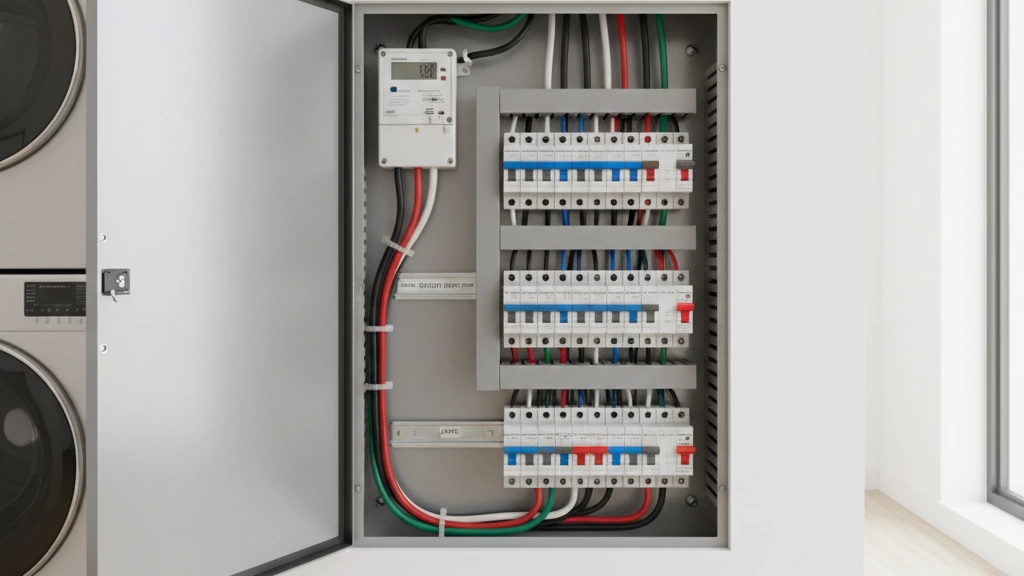
If you open the door and see switch-style breakers, that’s a circuit breaker panel. If you see round screw-in fuses or pull-out blocks, you’ve got an older fuse box, which may be a candidate for an old fuse box upgrade.
For a deeper breakdown of what each style looks like, I’ve put together a dedicated guide to the fuse electrical panel so you can compare what you see at home.
Local variations: older homes, apartments, condos
Depending on your building type, things change a bit:
If you still can’t find your electrical panel after checking these spots, ask building management, your landlord, or check your purchase/inspection report – the panel location is usually documented there.
Understanding the Parts of Your Fuse Panel / Electrical Panel
Knowing what you’re looking at inside your fuse panel or circuit breaker panel makes everything safer and easier.
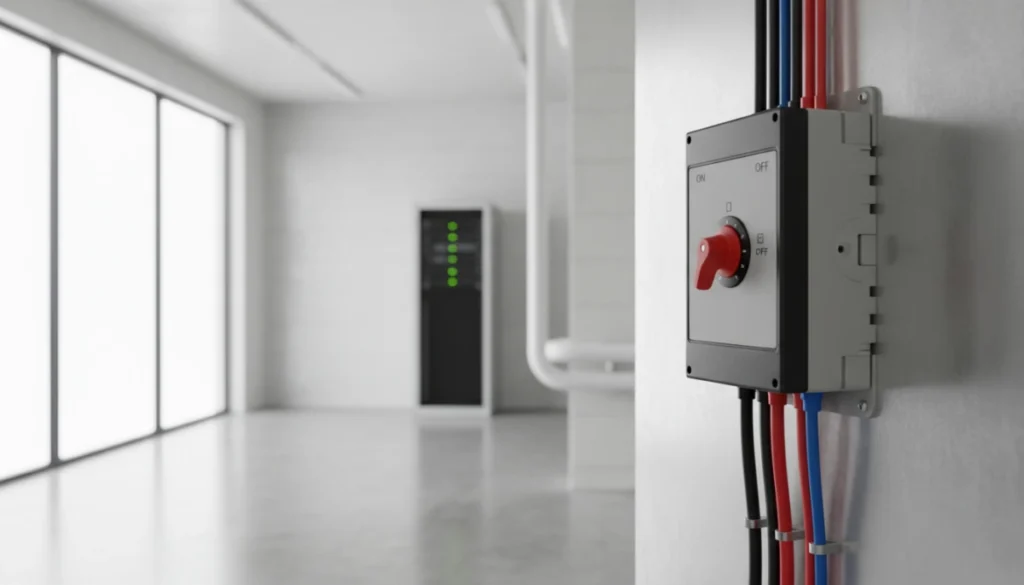
Main Breaker / Main Disconnect
This is the “master switch” for your whole home.
- It’s usually a large double switch at the top or bottom of the panel
- Labeled something like “Main 100A / 150A / 200A”
- Turning it OFF cuts power to the entire panel (except possibly the service lines above it – those are always live and not for DIY)
If your main breaker ever feels hot, looks burned, or hums loudly, that’s a stop-now and call a licensed electrician situation.
Individual Circuit Breakers vs Screw‑In Fuses
Inside the panel you’ll see either:
1. Circuit breakers (modern panels)
- Flip switches, usually black or gray
- Can be reset after they trip
- Often grouped by room: kitchen, bedrooms, AC, dryer, etc.
- You’ll also find specialized breakers for higher loads, similar to higher‑capacity circuit breakers used on industrial equipment.
2. Screw‑in fuses (old fuse boxes)
- Round, glass or ceramic pieces that screw in like light bulbs
- When they “blow,” they must be replaced, not reset
- Some are Type‑S tamper‑resistant fuses to prevent oversizing (putting in a bigger fuse than the wiring can handle)
If you see mixed sizes, odd adapters, or random “mystery” fuses, the panel is probably overdue for a professional check.
Panel Labeling (And Why Yours Is Probably Useless)
Most homes have panel labels that are:
- Faded, scribbled, or totally blank
- Marked with gems like “plugs,” “lights,” or “misc”
That doesn’t help anyone in an emergency.
How to fix it properly:
- Have someone inside the house turn things on/off (lights, microwave,
Step-by-Step: How to Reset a Tripped Breaker Safely
When something suddenly stops working, a tripped breaker in your fuse panel electrical system is usually the fastest fix. But you need to do it safely and correctly.
Basic Safety Rules (Don’t Skip These)
Before you touch anything at the electrical panel:
- Wear shoes with rubber soles (no bare feet, no wet floors).
- Make sure your hands are completely dry.
- Use a flashlight if the area is dim (don’t rely on your phone’s metal case pressed against the panel).
- Remove metal jewelry: rings, watches, bracelets, necklaces.
- Never touch exposed wires or metal bus bars inside the panel.
- If you smell burning, see smoke, or hear crackling: stop and call a licensed electrician immediately.
How to Spot a Tripped Breaker
On a typical circuit breaker panel:
- Breakers that are ON are usually all lined up in one direction.
- A tripped breaker is often:
- Slightly out of line, or
- In the middle between ON and OFF.
- Sometimes the handle shows “TRIP” or feels loose compared to the others.
That “in the middle” position basically means:
The breaker shut itself off to protect the circuit after a fault or overload.
5-Step Process to Reset a Tripped Breaker
Imagine this as a simple sequence of “look → identify → reset → test”:
Turn off or unplug the device(s) that were running when power went out
- Example: space heater, hair dryer, microwave, portable AC.
Open your electrical panel door and locate the breaker that:
- Is not fully in the ON position
- Looks slightly out of alignment, or in that “middle” spot.
Firmly push the breaker all the way to OFF
- You must click it fully OFF first.
- If you skip this, it usually won’t reset properly.
Firmly push it back to ON
- You should feel a solid “click.”
- If it instantly flips back to the middle or OFF, stop resetting it.
Test the circuit
- Turn one device back on at a time.
- If the breaker trips again quickly, you likely have:
- An overloaded circuit, or
- A wiring/fault issue that needs a pro.
If your breaker keeps tripping and you’re not sure why, treat it as a warning, not an annoyance. It’s doing its job to prevent overheating and fires. When in doubt, call a licensed electrician near you to inspect the circuit instead of repeatedly forcing it back on.
How to Replace a Blown Fuse in a Fuse Panel (Safely)
Still running an old fuse panel electrical setup? You can swap a blown fuse safely if you follow some basic rules—and know when to stop and call a pro.
1. Know Your Fuse Types
Most older fuse boxes use one or more of these:
- Edison-base plug fuses (screw-in, look like light bulbs)
- Often 15A, 20A, or 30A
- Safer versions are Type-S (tamper-resistant, color-coded)
- Cartridge fuses (tube-shaped, usually for main or big appliances)
- Pull-out holder or clips inside the panel
- Common on older ranges, AC, or main disconnects
If you’re unsure what you’re looking at, don’t guess. The internal layout can be similar to the wiring examples in an electrical fuse box you’d see in resources like this electrical fuse box wiring guide.
2. Step-by-Step: Replace a Blown Fuse
Only do this if:
- The panel is dry
- There’s no burning smell, buzzing, or visible damage
- You can stand on a dry surface with dry hands
Basic process:
- Turn off and unplug the devices on that circuit (lights, appliances).
- Stand on a dry surface, use dry hands, and grab a flashlight if needed.
- Open the fuse box door and find the fuse for the dead circuit (often darker or the glass looks broken).
- Unscrew or pull the fuse straight out—no twisting on cartridge holders; just firm, steady pressure.
- Match the rating exactly (15A with 15A, etc.) and install the new fuse securely.
- Close the door and test the circuit. If it blows again, stop. Something is wrong in the wiring or device.
Never “upsize” the fuse (e.g., 15A → 20A) to stop nuisance blows. That’s how fires start.
3. The Penny-in-Fuse Myth (Don’t Do It. Ever.)
You may hear old-timers joke about putting a penny behind a fuse:
- A penny bypasses protection completely
- That turns your wires into a heating element inside your walls
- It’s a major fire and liability risk, and your insurance will absolutely deny a claim if they find it
If you see coins, foil, or any homemade hack in your fuse box, stop using it and get it corrected immediately.
4. When It’s Safe vs When to Call cnsovio
Generally safe DIY:
- Swapping one clearly blown fuse with:
- The same type (plug vs cartridge)
- The same amperage rating
- Doing it in a dry, undamaged panel with no smells or noises
Call cnsovio (or your local licensed electrician) right away if:
- Fuses blow repeatedly on the same circuit
- You smell burning, melting plastic, or see scorch marks
- The panel feels hot or you hear buzzing/crackling
- Someone has installed oversized fuses or “creative” fixes
- You need to deal with main fuses or large cartridge fuses feeding the whole house
In those cases, you’re not dealing with a simple blown fuse—you’re dealing with a system that’s telling you it’s overloaded or failing. That’s when you get us involved, not a YouTube tutorial.
Top 7 Warning Signs Your Fuse Panel Needs Replacement
If your fuse panel electrical setup is showing any of these signs, it’s not “old-school charm” – it’s a safety and insurance problem waiting to happen.
1. Frequent blown fuses or tripped breakers
If you’re constantly:
- Replacing fuses
- Running to reset tripped breakers
- Losing power when you use the microwave + toaster
…your panel is telling you it’s overloaded or failing. Modern homes pull more power than old fuse boxes were ever designed to handle.
2. Only 60–100 amp service
Many older homes still have 60–100 amp service. That might have worked in the 1960s, but with:
- AC units
- EV chargers
- Induction cooktops
- Multiple PCs and big TVs
…it’s simply not enough. Anything under 200-amp service in a busy household is usually underpowered and a red flag for an upgrade.
3. Federal Pacific or Zinsco panels
If your label says Federal Pacific (FPE) or Zinsco, or you see those colorful “retro” breakers often called the “red panels of death”, that’s a serious issue. These brands are notorious for:
- Breakers that don’t trip when they should
- Overheating and internal arcing
- Documented fire risk and insurance pushback
In 2026, many insurers flat-out dislike these panels and may require replacement.
4. Burning smell or scorch marks
Any of this near your electrical panel is an emergency sign:
- Burnt or “hot plastic” smell
- Brown or black scorch marks
- Discolored metal around breakers or fuses
- Crackling or buzzing sounds
That often means overheating or loose connections. This is not a wait-and-see situation – power should be shut off and a licensed electrician called immediately.
5. Two-prong outlets everywhere
If most of your outlets are two-prong (no ground), it usually means:
- Very old wiring
- Outdated panel and no true grounding system
- Higher shock and surge risk for electronics
Upgrading the panel often goes hand-in-hand with updating wiring and adding proper grounding throughout the house.
6. Can’t run modern appliances
If your home struggles with:
- Lights dimming when major appliances start
- Breakers or fuses going out when you run AC + dryer + oven
- Extension cords and power strips everywhere just to make things work
…your circuit breaker panel or fuse box is likely undersized or maxed out. That’s both an everyday headache and a safety concern.
7. Home insurance requiring an upgrade
Electrical Panel Upgrade in 2026: What to Expect
Upgrading an old fuse panel or undersized breaker panel in 2026 is one of the smartest electrical safety moves you can make, both for comfort and for insurance.
Electrical Panel Upgrade Cost in 2026
Exact pricing depends on your home, city, and utility, but here’s the ballpark for a typical residential fuse panel electrical upgrade:
- National average (USA/Canada):
- 100A → 200A panel: ~$2,000–$4,500
- Fuse box to modern breaker panel: ~$2,500–$5,000
- Full service upgrade with meter & mast: ~$3,500–$7,500
- Local reality:
- Urban areas with strict permitting and older housing stock tend to come in on the higher end.
- Simpler suburban setups with easy access and short wire runs skew lower.
If you’re comparing options or coming off an old fuse box, this breakdown of an old electrical fuse box upgrade is a good reference before you call anyone out.
200-Amp vs 400-Amp Service
Most modern homes are perfectly happy on 200-amp service. I only recommend 400 amps in very specific cases.
200-amp service upgrade (most common):
- Works for:
- Typical 3–5 bedroom homes
- Electric oven, dryer, hot tub, central AC, EV charger (1 car)
- Pros:
- Lower cost and easier permitting
- Enough capacity for most “normal plus a bit extra” lifestyles
400-amp service (niche but growing):
- Makes sense if:
- You have two EVs, big workshop tools, pool equipment, and multiple HVAC systems
- You’re planning all-electric: heat pump, electric water heater, induction cooktop, etc.
- Pros:
- Lots of room for future circuits
- Great selling point in high-end or energy-hungry homes
- Cons:
- More expensive gear, more labor, more paperwork
If you’re not sure, 90% of the time 200 amps is the sweet spot for cost and capacity.
Permits, Utility Shutdown, and Timeline
An electrical panel upgrade isn’t just swapping a box on the wall. There’s a real process:
1. Permits & design
- We pull the electrical permit from your local jurisdiction.
- We confirm with the utility company that your service drop can handle the new amperage.
- We design the panel layout so there’s space for future circuits (EV, hot tub, etc.).
2. Utility shutdown
- Your power will be shut off at the meter while we:
- Remove the old fuse box or breaker panel
- Install the new panel, service cable, and meter base where needed
- Land and torque all breakers and grounding/bonding
3. Timeline
- On-site work: usually 4–8 hours for a straightforward 200-amp swap.
- Power off: typically 4–6 hours, depending on inspection and utility coordination.
- Inspection & reconnection:
- Electrical inspector signs off.
- Utility restores permanent power, sometimes same day, sometimes next business day.
For complex jobs (service relocation, drywall repairs, exterior mast changes), we may stretch to 1–2 days, but we plan this with you upfront so you’re not guessing.
How a Panel Upgrade Boosts Home Value and Lowers Insurance
A modern circuit breaker panel isn’t just about lights staying on; it impacts your wallet long-term:
If your home still has an old fuse panel electrical setup or a panel that makes buyers and insurers nervous, a properly permitted upgrade is one of the highest-ROI safety improvements you can make.
DIY vs Professional: When to Call cnsovio for Your Fuse Panel Electrical Work
When it comes to your fuse panel electrical system, some things are safe to handle yourself, and some absolutely are not. Here’s the line I recommend you never cross.
Safe DIY tasks (simple and low‑risk)
You can usually do these on your own, as long as you’re careful:
- Reset a tripped breaker:
- Stand to the side, look away from the panel.
- Flip the breaker fully OFF, then firmly back ON.
- Replace a clearly labeled blown fuse (in older fuse boxes):
- Only with the same amp rating.
- Power off the affected circuit first if possible.
- Read and update panel labels:
- Turn breakers on/off one at a time and note which room or outlet they control.
- Use a permanent marker and clear, simple wording.
If anything feels hot, smells like burning, or looks damaged, stop and leave the panel closed.
Never-do-yourself tasks (call cnsovio)
Do not DIY any of the following; they’re high-risk and can void insurance or cause fires:
- Moving or replacing the electrical panel
- Adding circuits or new breakers to an old fuse panel
- Upgrading to 200 amp service or higher
- Working on the main breaker / main disconnect
- Fixing overheating, buzzing, or arcing inside the panel
- Any work that requires the panel cover to stay off while circuits are live
For anything beyond basic reset and labeling, you want a licensed electrician. Our team at cnsovio designs and supplies professional-grade medium-voltage gear—like 10kV ring main units and single-phase voltage transformers—and we bring that same focus on safety and reliability to residential panel work through our partner network.
Free panel inspection – strong CTA
If you’re not sure whether your fuse panel electrical setup is still safe, don’t guess.
Book a free panel inspection with cnsovio:
- We check panel brand, age, and amp rating
- Look for hidden hazards (overheating, loose connections, outdated fuses)
- Give you a clear report and upgrade options if needed
No pressure, no hard sell—just a straight answer on whether your panel is safe in 2026 and what it takes to make it right.
FAQs About Your Fuse Panel & Electrical Panel Upgrade (2026)
Can I convert my fuse box to breakers myself?
No, you shouldn’t. Converting a fuse box to a modern circuit breaker panel means:
- Working on live service cables from the utility
- Re-sizing wiring and grounding
- Pulling permits and passing inspection
In most countries and states, this must be done by a licensed electrician. A DIY panel swap can void insurance, fail inspection, and create a fire risk. Always bring in a pro for any old fuse box upgrade or panel change.
How long does a panel upgrade take?
Most electrical panel upgrades take:
- On-site work: 1 working day for a standard 200-amp service
- Planning & permits: A few days to a few weeks, depending on your city and utility
- Complex jobs (meter move, trenching, multi-family): 1–2 days of on-site work
We schedule around your routine so you’re not stuck without power longer than needed.
Will my power be off all day?
Usually, no. For a typical 200 amp service upgrade:
- Power is off for 4–8 hours during the panel swap
- Utility cut and reconnection are coordinated in the same window
- Critical loads (Wi‑Fi, fridge, medical devices) are planned around the outage
In rare complex jobs, the outage can stretch, but we always tell you upfront and plan for it.
What’s the difference between 100-amp and 200-amp service?
100-amp service
- Common in older homes
- Can be tight if you have EV charging, heat pumps, hot tubs, or large electric ranges
- More likely to trigger insurance questions in 2026
200-amp service
- Current standard for most modern homes
- Supports EV chargers, electric heating, and bigger appliances
- Often improves resale value and can reduce insurance premiums
If you’re planning future loads or smart power distribution (including outdoor or auxiliary loads using gear like an outdoor low-voltage power distribution cabinet), 200A is usually the right move.
Are Federal Pacific panels still dangerous in 2026?
Yes. Federal Pacific (FPE) and Zinsco panels are still widely flagged as unsafe because:
- Many breakers fail to trip during overloads
- They can overheat and cause fires
- Home inspectors and insurers know these brands and often require replacement
If your panel label says Federal Pacific, FPE, or Zinsco, or you see red “Stab-Lok” breakers, plan for a panel replacement as soon as possible. Many insurers in 2026 will either surcharge you or refuse coverage until it’s upgraded.