Types of Fuses in GE Microwaves
When a GE microwave has no power, the first place I look is the fuses. Most GE, GE Profile, GE Café, and Hotpoint units use three main protection devices:
High-Voltage Line Fuse (20A Ceramic Fuse)
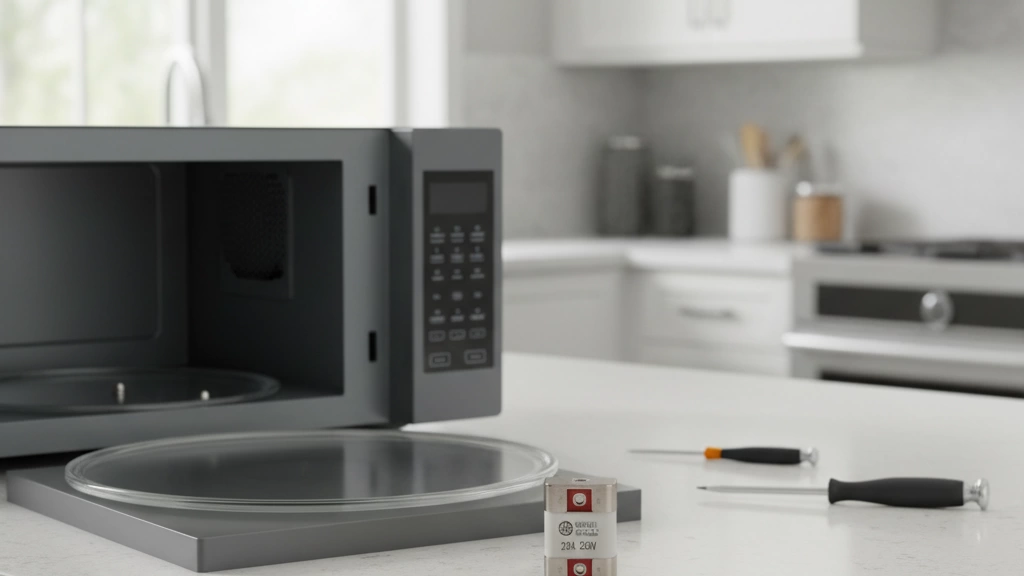
This is the primary GE microwave ceramic fuse 20 amp you see in most models.
- Type: Time-delay ceramic cartridge fuse
- Typical rating: 20A, 250V (some compact/European models may differ)
- Job: Protects the entire microwave from short circuits and power sur
Tools and Parts Needed for GE Microwave Fuse Replacement
Required tools to access and test a GE microwave fuse
To safely get to and test a GE microwave fuse, I always keep these basics on hand:
- Phillips screwdriver (most GE over-the-range and countertop units use #2)
- Flat screwdriver or plastic pry tool (for gently lifting panels and clips)
- Nut driver set (usually 1/4″ and 5/16″ for GE outer covers and brackets)
- Needle-nose pliers (to pull the fuse from tight clips without damaging them)
- Digital multimeter with continuity/ohms mode (to test if the fuse is blown)
- Insulated screwdriver or resistor lead (for safely discharging the capacitor)
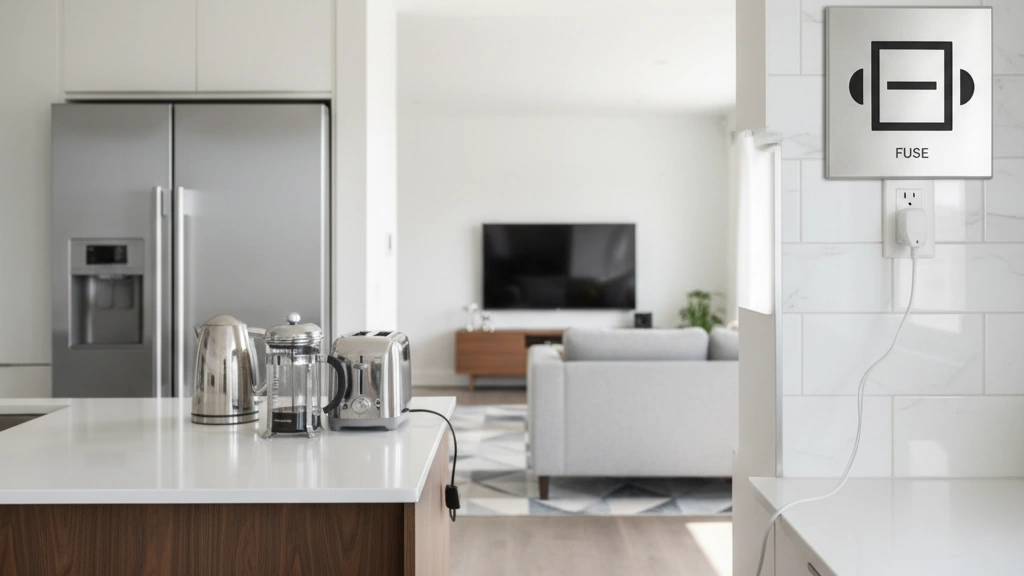
If you’re new to electrical work, it helps to understand basic fuse symbols and functions; guides like this electrical symbol for fuse overview give a quick visual reference.
Exact replacement GE microwave fuse specs and part numbers
For most GE microwaves, the main line fuse is:
- Type: Ceramic, time-delay or fast-blow (follow your original spec)
- Rating: 20A, 250V (very common on GE OTR and countertop units)
- Physical size: 6×30 mm or 3AG-style – match length and diameter exactly
Common OEM-style references you’ll see:
- GE microwave line fuse 20A (often bundled under WB27-series part numbers)
- WB27X10928 fuse – used in many GE/Hotpoint models as a standard 20A ceramic fuse
- High-voltage fuses (HV) – slim glass/ceramic fuses in the HV section; these are different from the main line fuse and must be matched precisely
When ordering, I always:
- Match amperage (A), voltage (V), type (ceramic vs glass), and length
- Use the model number to cross-reference OEM GE microwave fuse part numbers with compatible replacements
- Buy 2–3 fuses at once, since a second failure during troubleshooting is very common
For high‑voltage sections, I only use quality HV fuses similar to a dedicated high-voltage microwave fuse rather than cheap, off-spec variants.
Safety gear for working on a GE microwave
Microwaves store dangerous high voltage even after unplugging. I never work on them without:
- Insulated work gloves (dielectric or solid rubber for handling internal parts)
- Safety glasses (to protect against accidental arcing or fuse shatter)
- Non‑conductive shoes and a dry work area (no metal counters, no water)
- Good lighting so you can clearly see wiring and fuse clips
- One hand rule when near HV parts – keep one hand away from the chassis to reduce shock risk
If any of this feels out of your comfort zone, it’s safer to stop, unplug the unit, and call a qualified appliance tech instead of pushing through.
Finding Your GE Microwave Model Number
If you want the right GE microwave fuse replacement, the model number is non‑negotiable. GE uses different fuse ratings and part numbers across JVM, PVM, Profile, Café, and Hotpoint units, so guessing here usually ends in a wrong part and a wasted repair.
Common label locations on GE microwaves
On most GE models, the rating plate (model/serial tag) is a white or silver sticker with a barcode. Check these spots first:
Over-the-range GE microwaves (JVM, PVM, CVM, AVM series):
- Open the door and look:
- Along the frame where the door latches (usually right side or bottom)
- On the inner cavity frame around the opening
- If it’s not there:
- Check behind the grease filters on the bottom
- Check the left side wall inside the cavity
Countertop GE microwaves (JES, PEM, CES series):
- Open the door and look:
- On the left or right interior wall
- Along the frame around the cavity opening
- If still not obvious:
- Look on the back panel
- Or on the underside or side panel of the cabinet
Built-in / Advantium / GE Profile / Café:
- Open the door:
- Look along the door frame, especially bottom or right side
- For trim-kit installs, you may see the tag:
- On the inside frame once the door is open
- Occasionally behind a small plastic access tab on the frame
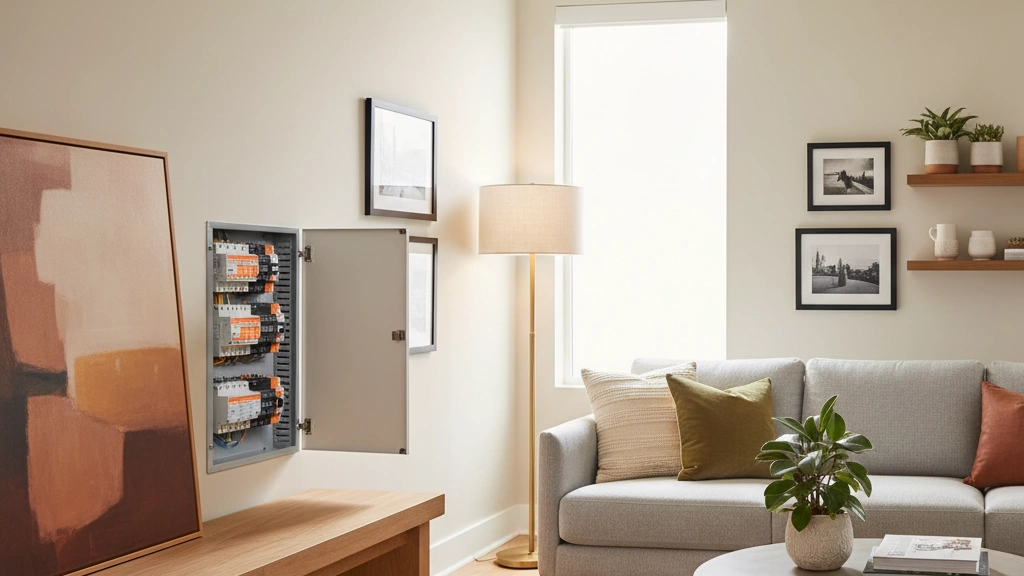
Think of it like checking a panel label in an electrical fuse box—you’re looking for the official ID, not guessing by looks.
How to read a GE model tag for correct fuse replacement
Once you find the tag, focus on three lines:
- Model Number – for example:
- JVM3160DFWW
- PVM9005SJSS
- PEM31SFSS
- CVM1790SSSS
- Serial Number – not critical for the fuse, but useful for age/warranty.
- Electrical rating – usually shows:
- Input: 120V, 60Hz
- Current: ~12–16A
- Power: 1550–1800W input (not cooking watts)
For fuse matching, the model number is what matters. Don’t confuse it with “Cat. No.”, manufacturing code, or any long string that doesn’t match the typical GE pattern of letters + numbers (like JVM3160, PVM9505, etc.).
Using the model number to match GE microwave fuse part numbers
Once you have the exact model number, use it to lock in the correct GE microwave fuse:
- Go to a GE parts site or a major parts supplier.
- Enter your full model number (e.g., JVM3160DF1WW, not just JVM3160).
- Look under:
- “Line Fuse”
- “Fuse – line”
- “Ceramic fuse”
- “Thermal fuse / thermostat / cut-out” (different part)
Typical line fuses for GE units:
- Many over‑the‑range models use a 20A 250V ceramic fuse (often OEM numbers like WB27X10928 or superseded variants).
- Some compact/countertop units may use 15A or different thermal devices.
Rules I stick to:
- Always match:
- Amperage (A)
- Voltage (V)
- Type (ceramic microwave line fuse vs. thermal fuse)
- Use the OEM part number or a listed compatible replacement from the parts database.
- If the parts site shows a different amp rating than you assumed, trust the listing for your specific model—don’t guess based on another GE microwave you own.
If you’re used to standard household fuses, note that microwave fuses are purpose-built for high-energy appliances, not generic glass fuses you’d see in basic electrical fuse tripping setups. Matching by model number is how you keep it both safe and compliant.
GE Microwave Fuse Location by Model Type
Fuse location changes a bit between GE series, but once you know where GE hides the main line fuse and thermal fuses, you can get to them quickly and safely. Before you start: always unplug the microwave and respect that it still stores high voltage. If you’re new to fuses in general, it helps to first understand basic types of electrical fuses and how they behave when they blow.
Fuse location on GE over-the-range microwaves (JVM, PVM, CVM, AVM)
Most GE over-the-range microwaves (JVM, PVM, CVM, AVM series) use a 20A ceramic line fuse plus one or more thermal cut-outs.
Typical layout:
- Main line fuse (20A ceramic fuse)
- Usually sits behind the control panel, mounted in a small inline holder or clip.
- To reach it, you generally:
- Remove the top grille (2–3 screws across the front top edge).
- Remove the single screw securing the control panel, then swing the panel out or lift it up and out.
- The line fuse is often on the right side, near where the power cord enters the chassis.
- Cavity thermal fuse / hood thermal cut-out
- Commonly mounted on top of the cooking cavity or on the magnetron housing toward the left or back.
- You’ll see a small, round or flat thermal device with two wires and a metal body clipped to the metal surface.
- JVM3160 / common JVM models
- The line fuse is almost always behind the control panel on the right.
- If the unit is totally dead (no display, no lights), this is the first fuse you check.
On most OTR GE units, you do not have to fully remove the microwave from the wall just to access the main fuse, but you do need to pull the grille and loosen the control panel.
Fuse location on GE countertop microwaves (JES, PEM, CES)
Countertop units are more compact, but the fuse layout is still predictable:
- Main line fuse
- Usually located just behind the control panel or near the front-right side once the outer case is removed.
- Steps are usually:
- Unplug the unit.
- Remove screws at the back/side and slide the entire outer shell back and off.
- Look for a small inline fuse holder or clip on the right, near the power cord entry.
- Thermal fuse / thermal cut-out
- Often mounted on top of the cavity or on the magnetron toward the rear.
- Some compact models may have the thermal cut-out near the back wall, accessible once the shell is off.
PEM (Profile under-cabinet/compact) units follow a similar pattern: front-right line fuse, thermal fuse on cavity or magnetron once the cover is off.
Fuse location on GE Profile and GE Café microwaves
GE Profile and GE Café microwaves are more premium, but the internal fuse layout is still basically GE standard:
- Main line fuse (20A ceramic fuse)
- Typically found:
- Behind the touchpad/control panel, mounted on a small PCB or in an inline holder.
- Often near the top-right area when viewed from the front.
- For many Profile/Café OTR models, you remove:
- Top grille
- Control panel screw
- Tilt the panel forward to expose the fuse holder.
- Thermal fuses and cut-outs
- One may be on the cavity roof and another on the magnetron or top-rear frame.
- Café models with higher wattage usually have multiple thermal protectors to cut power if the unit overheats.
If a Profile or Café microwave is dead but the hood fan or light still works, you’re usually looking at the internal line fuse or a cavity thermal cut-out.
Fuse location on GE built-in and Advantium models
Built-in and Advantium (speedcook) units pack more parts into the chassis, so fuse access can be a bit tighter:
- Built-in (trim kit) microwaves
- These are often standard countertop chassis in a trim kit.
- Steps:
- Remove the trim kit frame.
- Slide the microwave out enough to access the outer case screws.
- Pull off the outer shell.
- Main line fuse: usually along the right side near the front, or behind the control panel assembly once the shell is off.
- Advantium (120V and 240V models)
- Use multiple fuses and thermal cut-outs due to the halogen, convection, and microwave systems.
- Common positions:
- Main line fuse near the incoming power cord, often on the right or rear-right.
- Additional thermal cut-outs on:
- The magnetron
- The oven cavity
- The upper heater/halogen area (especially on 240V models)
- Access usually requires:
- Removing the top grille or trim
- Removing the control panel
- Sometimes loosening or removing the top cover to see all thermal devices.
With Advantium, it’s normal to see more than one “fuse-like” device. Confirm part numbers and function (line fuse vs thermal cut-out) before replacing anything.
Visual guides and diagrams for GE microwave fuse positions
If you’re not sure which component you’re looking at, a quick visual reference makes life easier:
- Use the tech sheet inside the unit
- Most GE microwaves have a folded wiring diagram/tech sheet inside the top grille area, behind the control panel, or under the outer shell.
- This sheet usually shows:
- Line fuse symbol and location
- Thermal fuses / TCOs and their positions
- Door switch layout
- Look at exploded parts diagrams online
- When you search your GE model number + “parts diagram”, you’ll often see:
- “Power cord and components” section – shows the main line fuse.
- “Cavity and duct work” – shows cavity and magnetron thermal cut-outs.
- Spotting the fuse visually
- Line fuse: white ceramic cylinder, metal caps at both ends, in a plastic or clip holder.
- Thermal fuse / TCO: small metal or plastic disc/capsule with two wires, bolted or clipped to metal surfaces.
Once you know the model series and where GE typically hides the fuses, tracking down a GE microwave internal fuse stops being a guessing game and becomes a straightforward, repeatable process.
How to Test a GE Microwave Fuse with a Multimeter
If your GE microwave has no power at all, testing the internal fuse with a multimeter is the fastest way to confirm if the general electric microwave fuse is blown.
1. Unplug and Discharge Safely
Before anything else, treat a microwave like a high‑voltage device:
- Unplug the microwave from the wall outlet. Never work on it while it’s live.
- Wait a few minutes, then discharge the high‑voltage capacitor:
- Remove the top/side cover (more on that below).
- Use an insulated screwdriver with a plastic handle.
- Carefully touch both capacitor terminals together, or one terminal to the metal chassis, to bleed off any stored charge.
- Wear insulated gloves and safety glasses. The capacitor can hold a dangerous charge even when unplugged; this is the same principle behind thermal and safety fuses used in high‑heat appliances like a GE electric dryer thermal fuse setup.
If you’re not comfortable with this step, don’t push it—call a tech.
2. Remove the Outer Cover to Access the Fuse
For most GE over-the-range microwaves (JVM, PVM, CVM) and countertop units (JES, PEM):
- Take the unit down (for OTR models) if needed so you can work safely and flat.
- Remove the screws along the back and sides of the outer case/shroud.
- Slide the cover back and lift it off.
- Look near the power cord entry, control board, or on a small holder on the chassis. The 20A ceramic line fuse is usually:
- White, ceramic, about 1¼” long.
- Mounted in a clip holder or inline fuse holder.
Some models also have thermal fuses/thermal cut‑outs mounted on the cavity or magnetron body.
3. Use a Multimeter to Test Fuse Continuity
You can test any GE microwave ceramic fuse 20 amp or thermal fuse with a basic multimeter:
- Set your multimeter to continuity or the lowest Ohms (Ω) range.
- Carefully pull the fuse from its holder (note its orientation).
- Touch one probe to each end of the fuse:
- Good fuse: 0–1 Ω reading or a continuity beep.
- Blown fuse: “OL”, “∞”, or no beep (open circuit).
- Repeat for thermal fuses / thermal cut-outs; they should also read closed (near 0 Ω) at room temperature.
This works for common parts like the GE microwave line fuse 20A and cavity thermal fuses.
4. Identify Which GE Fuse Is Most Likely Blown
Different symptoms often point to different fuses:
- Microwave totally dead (no lights, no display, no fan):
Most likely the main ceramic line fuse (20A) is blown. - Microwave has display but no heat, shuts down mid‑cycle, or dies when hot:
Check thermal fuses / thermal cut‑outs on the cavity or magnetron. - Fuse blows instantly when you start cooking or when you open/close the door:
Likely a door switch / monitor switch problem causing the new fuse to pop. - After a power surge, microwave dead:
Often the main 20A fuse sacrificed itself to protect the rest of the electronics.
Once you confirm a blown fuse, always replace it with the exact same type, amperage, and voltage rating used in your GE model—no shortcuts, no “close enough” car or old electrical fuse box fuses.
Step-by-Step GE Microwave Fuse Replacement
Replacing a GE microwave fuse is simple if you follow the steps carefully and stay safe. I’ll walk you through it like a real-world repair, not a manual.
1. Preparing the Microwave and Work Area
Before touching anything inside a microwave:
- Unplug the microwave from the wall (no exceptions).
- If it’s an over-the-range GE microwave, support it securely so it doesn’t shift while you remove the cover.
- Clear a large, flat workspace with good lighting.
- Wear insulated gloves and safety glasses.
- Keep kids and pets away while you work.
Microwaves store high voltage in the capacitor, so treat this job with the same respect you’d give to any high-energy electrical system. If you’re ever unsure, a pro tech is safer than DIY.
2. Removing the Outer Shroud or Case (GE Units)
The exact screws vary, but the overall process is the same on most GE over-the-range, Profile, Café, and countertop microwaves:
Remove the top grille (over‑the‑range models)
- Open the door.
- Take out the screws on top of the grille.
- Slide the grille to the side and pull it off.
Remove the control panel screw(s)
- There’s usually one or two screws at the top of the control panel.
- Lift the panel up slightly and tilt it out to access the inside if needed.
Remove the outer cover / shroud
- Unplug first, then remove screws on the back and sides.
- Slide the cover back about 1–2 cm, then lift it off.
- Set it aside safely so you don’t bend it.
3. Locating and Removing the Blown GE Microwave Fuse
Most GE microwave line fuses (20A ceramic) are:
- In a fuse holder or clip near where the power cord enters
- Close to the noise filter board or control board
To remove it:
- Look for a white ceramic fuse (usually 20A, 250V) in clips or a small holder.
- Take a clear photo of its position for reference.
- Gently pry it out of the clips using your fingers or a plastic tool (no metal tools near live parts).
- If you have a multimeter, test for continuity—no beep or infinite resistance means it’s blown.
If you’re working around electrical components and want more background on how fuses protect circuits, I’ve covered the basics of electrical fuses and circuit protection in detail on my electrical fuses and circuit breakers guide.
4. Installing the New GE Microwave Fuse Correctly
Use the exact same type and rating as the original (example: 20A 250V ceramic, fast‑blow). Never “upgrade” to a bigger fuse.
- Make sure the clips are clean and tight.
- Press the new GE fuse firmly into the same position and orientation.
- It should sit snugly; if it feels loose, gently pinch the clips tighter (with power still unplugged).
Do not bypass the fuse or wrap it with foil. That’s a fire risk and can destroy the microwave or worse.
5. Reassembling and Testing for Power
Once the new fuse is in:
Reinstall the outer cover
- Set the shroud back in place.
- Slide it forward and align the edges.
- Reinstall all screws (don’t overtighten).
Reattach the control panel and grille (over‑the‑range models)
- Hook the control panel back on, reinstall screws.
- Slide the top grille in and secure it.
Plug the microwave back in
- Check if the display lights up.
- Set the clock.
- Heat a cup of water for 30–60 seconds and listen for any odd noises or smells.
If the new GE microwave fuse blows immediately, you likely have a deeper issue (door switch, shorted magnetron, or wiring fault). At that point, either dig into diagnostics or bring in a qualified tech instead of burning through more fuses.
GE Microwave Fuse Part Numbers (Popular Models)
When you’re replacing a GE microwave fuse, matching the exact specs and part number matters. Below is a quick cheat sheet for common models and how to cross‑reference them.
Fuse specs for common GE over-the-range microwaves
Most GE over-the-range units (JVM, PVM, CVM, AVM series) use:
- Main line fuse (ceramic)
- Rating: 20A, 125/250V, slow-blow ceramic fuse
- Common OEM part numbers: WB27X10928, WB27X10388, WB27X11138
- Typical models using 20A ceramic fuses:
- JVM3160, JVM6172, JVM7195
- PVM9005, PVM9215
- AVM & older Spacemaker units (verify by model tag)
Always verify the specs printed on the old fuse body before ordering a replacement.
GE Profile, GE Café, and Hotpoint fuse specs
Higher-end and sister brands under GE usually keep the same fuse style but with different part numbers:
- GE Profile (PVM, PEB, PT7800 etc.)
- Main fuse: 20A ceramic, 125/250V
- Common part numbers: WB27X11138, WB27X10388, WB27X10860
- GE Café series (CVM, CEB, CSB combos)
- Main fuse: 20A ceramic, 125/250V
- Typical parts: WB27X10928, WB27X11138
- Hotpoint microwaves
- Main fuse: 20A ceramic, 125/250V
- Go-to part numbers: WB27X10388, WB27X11138
Thermal fuses / thermal cutouts on these models usually have separate part numbers and different temperature ratings; never swap a line fuse for a thermal fuse.
Cross‑referencing OEM GE fuses with compatible replacements
You don’t always need the blue GE box, but you DO need the same:
- Amperage (A)
- Voltage rating (V)
- Slow-blow vs. fast-blow
- Physical size (length & diameter)
- Ceramic body, not glass
How to cross‑reference safely:
- Pull the old fuse and read the markings (e.g., “T20A 250V”).
- Match it against OEM GE numbers:
- If it reads 20A 250V ceramic, it can usually replace WB27X10928, WB27X10388, or WB27X11138, as long as size and time‑delay type match.
- Use a reputable parts supplier or appliance shop; they’ll list cross-reference tables for OEM vs. generic.
For higher‑voltage and industrial protection in other equipment, I use specialized gear like outdoor AC high-voltage vacuum circuit breakers to handle serious surge and fault conditions—your microwave’s fuse is the small, household version of that protection logic.
Bottom line: always match rating, type, and size. If you’re not 100% sure a replacement matches your GE microwave line fuse 20A spec, stick with the OEM part number printed in the tech sheet or user manual.
Why GE Microwave Fuses Blow
When a GE microwave fuse blows, it’s almost never “random.” It’s the fuse doing its job and protecting you from a bigger failure. Here’s what usually causes it and how to stop it from happening over and over.
1. Door Switch Problems
The door switches (including the monitor switch) tell the control board if the door is fully closed. If one is out of alignment or failed, it can short the circuit and pop the fuse instantly.
Common signs:
- Fuse blows the moment you press START
- Microwave goes dead when you open or close the door
- You hear clicking from the door area but no power
Fix / prevention:
- Check that the door closes evenly and isn’t sagging
- Inspect and, if needed, replace all door switches as a set
- Never slam the door – that’s a fast way to damage switches and keep blowing fuses
2. Magnetron Shorts and Internal Faults
The magnetron is the part that actually makes the microwaves. When it shorts to ground, it can take the high‑voltage fuse out immediately.
Warning signs:
- Loud humming, buzzing, or burning smell before the fuse blew
- Unit runs but doesn’t heat, then later goes totally dead
- Fuse blows again right after replacement, even with no door issues
Fix / prevention:
- Test the magnetron and high‑voltage components (transformer, diode, capacitor)
- Replace the magnetron if it’s shorted – don’t keep feeding it fuses
- If multiple HV parts are bad, it’s often more cost‑effective to replace the microwave
3. Grease, Arcing, and Overheating Near the Cavity
In real-world kitchens, steam, grease, and food splatter build up fast. On GE microwaves, that buildup can cause arcing (small lightning-like flashes) and overheating near the waveguide and cavity.
What this does:
- Hot spots stress the thermal fuse or thermal cut‑out
- Arcing can damage the paint and metal, leading to shorts
- Overheating blows fuses to protect the rest of the unit
Fix / prevention:
- Keep the inside clean – especially above the cooking area and around the waveguide cover
- Stop using the microwave if you see sparks, crackling, or burnt paint
- Replace a damaged waveguide cover before using it again
If you’re interested in how high‑voltage protection works on a bigger scale, the same principles show up in gas‑insulated tank circuit breakers used in power systems.
4. Power Surges and Home Electrical Issues
A sudden surge or brownout can hit the line fuse or main board hard, especially in areas with unstable power.
Typical scenarios:
- Fuse blows right after a lightning storm or power outage
- Microwave died after a breaker trip or when another big appliance turned on
- Outlet or plug shows signs of heat or discoloration
Fix / prevention:
- Plug the microwave into a properly grounded outlet (no extension cords)
- Use a quality surge protector rated for kitchen appliances
- If your home has frequent voltage swings, get an electrician to check the circuit
5. How to Stop Your GE Microwave Fuse from Blowing Again
Once you replace the fuse, you want it to last. Here’s what I’d always do:
- Identify the root cause first – don’t just throw in a new fuse and hope
- Inspect door switches, latch, and hinges for play, burning, or broken plastic
- Check for arcing and burnt spots inside the cavity and around the waveguide
- Look for signs of overheating around the magnetron, vents, and thermal fuses
- Protect against surges with a proper surge protector and stable circuit
If the fuse keeps blowing immediately, stop running tests and treat it as a high‑voltage fault. At that point, paying a pro or replacing the microwave is cheaper – and safer – than burning through more fuses.
When to Replace the Magnetron Instead of Just the Fuse
If your GE microwave fuse keeps blowing, there’s a good chance the magnetron is the real problem, not the fuse itself. Swapping fuses over and over won’t fix an internal short or failing high‑voltage parts.
Warning signs the new fuse will blow again
If you see any of these, suspect the magnetron or high‑voltage circuit:
- Microwave blows the fuse immediately when you press Start
- Loud humming, buzzing, or crackling right before it dies
- Burnt smell from inside the cabinet (not food)
- Unit powers on but stops mid‑cycle and dies completely
- Food is barely warming even when the fuse hasn’t blown yet
When the magnetron short-circuits, it can overload the line fuse (20A ceramic) and other safety components. In that case, just replacing the fuse is a band-aid.
Cost: Magnetron replacement vs. new GE microwave
In most markets, here’s the rough reality:
- Magnetron part: often $60–$150 (OEM GE, depending on model)
- Labor (if you hire a pro): another $80–$200+
- New mid‑range GE over-the-range microwave: roughly $250–$500
- New GE Profile / Café models: typically $400–$900+
If your unit is:
- Under 5–7 years old, high-end, and in good shape → magnetron replacement can make sense
- Older than 8–10 years, basic model, or has other issues (keypad, door, fan noise, rust) → it’s usually smarter to put that money into a new GE microwave instead of chasing repairs
When to call a technician instead of DIY
You should stop at the fuse and call a pro if:
- You’re not comfortable with high voltage or don’t know how to discharge the capacitor safely
- The fuse blows instantly, even with the correct OEM 20A ceramic fuse installed
- You’ve already checked door switches, wiring, and thermal fuses, and they all test good
- You see burn marks, melted plastic, or arcing near the magnetron, waveguide, or high‑voltage area
A technician can diagnose whether it’s the magnetron, high-voltage transformer, diode, or control board before you spend money on parts. For industrial or higher‑voltage protection setups outside the home, I’d also look to dedicated medium-voltage circuit breaker solutions rather than DIY fixes.
If the unit is older, heavily used, or the repair quote is close to half the price of a new microwave, I’d replace the whole microwave instead of chasing a magnetron repair.
Where to Buy a GE Microwave Fuse
Buying GE Microwave Fuses Online (OEM + Compatible)
If your GE microwave fuse is blown, I always start online first:
For more complex electrical protection in your home or workshop, I use dedicated devices like a quality switch isolator instead of relying on fuses alone.
Comparing Parts Stores, Amazon, and Direct Suppliers
Here’s how I look at each option:
Appliance parts stores (online or local)
- Pros: OEM parts, diagrams by model, tech support, better return policies
- Cons: Sometimes higher prices than Amazon
Amazon / big marketplaces
- Pros: Fast shipping, bundles of fuses, tons of options
- Cons: Easy to buy the wrong spec if you don’t double-check the fuse rating
Direct suppliers / wholesalers
- Pros: Best if you’re a landlord, repair tech, or you maintain multiple properties
- Cons: May have minimum order quantities or trade-only accounts
Shipping Speed + How Many Fuses to Keep
I treat fuses like consumables:
GE Microwave Fuse FAQ
Where is the fuse located in my GE microwave?
On most GE microwaves, the main ceramic line fuse (usually 20A) is inside the cabinet, not accessible from the front:
- Over-the-range (JVM, PVM, CVM, AVM): Behind the top grille and control panel, or just behind the outer metal cover on the right side.
- Countertop (JES, PEM, CES): Under the outer metal cover, usually near where the power cord comes in.
- Profile / Café / Advantium / built-in: Inside the top or right side of the chassis, in line with the power cord.
If you’re not comfortable removing covers and dealing with mains voltage, treat it like any other live electrical component and bring in a pro. Microwaves store high voltage even when unplugged.
What size fuse does a GE microwave use?
Most modern GE and Hotpoint units use:
- Main line fuse: 20A, 250V, ceramic, fast-blow or time‑delay as specified on the original
- Thermal fuse / thermal cut‑out: Usually rated by temperature (°C) and sometimes amps, mounted on the cavity or magnetron
- Monitor fuse (if present): Typically lower amperage, designed to open if door switch logic fails
Always match:
- Amperage (A)
- Voltage (V)
- Physical size / style (ceramic cartridge)
- Blow type (fast vs slow) to what’s printed on your original or in the tech sheet.
Can I use any 20A ceramic fuse in a GE microwave?
No. It needs to be the correct type, not just “20A ceramic”:
- Match 20A / 250V, ceramic body, same length and diameter
- Match fast‑blow vs time‑delay (T or F marking)
- Use an appliance‑grade / microwave‑rated fuse from a reputable brand or OEM source
Swapping in a random automotive or glass fuse is not safe. The fuse is part of the safety system, just like a properly rated switch disconnector in industrial gear, so I only choose fuses from trusted electrical component suppliers or OEM parts.
Why does my GE microwave blow the fuse immediately after replacement?
If the new fuse blows right away, there’s almost always a bigger fault upstream:
- Shorted door switch or misaligned door latch
- Monitor switch fault that shorts line to neutral when the door is opened
- Shorted magnetron, high-voltage capacitor, or HV diode
- Damaged wiring harness rubbed through to metal
- Severe power surge that took out multiple components
In this situation, don’t keep feeding it fuses. You need to test door switches, HV parts, and wiring with a multimeter. If you’re not used to high‑voltage work, stop here and call a technician.
Is it safe to bypass the microwave fuse on a GE unit?
No, and I’m firm on this: never bypass or “jumper” a GE microwave fuse:
- You’re defeating a critical safety device
- You risk fire, shock, or severe damage to the oven and home wiring
- It voids any warranty, and in many places it’s a code and insurance issue
If a fuse is blowing, find and fix the cause. The fuse is doing its job by opening the circuit.
More common GE microwave fuse questions
Why is my GE microwave totally dead with no display?
Most likely: blown line fuse, bad line filter board, or failed control board. Check the fuse first (with power unplugged and capacitor discharged).
Can a bad door switch blow the fuse?
Yes. A miswired or failed monitor door switch is one of the most common reasons a GE microwave keeps blowing the fuse.
How do I test my GE microwave fuse?
Remove the fuse and check with a multimeter in continuity or ohms mode. A good fuse reads close to 0 Ω (beep). Infinite or very high resistance means it’s blown.
Where should I buy GE microwave fuses?
I recommend:
- OEM appliance parts suppliers
- Quality online electrical component stores
- Reputable marketplaces listing OEM part numbers (for example, WB27X‑ series fuses)
I usually keep 2–3 spare fuses on hand so I’m not stuck if the first replacement blows while I’m still diagnosing the root cause.