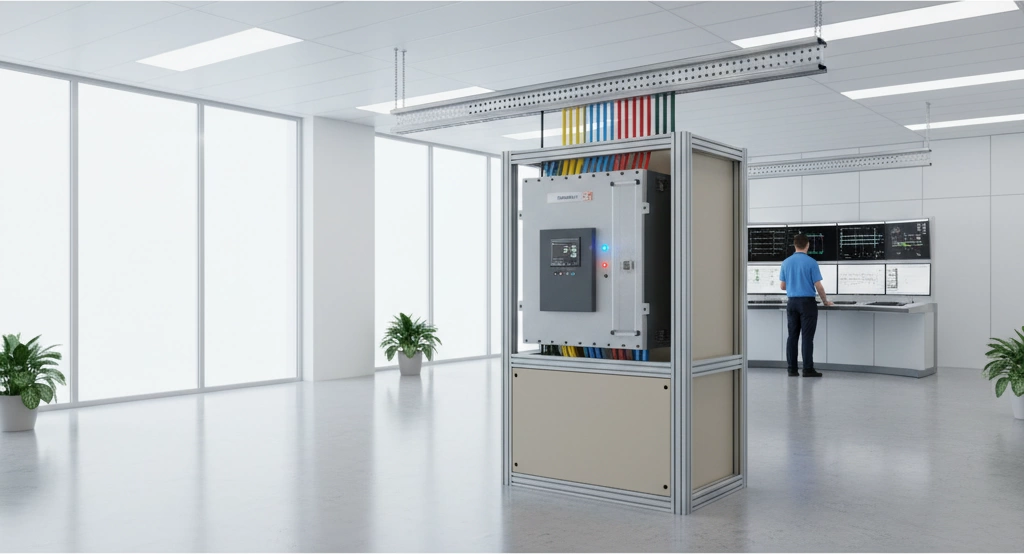
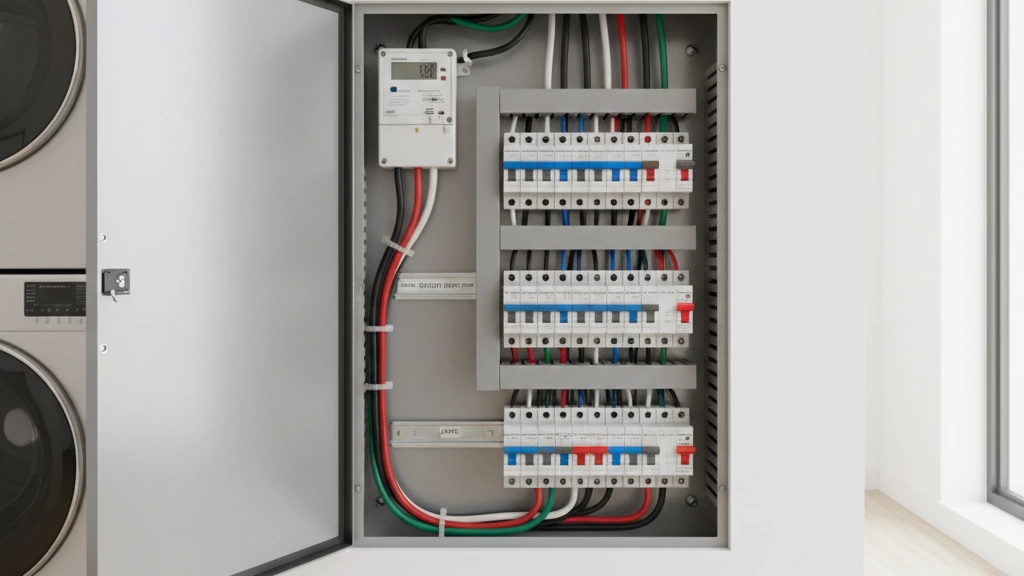
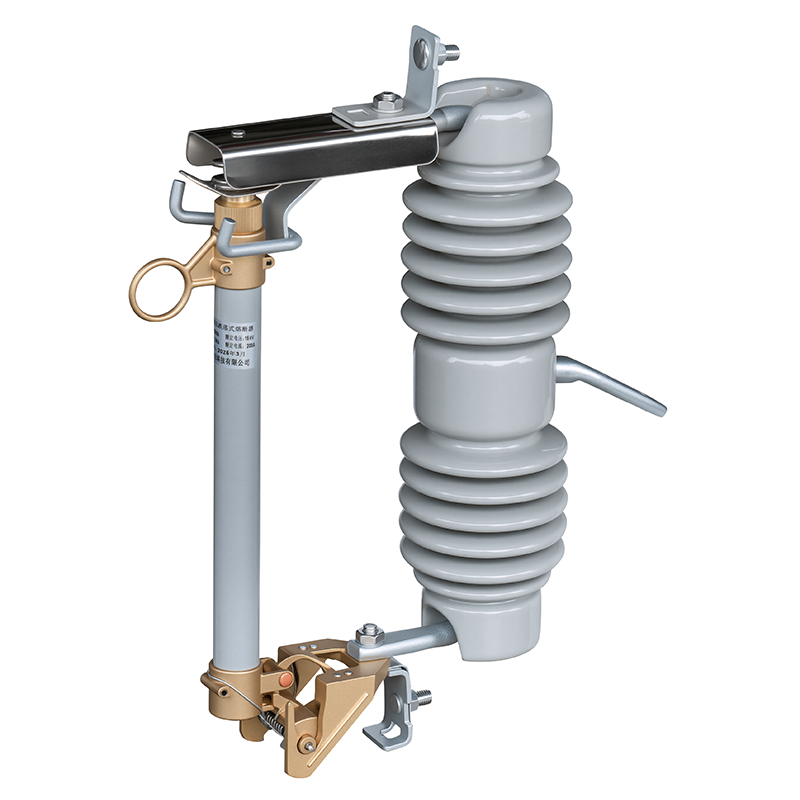
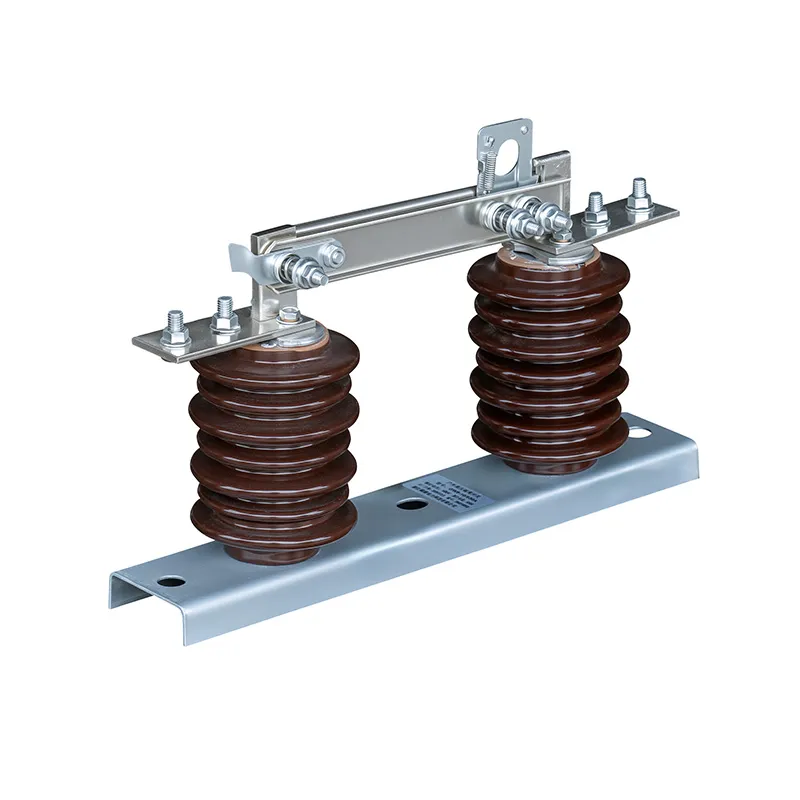
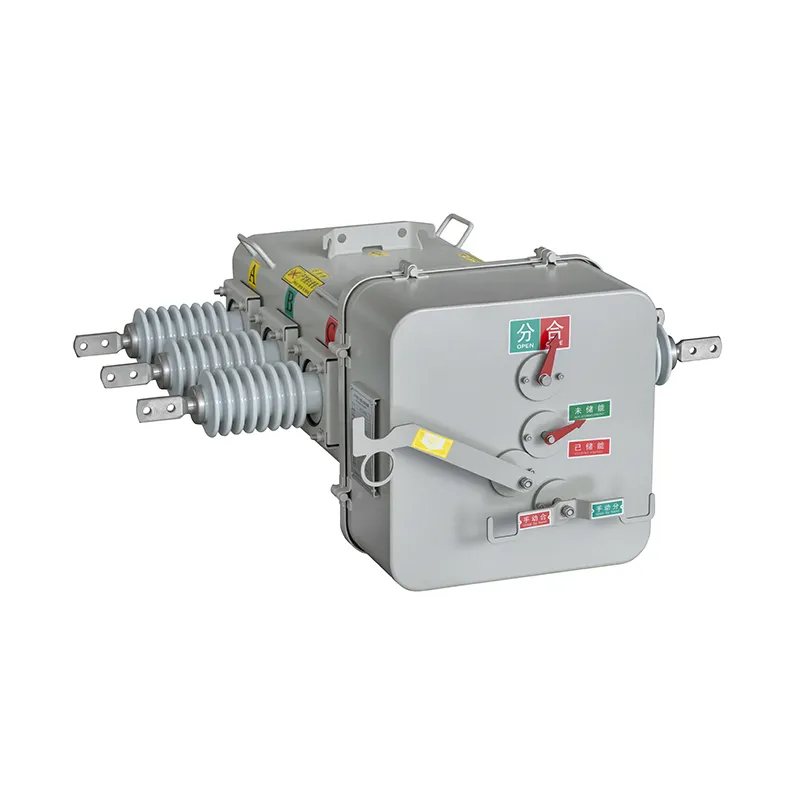
When you see terms like “11kV breaker” or “33kV circuit breaker” on a single-line diagram, you’re dealing with a medium voltage breaker. In simple terms, a medium voltage circuit breaker is a switching and protection device designed to safely interrupt fault currents and switch normal load currents in the medium voltage range, typically from about 3.3 kV up to around 38 kV (sometimes extended to 40.5 kV).
Engineers use medium voltage breakers anywhere the energy levels are too high for low-voltage breakers but still below transmission levels. Typical nominal voltage levels you’ll see include:
3.3 kV, 6.6 kV, 7.2 kV
10 kV, 11 kV, 12 kV
17.5 kV
22 kV, 24 kV
33 kV, 36 kV, 38 kV, 40.5 kV
Across this range, a medium voltage breaker must do three critical jobs:
Protection:
Detect and interrupt short-circuit faults and severe overloads within a few cycles.
Limit thermal and mechanical stress on cables, transformers, motors, and busbars.
Coordinate with relays and protection schemes so that only the faulty section is isolated.
Switching:
Make and break normal load currents reliably, including switching transformers, motors, and capacitor banks.
Handle occasional operations like feeder energization, maintenance switching, and system reconfiguration.
Isolation:
Create a visible and reliable isolation point for maintenance.
In withdrawable or fixed designs, provide clear separation between live parts and the network when the breaker is open or racked out.
In real networks, you’ll often see medium voltage breakers mentioned alongside reclosers and load break switches. They all switch medium-voltage circuits, but their purpose and performance are different:
Medium voltage breaker (MV breaker / MV vacuum circuit breaker):
Primary device for protection and control inside medium voltage switchgear panels.
High short-circuit breaking capacity and precise trip control via protection relays.
Used for frequent and infrequent switching, fault clearing, and safe isolation.
Recloser:
Typically pole-mounted, used mainly on overhead distribution lines.
Designed to open on a fault and automatically reclose several times (e.g., 3–4 shots) because many overhead faults are temporary (branches, lightning, etc.).
Optimized for automatic fault management and feeder reliability, not for heavy indoor switchgear environments.
Load break switch (LBS):
Can safely switch normal load current but is not designed to interrupt high short-circuit currents like a full medium voltage breaker.
Often used with series fuses (switch-fuse combinations) to protect transformers and small feeders.
Simple, compact, and cost-effective where fault duties are low and full breaker capability is not required.
In practice, you choose between these devices based on the fault level, the need for automatic reclosing, and how critical controlled protection and isolation are for the installation.
Medium voltage breakers show up in almost every modern power system. The main application areas include:
Utilities and distribution networks:
Incoming and outgoing feeders in 11 kV and 33 kV switchgear.
Substation breakers for ring main units, distribution substations, and step-down transformers.
Integration of distributed energy resources such as solar farms, wind plants, and battery storage.
Industrial plants:
6.6 kV, 11 kV, or 13.8 kV switchgear for large motors, compressors, pumps, and drives.
Protection and control of process lines, blast furnaces, cement mills, chemical processes, and refineries.
Reliable isolation for maintenance in harsh or high-duty environments.
Data centers and commercial campuses:
Medium voltage breakers feeding multiple 11 kV or 13.8 kV to low voltage transformers.
Critical power distribution to UPS systems and low voltage switchboards.
Built-in redundancy, fast fault clearing, and selective coordination to keep uptime high.
Infrastructure projects:
Airports, metros, rail systems, hospitals, and large public facilities.
Medium voltage switchgear for traction power, large HVAC plants, water treatment, and district energy systems.
Integration with SCADA and digital protection systems for remote monitoring and control.
If you’re planning or upgrading a medium voltage system, the medium voltage breaker is the core protection and switching component you design around. The right choice directly impacts safety, reliability, maintainability, and the long-term operating cost of your electrical network.
Medium voltage breaker technologies in 2025
In 2025, almost every new medium voltage breaker project I see is pushing toward SF6‑free technology, with vacuum as the clear standard for 7.2–40.5 kV systems.
Vacuum medium voltage circuit breaker (VCB) – the default choice
Vacuum medium voltage circuit breakers are now the go‑to option for new 11 kV and 33 kV switchgear lineups. They use vacuum interrupters instead of gas, which means:
No greenhouse gas, no gas refilling
Very low maintenance and long mechanical life
Compact size for metal‑clad and metal‑enclosed switchgear
Strong performance for motor, transformer, and cable switching
For outdoor distribution, I typically recommend pole‑mounted or compact outdoor VCBs, such as our ZW32-12G outdoor medium voltage vacuum circuit breaker, because they combine reliable vacuum technology with sealed, weather‑proof construction.
SF6 medium voltage breaker – still present, but being phased out
SF6 medium voltage breakers were popular because they are compact and handle high short‑circuit levels. But SF6 gas has a very high global warming potential, and regulations in Europe, North America, and other regions are tightening fast.
What this means in practice:
SF6 MV breakers are still used in existing GIS and tank‑type switchgear
Many utilities now specify SF6‑free for new 11 kV and 33 kV projects
Gas handling, leakage checks, and end‑of‑life recovery add cost
I still see SF6 tank breakers in some special cases (very high fault levels, limited space), similar to our own SF6 gas‑insulated tank circuit breaker solutions, but they are no longer the first choice for standard MV distribution.
Air and air‑blast medium voltage breakers – mainly legacy
Air and air‑blast medium voltage circuit breakers now sit mostly in older substations and industrial plants:
Often candidates for retrofit with modern vacuum MV breakers
When I work with customers on brownfield upgrades, air/air‑blast breakers are usually the first equipment we target for VCB retrofit to boost reliability and safety.
Solid dielectric and SF6‑free medium voltage switchgear
To replace SF6, the market is moving toward:
Solid dielectric medium voltage breakers (vacuum interrupter embedded in solid insulation)
SF6‑free switchgear using vacuum + clean gases or solid insulation
Fully sealed poles, lower partial discharge, and longer service life
This is especially attractive for indoor metal‑clad medium voltage switchgear in data centers, commercial buildings, and industrial plants where ESG, safety, and footprint all matter.
*Actual life depends on duty, environment, and maintenance.
Cost and total cost of ownership
When I look at total cost of ownership (not just purchase price) for a medium voltage circuit breaker:
Vacuum MV breakers usually win on service cost, downtime, and lifetime reliability
SF6 breakers can look cheap up front but add cost in gas handling, leakage checks, and regulatory risk
Air/air‑blast breakers are expensive to keep running and are rarely justified for new projects
Solid dielectric / SF6‑free switchgear may cost more at purchase but often pay back through longer life, low maintenance, and ESG compliance
For most global customers planning a new 11 kV or 33 kV switchgear panel today, I position vacuum medium voltage breakers – often in SF6‑free or solid dielectric designs – as the most balanced choice across performance, safety, environmental impact, and long‑term cost.
Vacuum medium voltage breaker working principle
A vacuum medium voltage breaker (MV vacuum circuit breaker) interrupts fault currents by opening its contacts inside a sealed vacuum interrupter. With no gas to sustain the arc, the current is cut quickly and safely, which is why modern 11kV breakers and 33kV vacuum circuit breakers rely on this technology.
Vacuum interrupter structure
Inside the vacuum interrupter you’ll always find a few key parts:
Contacts: Fixed and moving contacts carry the normal current and interrupt the fault current.
Arc shield: A metal shield around the contacts catches metal vapour and protects the ceramic or glass insulator.
Bellows: A flexible metallic bellows lets the moving contact travel in and out while the vacuum remains sealed.
Housing: A ceramic or glass cylinder, sealed with metal end caps, forms the vacuum envelope and provides insulation.
This simple, sealed design is what makes vacuum interrupters compact, reliable, and ideal for metal-clad medium voltage switchgear panels.
Arc extinguishing in vacuum breakers step-by-step
The arc extinguishing in vacuum breakers is straightforward once you break it down:
Normal operation: Contacts are closed, carrying the rated normal current of the MV breaker with low resistance and minimal heating.
Fault detected: A relay signals the breaker to open when short-circuit current or any abnormal condition appears.
Contacts part: As the moving contact begins to separate, an arc forms between the contacts inside the vacuum.
Arc in vacuum: With no air or SF6 gas, the arc is made of metal vapour from the contact surface. It is highly concentrated and quickly diffuses.
Current zero: In AC systems, the current naturally crosses zero every half cycle. At this instant, the arc becomes very weak.
Dielectric recovery: In the vacuum, the vapour condenses onto the arc shield and contacts; the space between contacts regains high dielectric strength almost instantly.
Interruption complete: The circuit is fully open, and the rated short-circuit breaking current has been interrupted without restrike.
This fast dielectric recovery is the core of the vacuum interrupter working principle and is why arc extinguishing in vacuum breakers is so efficient.
Contact materials and performance (CuCr contacts)
In modern vacuum medium voltage breakers, the contacts are usually made of copper–chromium (CuCr):
Copper: Gives low resistance and good current-carrying capability for continuous load and motor starting.
Chromium: Controls the arc and limits erosion, so contact wear stays low even at high fault levels.
Benefits: Longer life, higher number of electrical operations, and stable performance for 11kV vacuum breakers and 33kV circuit breakers in tough networks.
Choosing the right CuCr composition is critical for high mechanical endurance class M2 and electrical endurance class E2 performance.
Mechanical design and operating mechanisms
A vacuum medium voltage breaker combines the interrupter with a robust operating mechanism:
Spring or motor-spring mechanism: Stores energy and delivers a fast, consistent opening and closing action, even for demanding operating sequences like O-0.3s-CO-3min-CO.
Linkages and drive rods: Transfer motion from the mechanism to the moving contacts through the bellows without stressing the vacuum envelope.
Position indication and interlocks: Show open/closed status and ensure safe operation in withdrawable medium voltage breakers and fixed type medium voltage breakers.
Auxiliary switches and control: Provide signals to protection relays, SCADA, and remote control systems for modern medium voltage protection devices.
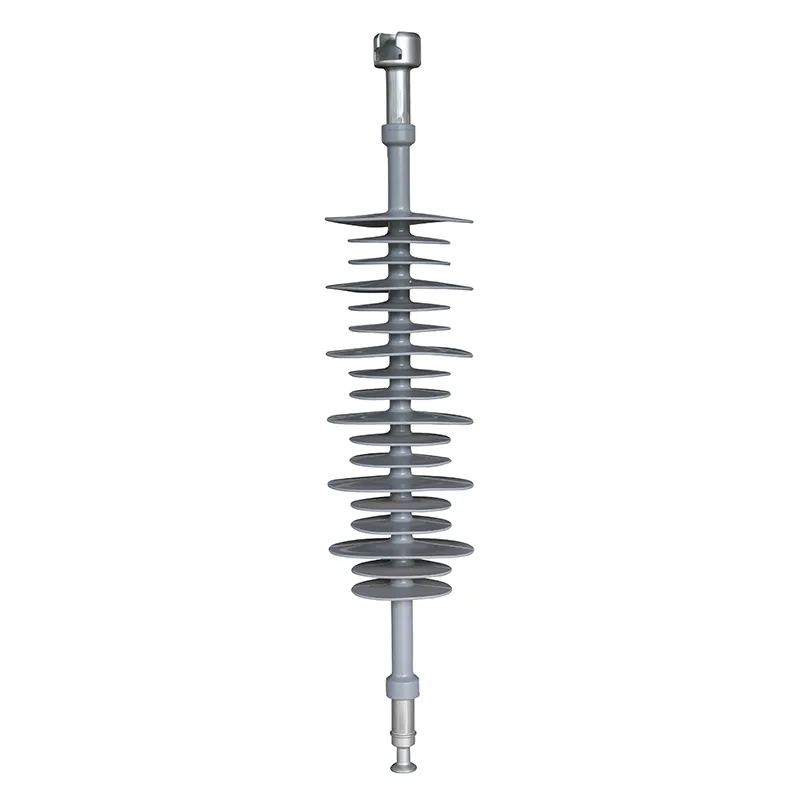
In outdoor medium voltage breakers, the same interrupter principle applies, but the mechanism and housing are designed to handle UV, rain, and contamination, often supported by robust high-voltage composite insulators for external insulation.
Why vacuum medium voltage breakers last long with low maintenance
From my experience supplying MV vacuum circuit breakers globally, this technology stands out for long life and low maintenance:
Sealed-for-life vacuum interrupters: No gas refilling, no pressure checks, no risk of SF6 leakage.
Low contact wear: CuCr contacts and clean arc behaviour mean fewer replacements over 20–30 years of service.
Simple dielectric system: No ageing of gas; insulation remains stable if basic visual checks and tests are done.
Robust mechanics: With correct lubrication and periodic mechanism checks, a vacuum medium voltage breaker can complete thousands of operations without major overhaul.
Lower total cost of ownership: Less downtime, fewer spare parts, and minimal routine work compared to SF6 medium voltage breakers or older air-blast designs.
For utilities, industrial plants, and data centers looking for reliable 11kV switchgear breakers and 33kV switchgear panels, vacuum interrupters deliver a strong balance of safety, durability, and predictable maintenance over the full life of the equipment.
Medium voltage breaker technical specifications
When I specify a medium voltage breaker, I focus on a few key ratings that decide if the breaker will actually survive real-world faults and switching duty. Here’s how I break it down for typical medium voltage circuit breakers and MV vacuum circuit breakers.
Rated voltage levels (7.2–40.5 kV)
Medium voltage breakers are designed for standard system voltages. Common rated voltages include:
7.2 kV
12 kV (11 kV breaker in many markets)
17.5 kV
24 kV
36 kV / 40.5 kV (33 kV circuit breaker range)
The breaker’s rated voltage must be ≥ your system highest voltage (Um). For example:
11 kV switchgear → typically 12 kV breaker
33 kV switchgear panel → typically 36/40.5 kV breaker
Rated short-circuit breaking and making current
Two of the most critical specs:
Rated short-circuit breaking current (kA)
What fault current the breaker can interrupt safely at its rated voltage
Common values: 16, 20, 25, 31.5, 40, 50 kA (3 s or 1 s base)
Rated short-circuit making current (kA peak)
The peak current the breaker can close onto during a fault
Typically 2.5 × breaking current (e.g. 31.5 kA breaking → ~80 kA making)
For any medium voltage protection device, I always match the rated short-circuit breaking current to the calculated fault level at the installation point, with safety margin.
Rated normal current and load profiles
The rated normal current of an MV breaker tells you how much continuous load it can carry without overheating:
Typical frames: 630 A, 1250 A, 1600 A, 2000 A, 2500 A, 3150 A, 4000 A
Select based on:
Maximum feeder or transformer load
Ambient temperature (often 40 °C reference)
Ventilation inside the metal-clad medium voltage switchgear
For high-load feeders, I like to size with headroom, especially in data centers and industrial plants where load growth is expected.
Medium voltage breaker operating sequence
The operating sequence code shows how fast and how often a breaker can operate under duty:
Common code: O‑0.3s‑CO‑3min‑CO
O = open
CO = close then open automatically on trip
0.3 s = minimum dead time between operations
3 min = time before the next sequence
For heavy-duty networks (ring mains, industrial systems), I check that the medium voltage breaker operating sequence meets the protection scheme requirements, especially with auto-reclose or fast backup protection.
Capacitive switching classes C1 and C2
For MV vacuum circuit breakers, capacitive switching performance matters for cables, capacitor banks, and long lines:
Class C1
Suitable for normal cable and line switching
Restricts re-ignitions and overvoltages to safe limits
Class C2
More severe test conditions
Recommended where the breaker frequently switches capacitor banks, long cables, or cable feeders with sensitive equipment
If I’m dealing with many cable feeders or capacitor banks, I prefer C2-class MV vacuum breaker to control switching transients.
Mechanical and electrical endurance (M2, E2, etc.)
Endurance classes tell you how long the breaker will last:
Mechanical endurance class (M2)
Higher number of no-load operating cycles (e.g. 10,000–30,000 mechanical operations)
Ideal for frequent operation, interlocking, and testing
Electrical endurance class (E2)
Rated for multiple short-circuit operations without losing performance
An E2 rated medium voltage breaker is what I consider the baseline for modern networks
For utilities, industrial plants, and data centers, I strongly recommend M2 / E2 as the minimum endurance combination for vacuum medium voltage breakers.
Other key medium voltage breaker data
A few more specs I always check on a datasheet:
Insulation level
Power-frequency withstand (kV) and lightning impulse withstand (BIL)
Must align with system overvoltage protection and insulation coordination
Operating duty / class of service
Indoor vs outdoor duty
Pollution level and altitude corrections
Control voltage
Coil and control circuits (typically 24 V, 48 V, 110 V, 220 V DC/AC)
Must match your auxiliary power system, including trip and close coils, spring charging motor, and signaling
In a complete medium voltage switchgear panel, these breakers work together with current transformers and voltage transformers (for example, 10 kV voltage transformers for protection and metering) to form a coordinated protection and control system that meets IEC 62271-100 and IEEE C37 requirements.
Indoor vs outdoor medium voltage breaker
<img src=’https://pub-36eea33d6f1540d281c285671ffb8664.r2.dev/2025/11/20/thinkSummarizing_SEO_keywords_The_user_is_looking_.webp’ alt=’**Summarizing SEO keywords** The user is looking for an SEO keyword related to “medium voltage breaker indoor vs outdoor” and any design differences. The keyword I came up with is “indoor vs outdoor medium voltage breaker design,” which is a clever way to include the main keyword and sticks to the character limit. I counted carefully, and it’s 47 characters, which fits nicely under 50. I’ll return that as the final keyword. indoor vs outdoor medium voltage breaker design’>
Design differences: indoor vs outdoor MV breakers
When I choose a medium voltage breaker, the first filter is always: indoor or outdoor?
Indoor medium voltage breakers
Built into metal-clad or metal-enclosed switchgear panels
Protected from rain, UV, and direct pollution
Optimized for compact footprints, cable connections, and safe operator access
Easier to integrate with ring main units (RMU) and indoor distribution like a 10kV ring main unit
Better for controlled environments: HVAC, clean rooms, data floors
Outdoor medium voltage breakers
Weatherproof housings designed for sun, rain, snow, wind, and ice
Stronger structures to handle temperature swings and UV exposure
Often mounted on poles or concrete foundations
Designed for overhead lines, transformers, and yard equipment connection
More mechanical robustness and higher insulation creepage distances for polluted air
Protection degree and enclosure IP ratings
For both indoor and outdoor medium voltage circuit breakers, enclosure protection (IP rating) is non‑negotiable:
Common indoor ratings:
IP2X–IP3X for internal compartments (protection from fingers/tools)
IP4X–IP5X for front panels in public or high-traffic rooms
Common outdoor ratings:
IP54–IP55 for general outdoor housings
IP65 or higher in harsh, coastal, or desert environments
When I size a solution for global users (from Europe to the Middle East to Southeast Asia), I always match:
Local climate (humidity, salt fog, dust)
Indoor cleanliness (industrial dust, chemical vapors)
Safety rules (access by non‑electrical personnel)
Withdrawable, fixed, and cassette-type vacuum circuit breakers
Vacuum medium voltage breakers mostly come in three mounting types:
Withdrawable MV vacuum circuit breaker
Breaker moves on rails between service, test, and disconnected positions
Ideal for metal-clad switchgear with high uptime needs
Mines, construction sites, renewable plants (solar/wind collector points)
The key benefits:
No building needed in remote sites
Shorter connection distance to overhead lines and outdoor transformers
Easier expansions in open yards
How environment, pollution, and space affect breaker choice
For global users, environment is often the real decision-maker:
Pollution level
High dust, chemical vapors, or salt fog → go for higher IP ratings and more creepage distance
Outdoor coastal areas: consider special insulators and SF6‑free, sealed VCB designs
Climate
Very cold: verify heater options, tested low‑temperature operation
Very hot/humid: check ventilation, condensation control, and derating
Space constraints
Crowded urban rooms: prefer indoor metal‑clad switchgear with compact VCBs
Limited footprint outdoors: use compact outdoor kiosks or RMUs
Operational strategy
Frequent switching, high reliability → indoor metal-clad with withdrawable VCB
Simpler networks with limited operations → fixed-type indoor or outdoor VCB
When I design or supply medium voltage breakers, I always start with:
Where will it be installed? (room, kiosk, pole, yard)
How harsh is the environment? (pollution, climate)
How much space is available? (urban vs rural)
What uptime and maintenance strategy does the customer need?
Once those are clear, the right indoor or outdoor medium voltage breaker configuration usually becomes obvious.
Medium voltage breaker standards and testing
When you buy a medium voltage breaker, standards and testing are what protect you from nasty surprises in the field. I always tell customers: if it’s not clearly tested to IEC or IEEE/ANSI, don’t touch it.
IEC standards for medium voltage circuit breakers
For most global projects (Europe, Middle East, Asia, Africa, Latin America), IEC is the base:
IEC 62271‑100 – Core standard for AC medium voltage circuit breakers. It defines:
Rated voltage, current, short‑circuit ratings
Operating sequences (O‑0.3s‑CO‑3min‑CO, etc.)
Capacitive switching classes (C1, C2)
Mechanical and electrical endurance classes (M1/M2, E1/E2)
Related parts you’ll often see on data sheets:
IEC 62271‑1 – Common specifications for high-voltage switchgear
IEC 62271‑103 – Switches and switch‑disconnector requirements
If you’re comparing complete MV switchgear, look for a manufacturer that certifies full systems (panels, RMUs, breakers) to IEC 62271‑200, not just the loose breaker.
ANSI/IEEE medium voltage breaker standards
For North America and projects designed under US practice, you want ANSI/IEEE C37 compliance:
IEEE C37.04 / C37.06 – Ratings and requirements for AC MV breakers
IEEE C37.09 – Test procedures (short‑circuit, mechanical, dielectric)
IEEE C37.013 – Generator circuit breakers
IEEE C37.20.x – Metal‑clad and metal‑enclosed switchgear
ANSI-rated gear uses different duty cycles, test duties and coordination rules than IEC. If your project uses US-style protection coordination, specify an ANSI medium voltage breaker explicitly.
Type tests vs routine tests
You should always distinguish between what was tested once in a lab and what’s checked on each unit:
Type tests (design verification – done once per design):
Dielectric tests (power frequency and lightning impulse)
Routine tests (done on every single breaker shipped):
Insulation tests at power frequency
Mechanical operation checks
Control and interlock function tests
Contact resistance and main circuit continuity
For critical projects (data centers, utility feeders, industrial plants), I always request full type test reports from accredited labs, not just a brochure claim.
Core tests: dielectric, short‑circuit, mechanical
When you see “tested to IEC 62271‑100,” these are the big three behind that line:
Dielectric tests
Power‑frequency withstand (on main circuit and across open contacts)
Lightning impulse (BIL) tests to prove insulation level
Short‑circuit tests
Rated short‑circuit breaking current at different power factors
Rated making current (peak kA)
Multiple operations in quick sequence to simulate real network faults
Mechanical endurance
Thousands of open/close operations without loss of performance
Classes like M2 indicate higher duty capability
A properly tested vacuum medium voltage breaker should have both strong short‑circuit performance and long mechanical life (tens of thousands of operations).
Seismic, temperature, altitude
For global projects, site conditions matter as much as the catalog:
Seismic
Check for seismic qualification or test reports when installing in seismic zones (e.g., Eurocode, IEEE 693).
Temperature
Verify operating temperature range (e.g. –25 °C to +40 °C or wider)
High ambient often means derating the rated normal current.
Altitude
Above ~1000 m, air density drops and dielectric strength falls.
Breakers/switchgear must be derated or specially designed for high altitude.
Always share site conditions (altitude, minimum/maximum temperature, pollution level) with the supplier up front.
Compliance, certification, and what to ask suppliers
When I qualify a medium voltage breaker supplier, I always ask for specific documents, not just marketing claims:
Standards compliance
Clear statement: “Breaker tested according to IEC 62271‑100” or relevant IEEE/ANSI C37 standard.
Test reports
Independent type test reports (short‑circuit, dielectric, mechanical)
Routine test templates or sample factory test reports
Certificates
Third‑party certifications (KEMA/DEKRA, CESI, etc., where applicable)
ISO 9001/14001/45001 for quality, environment, and safety management
Technical documentation
Datasheets with:
Rated voltage, current, short‑circuit ratings
Operating sequence
Endurance class (M1/M2, E1/E2)
Capacitive switching class (C1/C2)
Operation & maintenance manual
Installation guidelines and wiring diagrams
For example, on our own vacuum MV breakers and RMU panels, we provide full IEC test documentation and clear technical data. If you want to see what that level of transparency looks like in practice, check an IEC‑tested 10–12 kV ring main unit with vacuum breakers like our XGN15‑12F 10 kV RMU or browse the broader medium voltage switchgear product range.
If a supplier can’t promptly provide standards references and test evidence, treat that as a red flag and move on.
Medium voltage breaker selection guide
Choosing the right medium voltage breaker is mainly about matching the device to your network and long‑term operating strategy. Here’s how I approach it for global projects.
Define system voltage, frequency, and network
Start with the basics – the breaker must fit your system, not the other way around:
System voltage level: Confirm nominal and highest system voltage (11 kV, 33 kV, 24 kV, 36/40.5 kV, etc.). The rated voltage of the medium voltage circuit breaker must cover the highest system voltage.
Frequency: 50 Hz vs 60 Hz affects ratings, losses, and standards (IEC vs ANSI).
Network type: Solidly earthed, resistance earthed, or isolated neutral; radial vs ring vs meshed networks – this drives protection settings and fault levels.
Confirm short-circuit and load requirements
Your short-circuit level at the installation point is non‑negotiable:
Check rated short-circuit breaking current and making current against worst‑case fault studies. Always keep margin for future network growth.
Match rated normal current with present and future load (transformers, motors, data center racks, renewables, EV loads).
For heavy industrial users, consider high motor contribution to fault level and high duty switching.
Indoor vs outdoor medium voltage breakers
Choose an indoor medium voltage breaker for metal‑clad switchgear, data centers, industrial plants, and infrastructure rooms where space is controlled.
Choose an outdoor medium voltage breaker for overhead line bays, substations without buildings, and remote utility feeders.
Check IP rating, pollution level, UV, humidity, and altitude. In harsh environments, I often pair breakers with robust medium voltage switch-disconnector solutions in the same lineup for isolation and sectionalizing, as in our switch-disconnector range.
Withdrawable vs fixed-mounted MV VCBs
For vacuum technology, decide how you want to operate and maintain:
Withdrawable medium voltage breaker:
Best for utilities and large industrial plants with strict safety rules and frequent maintenance or testing.
Easier isolation and replacement without touching the cable terminations.
Fixed type medium voltage breaker or cassette type:
Good for compact switchgear, ring main units, and customers with limited maintenance staff.
Vacuum vs SF6 vs other technologies
Today, for 11 kV breakers and 33 kV circuit breakers, I default to vacuum medium voltage breakers:
Vacuum circuit breakers (VCB):
SF6‑free, low maintenance, long mechanical life, strong fit with ESG policies.
Ideal for most industrial, commercial, and utility applications.
SF6 medium voltage breaker:
Still present in legacy and some outdoor gear, but tightening regulations and carbon cost make them a risk for new installations.
Solid dielectric / SF6‑free switchgear:
Strong choice where environmental regulations are strict, or where gas handling is difficult.
Align your choice with local regulations, utility codes, and ESG goals; many clients now write SF6‑free into their project specs by default.
Check switching duties and performance classes
Beyond currents and voltage, confirm the breaker can handle special duties:
Capacitive switching classes (C1, C2):
C1 is fine for usual cable and capacitor bank switching.
C2 is preferred where frequent switching of capacitors or long cables is expected, limiting overvoltages.
Transformer inrush and motor starting:
Check manufacturer data for inductive and capacitive switching, inrush capability, and restrike performance.
Verify mechanical endurance (M2) and electrical endurance (E2) classes when you expect high operating duty (feeder switching, industrial processes).
Look at total cost of ownership
Don’t just compare purchase price:
Factor installation, commissioning, and any civil work.
Estimate maintenance cost (intervals, spare parts, service hours) over 20–30 years.
For vacuum breakers, long intervals and minimal parts usually cut lifetime cost significantly compared with SF6 gear.
Consider energy losses, downtime cost, and expected retrofit or upgrade cycles.
Check manufacturer support and service
For long‑term projects, I only work with vendors who can support the full lifecycle:
Proven track record with medium voltage switchgear in your region and climate.
Clear policy on spare parts availability (ideally 20+ years for 11 kV switchgear breakers and 33 kV switchgear panels).
Local or regional service teams, training, and on‑site support.
Transparent test reports, type test certificates, and references from similar utility or industrial projects.
When you shortlist a medium voltage breaker supplier, ask directly about long‑term support, upgrade paths, and how they handle urgent failures; that’s what protects your operations when something goes wrong.
Medium voltage breaker manufacturers and brands
Global leaders in medium voltage circuit breakers and switchgear
When you look at medium voltage breakers (11 kV, 24 kV, 33 kV, 36 kV, 40.5 kV), most projects end up shortlisting the same group of global brands because of their track record and standards compliance. In most regions, you will see:
Large multinationals with full MV portfolios:
Metal-clad medium voltage switchgear
Indoor and outdoor vacuum medium voltage breakers (VCB)
11 kV and 33 kV circuit breakers for utilities and industry
Strong regional players that focus on:
Utility distribution networks (ring main units, reclosers, 11 kV breakers)
Industrial and infrastructure projects (data centers, metros, oil & gas)
Specialist manufacturers that only do MV vacuum circuit breakers and vacuum interrupters, but do them very well
For global customers, the real difference is less about logo and more about:
Proven IEC 62271-100 / IEEE C37 compliance
Service network in your country
Availability of spare parts throughout the 20–30 year life of the switchgear
Strengths and differentiators of major MV breaker manufacturers
Major medium voltage breaker manufacturers tend to differentiate on a few key points:
High endurance ratings (M2, E2, C2) for demanding duty
Quality and reliability:
Type tested at accredited labs (KEMA/DEKRA, CESI, etc.)
Robust mechanical design and verified operating sequences (O-0.3s-CO-3min-CO and similar)
Standards and approvals:
IEC 62271-100, IEC 62271-200, and relevant IEEE/ANSI C37 compliance
Utility approvals and pre-qualification lists
ISO 9001 / 14001 / 45001 management systems
Application support:
Strong engineering support for:
Short-circuit calculation checks
Coordination with relays and CTs
Retrofit solutions for old 11 kV switchgear breakers or 33 kV panels
In practice, the “best” medium voltage breaker brand is the one that can prove reliability, support your local standards, and stand behind the installation for decades.
cnsovio as a specialist in vacuum medium voltage breakers
Alongside the large multinationals, we position cnsovio as a focused specialist in vacuum medium voltage circuit breakers. Our core strength is simple: we do MV vacuum breakers and vacuum interrupters all day long, and we do them with a long-term mindset.
Key points in how we position our brand:
Focus on vacuum technology:
3.3 kV to 40.5 kV MV vacuum circuit breakers
11 kV vacuum breakers and 33 kV vacuum circuit breakers for switchgear panels and outdoor installations
Global application coverage:
Utility distribution networks
Industrial plants and manufacturing
Data centers, hospitals, and critical infrastructure
Engineering-driven approach:
We design around long life, low maintenance, and easy retrofit
We support OEM switchgear builders and end users with technical selection and integration
If you want a quick view of our positioning and product scope, you can find it in the company profile on the cnsovio “About us” page: https://cnsovio.com/about-us/
For modern medium voltage switchgear, we push technologies that reduce risk, maintenance, and environmental impact:
Embedded pole vacuum interrupters:
Vacuum interrupters are molded directly in solid insulation
Better protection of the interrupter against dust, humidity, and pollution
Higher dielectric strength and improved reliability over the lifetime of the breaker
SF6-free medium voltage breakers and switchgear:
We focus on vacuum and solid dielectric insulation instead of SF6 gas
No gas handling, no SF6 leakage risk, no global warming concerns tied to the breaker
Easier acceptance in regions tightening SF6 regulations and ESG requirements
High endurance and stable performance:
Mechanical endurance classes up to M2 for frequent operation
Electrical endurance up to E2 and capacitive switching classes C2 where needed
Designed and tested for demanding duty cycles in real-world networks
Verified performance and type tests:
Short-circuit making and breaking tests
Dielectric tests at rated insulation levels
Mechanical endurance and operating mechanism reliability tests
We build these design choices into our MV vacuum circuit breakers so you get a product that runs quietly in the background for years with minimal intervention. For more technical detail, our FAQ covers typical questions on ratings, maintenance, and standards: https://cnsovio.com/faq/
How to qualify a medium voltage breaker supplier for long-term projects
For a 20–30 year medium voltage installation, choosing the right supplier is just as critical as choosing the right breaker rating. Here’s a straightforward checklist I use when qualifying a medium voltage breaker manufacturer:
Technical compliance:
Confirm compliance with relevant standards:
IEC 62271-100 (circuit breakers)
IEC 62271-200 (metal-clad switchgear, if applicable)
ANSI / IEEE C37 series where local codes require it
Rated short-circuit breaking current and making current
Normal current ratings that match your load profile
Type tests and documentation:
Ask for:
Complete type test reports from accredited labs
Routine test procedures and records for supplied equipment
Make sure:
Dielectric, thermal, short-circuit, and endurance tests are fully documented
Test reports match the exact type and rating you are buying
Product range and fit:
Check if the manufacturer can provide:
Indoor and outdoor MV breakers if you need both
Withdrawable and fixed type VCBs matching your switchgear philosophy
Compatible breakers for retrofitting into existing metal-clad switchgear panels
Confirm options for:
Control voltage (DC/AC) available in your facility
Protection and communication interfaces with your relays/SCADA
Manufacturing quality and capacity:
Confirm:
ISO-certified production
Traceability of key components (vacuum interrupters, operating mechanisms)
Clear QA/QC processes and final inspection routines
Ask about:
Lead times for standard and custom units
Capacity to support large or repeat orders
Service, support, and lifecycle:
Evaluate:
Local service partners, response time, and on-site support capability
Availability of spare parts and replacement vacuum interrupters over the long term
Clarify:
Recommended maintenance schedule and typical outage time per intervention
Training options for your maintenance team (on-site or remote)
ESG and SF6 policy:
If your company has ESG targets or is in a region phasing out SF6:
Confirm SF6-free medium voltage switchgear options
Check documentation on environmental impact and recycling policy
Prefer suppliers investing in vacuum and solid dielectric technologies, not just incremental SF6 designs
References and track record:
Ask for:
Reference projects in similar environments (utility, industrial, data center)
Installations with at least 5–10 years of operating history
Verify:
Failure rates, known issues, and how the manufacturer handled them
If a medium voltage breaker manufacturer can tick these boxes and is willing to share clear, honest documentation, you’re usually looking at a partner that can support your MV network reliably for the long run.
Medium voltage breaker maintenance and life expectancy
When I design or supply a medium voltage breaker lineup, I plan for 20–30 years of reliable service. That only happens if the medium voltage breaker maintenance strategy is clear from day one, especially for vacuum medium voltage breakers (MV VCBs) in the 7.2–40.5 kV range.
Recommended maintenance intervals for MV VCBs
For modern MV vacuum circuit breakers (11kV breaker, 33kV vacuum circuit breaker, etc.), I use this as a practical baseline:
Routine visual check: every 6–12 months
Functional + mechanical check: every 2–4 years
Detailed inspection + measurements: every 4–6 years or after major faults
Post-fault inspection: after any short-circuit interruption near the rated short-circuit breaking current
In many Global markets where downtime is expensive, I align maintenance with planned outages or shutdowns so the medium voltage switchgear panel can be checked without disrupting operations.
Visual checks: what I always verify
For any indoor medium voltage breaker or outdoor medium voltage breaker, my team runs quick visual inspections first. Key points:
Insulation condition
Check epoxy, solid dielectric parts, and bushings for cracks, tracking, or discoloration
Look for dust, salt, or pollution build-up, especially in coastal or industrial areas
Verify clearances and creepage are not compromised by deposits
Mechanical linkages and structures
Confirm all bolts, pins, and linkages are tight and correctly aligned
Watch for corrosion on metal parts, especially in outdoor or high-humidity sites
Inspect open/close indicators, racking systems (for withdrawable medium voltage breakers), and shutters
Signs of overheating
Look for discoloration on terminals, lugs, and busbar joints
Check for melted insulation, smell of burnt material, or deformation
Use an infrared camera on larger sites to spot hot spots under load
These basic checks catch 80% of early issues long before they cause a trip or failure.
Measuring contact wear and allowable limits
In a vacuum interrupter, contact wear is one of the few real “consumable” factors. For any MV vacuum circuit breaker, I focus on:
Contact erosion measurement
Use the manufacturer’s gauges or position indicators to measure contact travel
Compare against the specified wear limit in the datasheet or service manual
Allowable limits
Many E2 / M2 rated medium voltage VCBs have generous margins, but once the limit is reached, the vacuum interrupter must be replaced
I never “stretch” beyond the limit; it’s not worth the risk to people or equipment
After short-circuit interruptions
If the breaker clears a high short-circuit current close to its rated short-circuit breaking current, I always re-check contact wear and vacuum integrity
Well-managed contact wear is one of the main reasons a vacuum medium voltage breaker can stay in service for decades.
Lubrication, mechanism checks, and functional testing
Even the best vacuum interrupter fails if the operating mechanism seizes. For both fixed type medium voltage breakers and withdrawable designs, I follow a simple routine:
Lubrication
Use only the lubricants specified by the manufacturer
Clean old, dried grease from gears, pins, and cams before re-lubricating
Pay special attention to springs and release mechanisms on stored-energy drives
Mechanical checks
Manually operate the mechanism (if allowed) and feel for abnormal stiffness or delay
Verify opening and closing times are within spec using a breaker analyzer, especially for critical 11kV switchgear breakers and 33kV switchgear panels
Check interlocks (racking, door, earthing switch) for smooth and correct operation
Functional testing
Perform open/close operations locally and via remote control where used
Test trip circuits, undervoltage releases, shunt trips, and relays
Confirm control voltage stability and auxiliary contact feedback
This routine keeps the breaker’s mechanical and electrical endurance (M2, E2 classes) in line with what was promised at purchase.
Medium voltage breaker life expectancy in real projects
For modern vacuum medium voltage breakers in line with IEC 62271-100 medium voltage requirements or IEEE C37 medium voltage standards, I design around:
Typical service life:
20–30 years for indoor medium voltage VCBs in normal environments
15–25 years for outdoor medium voltage breakers in harsh climates without extra protection
Key factors that reduce life expectancy
High number of short-circuit operations near rated short-circuit breaking current
Poor or irregular maintenance, especially lack of lubrication
High pollution, condensation, or corrosive environments without proper enclosure (low IP rating, no heaters)
Frequent switching duty beyond the rated operating sequence or load profile
Repeated overloads and overheating at terminals and busbars
When I specify breakers for demanding Global industrial sites, data centers, or infrastructure, I always consider these stress factors up front and size the breaker accordingly.
Condition-based monitoring and retrofit/replacement decisions
For customers who want higher reliability and better medium voltage breaker life expectancy, I push condition-based monitoring instead of purely time-based maintenance:
What we monitor
Operation counters and trends in number of switching cycles
Coil currents and operating times to detect mechanism degradation
Temperature at terminals and busbars using fixed or portable sensors
Partial discharge (PD) in some higher-risk installations
When I recommend retrofit or replacement
When spare parts for old ANSI medium voltage breakers or legacy SF6 medium voltage breakers are becoming hard to source
When test results (timing, insulation, PD) show a clear downward trend even after maintenance
When the breaker or switchgear no longer meets current safety or ESG goals (for example, replacing SF6 with SF6-free medium voltage switchgear or solid dielectric medium voltage breakers)
When expanding capacity and short-circuit levels exceed the original breaker rating
Moving from old oil or SF6 medium voltage breakers to modern vacuum interrupters and metal-clad medium voltage switchgear is one of the most efficient reliability upgrades I implement on aging networks. It reduces unplanned outages, lowers maintenance cost, and aligns with modern environmental expectations in the Global market.
Medium voltage breaker FAQ
Typical voltage range for a medium voltage breaker
Most medium voltage breakers and MV vacuum circuit breakers cover:
Region / Standard
Typical MV Breaker Range
Common Ratings (kV)
IEC (global)
3.3 kV – 38/40.5 kV
7.2, 12, 17.5, 24, 33, 36
ANSI / IEEE (US)
4.16 kV – 38 kV
4.16, 13.8, 15, 27, 34.5
If you’re talking about 11 kV breakers or 33 kV circuit breakers, you’re squarely in the medium voltage range.
Why vacuum circuit breakers are preferred over SF6
In 2025, vacuum medium voltage breakers (VCB) are the default choice for most new MV switchgear projects. Here’s why:
Aspect
Vacuum VCB (11kV, 33kV)
SF6 MV Breaker
Arc interruption
In sealed vacuum interrupters
In SF6 gas
Maintenance
Very low (no gas checks)
Needs gas pressure checks / top‑ups
Environmental impact
No greenhouse gas
SF6 = very high GWP, strict regulations
Service life
Long mechanical & electrical life
Good, but gas handling adds complexity
ESG / regulations
Future‑proof, SF6‑free
Phase‑down in many countries
So if you’re choosing tech for 11kV switchgear breakers or 33kV vacuum circuit breakers, vacuum is simply cleaner, easier, and cheaper to keep compliant long term.
How often should a medium voltage breaker be serviced?
It depends on duty and environment, but typical practice for MV vacuum circuit breakers:
Task
Typical Interval*
Visual and thermal inspection
Annually
Mechanical operation & functional checks
1–3 years
Contact wear check (vacuum interrupter)
Based on number of operations / SC duty
Full maintenance & lubrication
5–10 years or per manufacturer guideline
*Always follow the manufacturer’s maintenance manual and local standards. Heavy industrial or coastal/polluted sites may need shorter intervals.
Retrofitting new MV breakers into old switchgear
You can often retrofit a new vacuum medium voltage breaker into existing metal‑clad medium voltage switchgear, but there are constraints:
Key checks before a retrofit:
Mechanical fit
Match truck/withdrawable interface or design an adapter
Same or higher rated short-circuit breaking current
Control voltage and auxiliary circuits match (AC/DC, levels, wiring)
Insulation & clearances
Creepage, clearance, and insulation level must meet current IEC / IEEE
Check for altitude, pollution level, and IP rating requirements
Certification
Prefer type-tested retrofit solutions
Ask for drawings, retrofit kits, and test reports
If retrofit is too constrained (space, interlocks, short-circuit ratings), a panel replacement or partial switchgear upgrade will be safer and cheaper long term.
What do E2 and C2 classes mean?
You’ll see these codes in medium voltage breaker specifications and datasheets, especially for 11kV vacuum breakers and 33kV switchgear panels.
Endurance class – E2
E2 = high electrical endurance.
Designed for:
Multiple short-circuit operations
Frequent switching of loads
Good choice for:
Industrial plants, utilities, data centers, infrastructure with high switching counts
Capacitive switching class – C1 vs C2
Class
Meaning
Typical Use Case
C1
Standard capacitive switching performance
General distribution, limited capacitor banks
C2
Enhanced capacitive switching performance
Frequent switching of cables, capacitor banks, long lines
C2 breakers are built and tested to handle capacitive currents (cables, overhead lines, capacitor banks) with less risk of overvoltage or re-strikes.
Quick checklist when you read an MV breaker datasheet
When I review a medium voltage breaker offer (11kV or 33kV especially), I always confirm:
Voltage range: fits your system (e.g., 12 kV, 24 kV, 36/40.5 kV)
Technology: vacuum circuit breaker vs SF6 – go vacuum where possible
Endurance: E2 for demanding networks
Capacitive switching: C2 if you have long cables, capacitor banks, or mixed overhead/underground lines
Maintenance: clear intervals, local service, and spare parts
If you share your voltage level, short-circuit level, and application (utility, industrial, data center, renewable, etc.), I can narrow down the exact medium voltage breaker spec profile that makes sense for your project.
Most Common Home Depot Electrical Fuse Types If you’re standing in the Home Depot electrical aisle staring at hundreds of fuses, you’re not alone. When a fuse blows, you want the right replacement fast, without guessing. I’ll walk you through the most common Home Depot electrical fuses you’ll actually see on the shelf, what they’re […]
What is a Switch Isolator? A switch isolator, or high voltage disconnector, is a mechanical switching device used to isolate a specific part of an electrical circuit for maintenance or inspection. Unlike circuit breakers, we design these devices to operate under no-load conditions, ensuring that a circuit is physically and safely disconnected from the power source. Mechanical Switching […]
We use cookies to enhance your browsing experience, serve personalised ads or content, and analyse our traffic. By clicking "Accept All", you consent to our use of cookies.