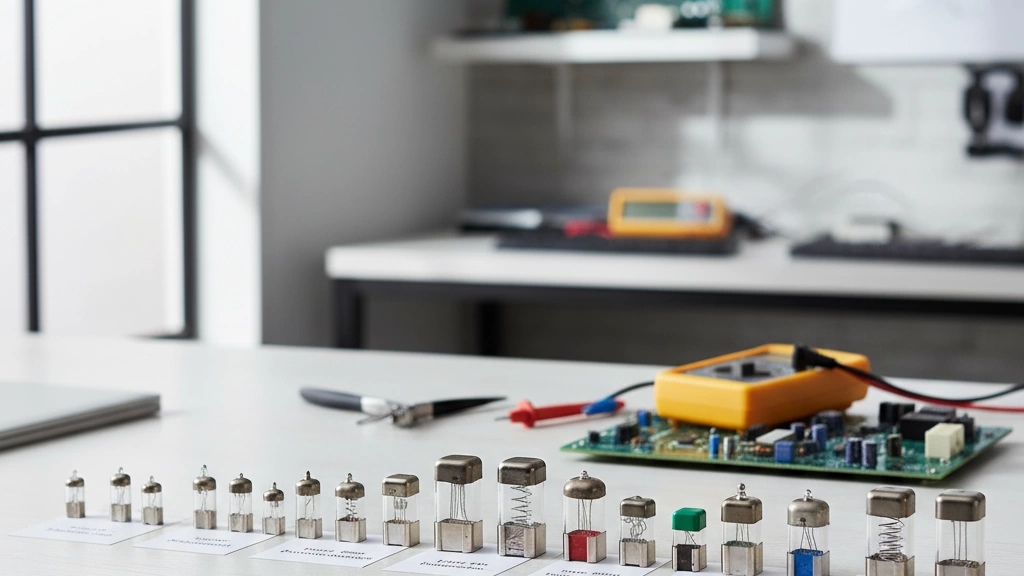
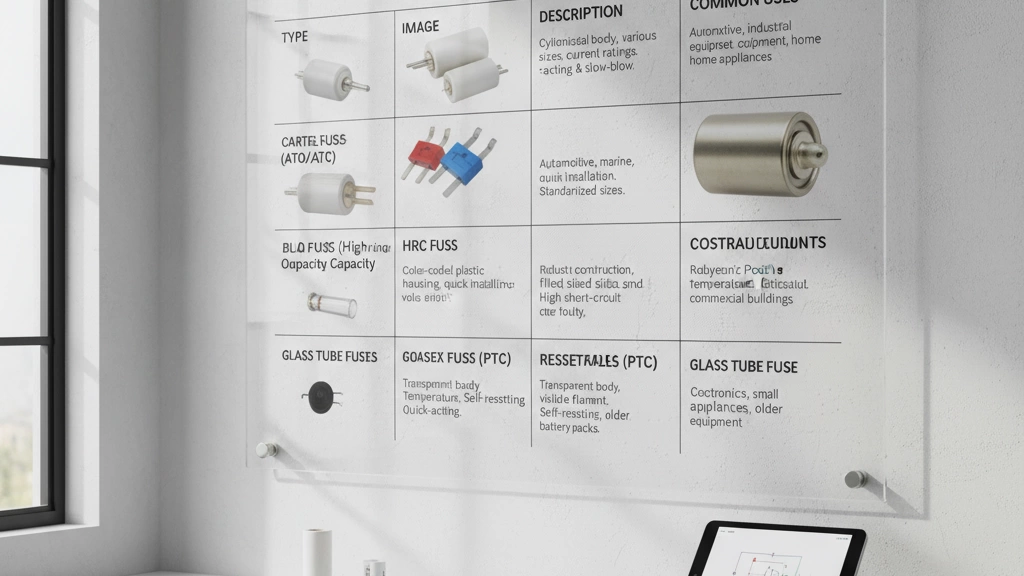
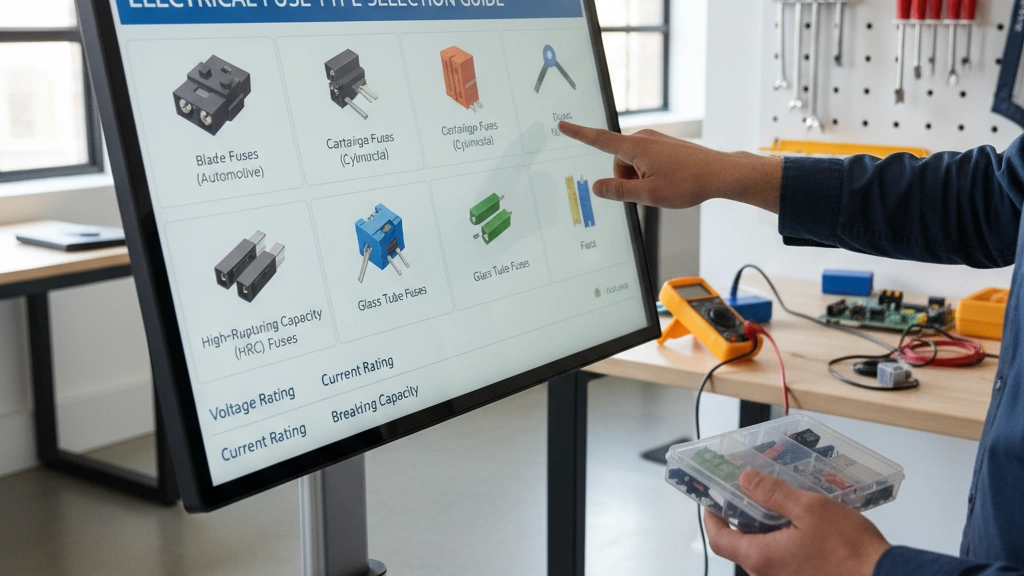
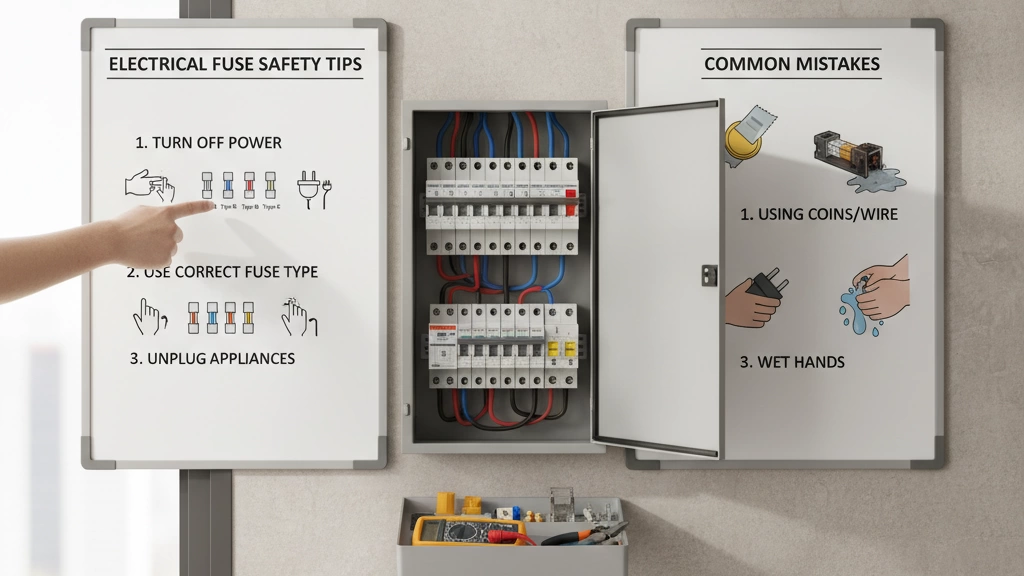
If you’ve ever opened a fuse box and stared at a mix of glass tubes, cartridges, and tiny plastic blades wondering what on earth they all do, you’re not alone.
Even in 2025, understanding the types of electrical fuse is critical – whether you’re troubleshooting a tripping circuit at home, protecting sensitive electronics, or speccing protection for motors and HVAC in a commercial building. Pick the wrong fuse and you risk nuisance trips, damaged equipment… or a serious safety hazard.
In this guide, you’ll get a clear, no-jargon breakdown of the 9 main types of electrical fuses you’ll actually encounter today – from cartridge and plug fuses to automotive blade, HRC, resettable, and even emerging smart fuses. You’ll see where each is used, how they differ, when to upgrade to breakers, and how to choose the right replacement.
And because quality matters with protection devices, you’ll also see where cnsovio fits in as a reliable source for modern, code-compliant fuse solutions – without the hard sell.
How to Use This Types of Electrical Fuse Guide
You’re here because you’ve got questions about types of electrical fuse devices and you don’t want guesswork anywhere near your wiring. Good. That’s exactly why I built this guide.
What You’ll Learn in This Fuse Types Breakdown
In this guide, you’ll quickly learn:
The main types of electrical fuses you’ll actually run into in real life (cartridge, plug, blade/automotive, glass tube, resettable, HRC, rewireable, smart, and more)
The difference between fast-acting and slow-blow fuses and when each is the right choice
How to match a fuse type, voltage rating, and current rating to the job
Where each fuse type is normally used:
Home fuse box types and household electrical fuse types
Automotive and low-voltage fuse types
Industrial fuse types and high voltage fuse types
Electronics and semiconductor protection fuses
Practical safety basics: what’s okay for DIY, and when you should stop and call a licensed electrician
By the end, you’ll be able to look at a fuse and say: “I know what that is, what it protects, and what I should (and shouldn’t) replace it with.”
Who This Guide Is Really For
This isn’t just for engineers. I’ve written it for real-world users:
Homeowners & landlords
Want to understand old house fuse types?
Wondering about plug in fuse vs cartridge fuse, or if you should replace cartridge fuses with breakers?
Need the best replacement fuses for home panel and what code expects?
DIYers & car owners
Need to decode the automotive blade fuse color code?
Curious which mini blade fuse types your car or boat uses?
Want safe, step-by-step basics for checking and replacing fuses yourself?
Students, apprentices, and electricians
Need a clean, high-level fuse selection guide?
Want a quick refresher on HRC fuse full form, fuse interrupting rating explained, or medium voltage fuse types?
If you deal with electricity at any level—from a blown car fuse to specifying protection for an industrial panel—this guide is written for you.
How Each Fuse Type Section Is Structured So You Can Skim Fast
I know you’re busy, so every fuse type is laid out in a simple, repeatable format:
What it is & how it looks So you can identify it in a panel, car, or device at a glance.
Typical ratings & behavior Voltage range (AC vs DC), current range, and whether it’s fast-acting or time-delay.
Common uses & locations Clear examples: home panels, motors, EVs, audio gear, solar, VFDs, telecom, etc.
Pros, cons, and safety notes Straight talk about rewirable fuse disadvantages, when resettable fuse vs circuit breaker makes sense, and when to upgrade.
Quick selection tips Bullet lists and tables that show:
Which fuse types can be replaced by circuit breakers
Which are best for motors, electronics, automotive, and industrial gear
What info you need before buying replacements
You can read start to finish or just jump to the section that matches your problem—the structure is built for fast scanning and real-world decision-making.
Basic Types of Electrical Fuse (Quick Overview)
What an electrical fuse actually does
An electrical fuse is a sacrificial safety device. Its only job is to blow (open the circuit) when the current gets too high, so the wiring and equipment don’t overheat or catch fire.
In simple terms:
Under normal load → fuse stays intact, current flows.
Under overload or short circuit → fuse element melts, circuit opens, power stops.
Once a standard fuse blows, you must replace it with the same type and rating.
How fuses protect against overcurrent and short circuits
Fuses react to heat created by current:
Overcurrent (overload) Happens when you run too many devices on one circuit or a motor is jammed. The fuse heats up over time and eventually melts.
Use time-delay (slow-blow) fuses here so they can handle short inrush currents.
Short circuit Happens when live and neutral (or live and ground) touch directly. Current spikes extremely fast. A fast-acting fuse breaks the circuit almost instantly to prevent arc, cable damage, or fire.
The key is matching the fuse type and rating to the expected fault conditions and the wiring size.
Key parts of a fuse
Most electrical fuse types share the same basic parts:
Fuse element – Thin metal strip or wire that melts when current exceeds its rating.
Body / housing – Made of glass, ceramic, plastic, or fiber; provides insulation and arc containment.
End caps / terminals – Metal parts that connect the fuse element to the circuit (blade, ferrule, screw base, bolt, etc.).
Filler (in some fuses) – Sand or other material inside high‑rupturing‑capacity fuses to safely quench the arc.
On higher‑voltage systems, like with a high‑voltage RW12 fuse, the body and filler are critical for safely interrupting large fault currents.
Main categories of electrical fuses
You’ll see fuse types grouped in a few main ways:
By voltage level
Low voltage fuses: up to ~1,000 V (home, auto, electronics, most industrial gear).
Medium voltage fuses: roughly 1 kV–38 kV (distribution lines, transformers).
High voltage fuses: above that, mainly used in utility and heavy industry.
By speed (operating characteristics)
Fast-acting (quick‑blow) – Trips very quickly; best for electronics and short‑circuit protection.
Time-delay (slow‑blow) – Allows short surges (motor start, transformer inrush) without blowing; best for motors, compressors, and inductive loads.
By application / form factor
Cartridge fuses – Cylindrical, used in panels, machines, HVAC.
Plug fuses – Screw‑in style for old home fuse boxes.
Blade fuses – Flat‑blade style for cars, trucks, boats, RVs.
Glass tube fuses – Common in small appliances and electronics.
Resettable fuses (PTC / polyfuse) – Self‑resetting for USB, chargers, and boards.
HRC and high‑voltage fuses – For industrial, solar, and grid protection.
Once you understand the voltage, current, and speed requirements of your circuit, picking the right type of electrical fuse becomes much simpler.
Cartridge Fuse Types Explained
What are cartridge fuses?
Cartridge fuses are cylindrical fuses used in most modern panels, machines, and controls. They’re usually:
A tube-shaped body (ceramic or glass)
Metal end caps or blades at both ends
Marked with amp rating, voltage, and fuse class
You’ll see them in disconnects, MCC panels, HVAC units, motor starters, and control circuits.
You’ll often run into these fuse classes (especially in North America):
Class CC – Compact, high interrupting rating, great for control panels and small motors
Class J – Current-limiting, high interrupting, used in branch circuits and motor protection
Class L – High amp ratings for mains and large feeders
Class RK1 / RK5
RK1: Tighter current-limiting, better protection for sensitive gear
RK5: More general-purpose, still current-limiting
Class T – Very compact, high interrupting, used where space is tight
Type D – Common in some IEC markets, used in older installations and small distributions
Each class has strict dimensions and performance rules so replacements fit and behave correctly.
Fast-acting vs time-delay cartridge fuses
Fast-acting (fast-blow)
Open very quickly on overcurrent
Best for:
Electronics without inrush
Control circuits
Lighting circuits
Not ideal for motors with heavy startup surge
Time-delay (slow-blow)
Allow short-term inrush current (motors, transformers, compressors)
Trip only if overload lasts too long
Perfect for:
Motors and HVAC
Transformers
Motor control centers
Knowing the difference between fast-acting and slow-blow fuses is critical. Using a fast-acting fuse where a motor needs time-delay is a recipe for nuisance trips.
From less than 1 A up to thousands of amps (Class L, high-power)
Always match or exceed the voltage rating and never exceed the amp rating of the original fuse.
Where cartridge fuses are used
You’ll see cartridge fuses in:
Electrical panels and disconnect switches
HVAC units (condensers, air handlers)
Motors and motor control centers (MCCs)
Industrial machines and control cabinets
Solar inverters and power electronics (using specialized semiconductor fuses)
They’re the workhorse of industrial fuse types and also common in commercial buildings.
Pros and cons of cartridge fuses
Pros
High interrupting rating – safely clears large fault currents
Reliable, simple, and cheap
Available in fast-acting and time-delay versions
Wide voltage and current range
Compact and easy to stock by fuse class
Cons
Single-use – once blown, must be replaced
Wrong class or type swap can cause poor protection or nuisance trips
Some require fuse pullers and access to panels (not always DIY-friendly)
Not as convenient as resettable breakers for frequent faults
For modern installs, cartridge fuses are still a strong choice when you need high fault protection, compact size, and code-compliant performance, especially in industrial and commercial systems.
Plug Fuse Types for Older Home Panels
What is a Plug Fuse?
Plug fuses are the round, screw‑in fuses you see in older home fuse boxes. They screw into a socket just like a light bulb.
There are two main plug fuse base types:
Edison base – Standard screw base, looks like a light bulb socket. Works with Type W, TL, SL, and T fuses.
Type S base (rejection base) – Uses a special adapter ring. Only accepts properly sized Type S fuses, which helps prevent dangerous oversizing.
You’ll mainly see these in older houses in North America and some legacy residential panels globally.
Type W, TL, SL, and Type T Plug Fuse Differences
Here’s how the common plug fuse types compare:
Type W plug fuse
Oldest style, fast‑acting only
Not time‑delay, so it trips quickly on motor startup surges
Mostly considered outdated for general household use
Type TL plug fuse
Time‑delay version for Edison bases
Handles short motor inrush (fridges, pumps) without nuisance blowing
Common upgrade over Type W in the same style panel
Type SL plug fuse
Same idea as TL (time‑delay) but for Type S rejection bases
Safer because it must match the correct amp rating adapter
Type T plug fuse
Fast‑acting, Edison base
Used where you want quick protection and don’t need time‑delay
Suitable for lighting circuits with no big motors
In simple terms:
Need motor/start‑up tolerance? → TL (Edison) or SL (Type S)
Need quick blow for sensitive circuits? → Type T
Avoid Type W in modern practice unless required to match existing specs.
How Type S Rejection Plug Fuses Prevent Oversizing
Oversizing a fuse (for example, replacing a 15 A with a 30 A) is one of the most dangerous mistakes in any home fuse box. It allows wiring to overheat and can start a fire.
Type S rejection‑base fuses solve this:
A metal adapter ring is installed in the panel for each circuit (15 A, 20 A, 30 A).
Once installed, that ring only accepts the matching Type S fuse rating.
You physically cannot screw in a higher‑amp fuse than what the adapter is designed for.
That’s why many electricians recommend converting old Edison plug circuits to Type S as a basic safety upgrade if you’re keeping the fuse panel for now.
Where Plug Fuses Still Show Up
You’re most likely to see plug fuses in:
Older houses with original fuse panels (common in 1950s–1970s homes in many countries)
Small apartments or rental units that haven’t been upgraded
Some detached garages, small shops, or farm buildings with legacy panels
Regions where service upgrades are expensive or slow to adopt
If you’re working with a whole‑building distribution upgrade, these older panels often end up feeding into modern gear like an outdoor low‑voltage power distribution box or compact switchgear, similar to how we integrate legacy loads with our outdoor low‑voltage JP distribution cabinets.
Safety Tips for Plug Fuse Panels
If you still have plug fuses, treat the system with respect:
Always match the original amp rating stamped on the panel or existing fuse.
Never “solve” frequent blowing by installing a bigger fuse. Fix the cause instead.
Turn off the main before changing fuses if possible.
Use only UL/CE‑listed, name‑brand fuses – cheap knockoffs can run hot or fail incorrectly.
Keep covers on; never leave fuse blocks exposed.
If a fuse is warm or discolored, have an electrician check for loose connections or overloads.
Frequent blowing on the same circuit is usually a wiring, overload, or appliance problem – not a fuse problem.
When to Keep, Replace, or Upgrade Plug Fuse Systems
Here’s how I look at decisions on old household electrical fuse types:
You might keep the plug fuse panel (short‑term) if:
The panel is in good condition, not corroded or damaged
Circuits are properly labeled and not overloaded
You upgrade to Type S rejection fuses wherever possible
Local code and insurance still allow it
You should plan an upgrade to a breaker panel if:
You’re adding big new loads (EV charger, heat pump, large AC)
You see double‑tapped circuits, constant blown fuses, or burnt fuse sockets
The panel is undersized (60 A or 100 A service for a heavy‑use modern home)
Your insurer or local code flags the fuse panel as a risk
You should replace immediately if:
There’s visible burning, melting, or arcing marks
Fuses are being bypassed with foil, pennies, or makeshift “repairs”
You can’t find the right replacement fuses and people keep “making things fit”
Upgrading to a modern breaker panel gives you safer protection, easier resetting, and better compatibility with future electrical gear. But until that upgrade happens, using the right plug fuse types and switching to Type S where possible is the safest way to live with what you’ve got.
Miniature Blade Fuse Types (Automotive and Low-Voltage)
What are blade fuses and why cars still use them
Blade fuses are small plastic fuses with two flat metal blades that push into a socket. Inside the plastic body there’s a thin metal link that melts when the current is too high.
Modern cars still use blade fuses because they’re:
Compact and cheap
Easy to see (transparent body)
Simple to pull and replace without tools
Standardized worldwide, so replacements are easy to find
You’ll see them in almost every passenger vehicle, plus a lot of low‑voltage equipment around the world.
Common blade fuse sizes (ATO/ATC, Mini, Micro2, Low-Profile, Maxi)
The main miniature blade fuse types you’ll run into:
ATO / ATC (standard size) Most common in older and mid‑age vehicles. Medium size, easy to handle.
Mini (ATM/MINI) Smaller than ATO/ATC, very common in newer cars and trucks.
Micro2 Very small, skinny fuse used where space is tight in modern vehicles and electronics.
Low-Profile Mini Similar rating to a Mini, but shorter body so it fits into shallow fuse blocks.
Maxi Larger, high‑current blade fuse used for big loads like radiator fans, audio amps, and main feeds.
Always match both the physical size and the amp rating when you replace a blade fuse.
Automotive blade fuse color code and amp ratings
Blade fuses use a standard color code so you can spot ratings at a glance. Common values (varies slightly by region/brand):
5A – Tan (or light brown)
7.5A – Brown
10A – Red
15A – Blue
20A – Yellow
25A – Clear or white
30A – Green
40A – Dark orange (Maxi)
50A / 60A – Different colors in Maxi style
Never “go up one size” because the original keeps blowing. That’s how wiring gets overheated and starts fires. Always replace with the same color and amp rating printed on the fuse and in the vehicle manual.
Typical blade fuse voltage range (12V–32V, up to ~58V electronics)
Blade fuses are designed for low-voltage DC systems, including:
Standard automotive: 12V or 24V DC
Heavy vehicles and boats: up to 32V DC
Some specialized fuses for electronics: up to around 58V DC
Do not use automotive blade fuses in mains AC (110–240V) – they’re not designed or tested for that kind of voltage. For medium or high‑voltage protection, I’d move to proper switchgear or medium-voltage circuit breaker solutions instead of any low‑voltage fuse.
Where blade fuses are used beyond cars
These low‑voltage fuse types show up in more than just cars:
Boats and marine panels (12/24V DC systems)
RVs and camper vans
ATVs, motorcycles, and scooters
Solar charge controllers and small inverters (12/24V side)
DC power distribution boxes in telecom and low‑voltage control systems
Some consumer electronics, audio systems, and battery packs
If it runs on 12–24V DC and needs basic overcurrent protection, a blade fuse is often the first choice.
How to read, test, and replace automotive blade fuses safely
1. Reading a blade fuse
Look for the amp rating number printed on top: e.g., 10, 15, 20.
Check the color to confirm the amp size.
Many fuses have a small inspection window so you can see the metal link.
2. Spotting a blown fuse
Remove the fuse and hold it up to the light.
If the metal strip inside is melted, cracked, or burnt, it’s blown.
Some have a visible indicator that turns dark when blown.
3. Testing with a meter
Set a multimeter to continuity or resistance.
Touch one probe to each blade.
Beep / low resistance = fuse is good
No beep / infinite resistance = fuse is blown
4. Replacing a blade fuse safely
Turn the ignition and affected circuit OFF.
Use a fuse puller or needle‑nose pliers; avoid yanking with bare fingers in tight boxes.
Match:
Same physical type (Mini vs ATO vs Micro2, etc.)
Same amp rating and color
Push the new fuse firmly into the slot until fully seated.
If it blows again quickly, stop guessing – you likely have a wiring or component fault that needs a proper diagnostic, not a bigger fuse.
Handle blade fuses right, and they’ll give you cheap, reliable protection for your vehicle, boat, or any low‑voltage DC system.
Glass Tube Fuse Types and Uses
Glass tube fuses are one of the most recognizable types of electrical fuses. They’re simple, transparent, and still widely used in low‑voltage electronics, older appliances, and audio gear.
What are glass tube fuses? (AGC, AGU, SFE, GMA)
A glass tube fuse is a small cylinder with:
A clear glass body
A thin metal element inside
Metal end caps for connection
Common glass fuse designations you’ll see:
AGC – 1/4″ x 1-1/4″, very common in older electronics and appliances
AGU – Similar length, larger diameter, often used in car audio and battery lines
SFE – Size changes with amp rating to prevent using the wrong size
GMA / GMC – Metric glass fuses, often found in newer electronics and imported equipment
These part codes are critical when you’re matching or buying replacement fuses.
Fast‑acting vs slow‑blow glass fuses
Glass tube fuses come in two main behaviors:
Fast‑acting (fast-blow)
Open quickly when current exceeds rating
Good for sensitive electronics that can’t handle overloads
Often labeled F or “Fast” on the body or datasheet
Slow‑blow (time-delay)
Tolerate short surges (like motor startup or inrush current)
Better for transformers, amplifiers, and power supplies
Often labeled T, “Slo-Blo”, or with a spring/coil element visible
Knowing the difference between fast-acting and slow-blow fuses is key: never swap one for the other without checking the equipment spec.
Glass tube fuse sizes and markings
Typical glass tube fuse sizes:
Imperial: 5×20 mm, 6.3×32 mm, 1/4″ x 1-1/4″ (AGC style)
Automotive/audio (AGU): larger diameter for higher currents
Markings usually include:
Current rating (e.g., 1A, 5A, 10A)
Voltage rating (e.g., 125V, 250V)
Speed code: F (fast), T (time-delay), sometimes manufacturer logo and series
Always match or exceed the voltage rating, and keep the same amp rating and speed when replacing.
Where glass fuses are commonly used
You’ll still find glass fuses in:
Older home appliances (microwaves, power strips, older TVs)
Audio gear (amplifiers, receivers, car audio)
Lab equipment and bench power supplies
Various consumer electronics and chargers
If you’re working around legacy panels or older equipment, it’s worth keeping a small electrical fuse types chart handy or checking trusted resources like our main electrical protection blog when you’re unsure.
Pros and cons vs modern fuse types
Pros:
Easy to see if it’s blown through the glass
Cheap and widely available
Simple to test and replace
Great for low‑voltage, low‑energy circuits
Cons:
Lower interrupting rating than modern cartridge fuses
Glass can crack in harsh environments
Not ideal for high fault currents or industrial use
More fragile than ceramic or HRC fuse bodies
For anything with higher fault levels or critical uptime, I usually recommend modern cartridge fuses or HRC types instead of glass.
How to identify and replace a blown glass fuse correctly
To safely deal with glass tube fuses:
Power off and unplug the device before touching anything.
Remove the fuse from its holder or clip carefully.
Check visually:
Look for a broken or melted element
Look for dark spots or glass discoloration
Confirm with a meter (recommended):
Set a multimeter to continuity or low ohms
Good fuse = continuity; blown fuse = open circuit
When replacing:
Match type (AGC/AGU/SFE/GMA, etc.)
Match amperage, voltage rating, and speed (fast/slow)
Use reputable brands and avoid no‑name fuses for critical gear
If a glass fuse keeps blowing repeatedly, don’t just keep swapping fuses. That usually points to a deeper fault in the equipment or wiring, and it’s often safer to get a pro involved via your local electrician or by contacting a specialist through our support and consultation page.
Resettable Fuse Types (PTC and Polyfuse Styles)
What Is a Resettable Fuse?
A resettable fuse (often called PTC fuse or polyfuse) is a self‑healing overcurrent protector. Instead of blowing once and needing replacement, it:
Trips (goes to high resistance) when current or temperature gets too high
Cools down and automatically resets when the fault clears and power is removed or reduced
In short: one component gives you multiple “fuse operations” over its lifetime.
How PTC Polymeric Resettable Fuses Work
PTC = Positive Temperature Coefficient. As temperature rises, resistance rises sharply.
Basic process:
Normal load → fuse is low resistance, barely affects the circuit
Overcurrent/short → device heats up
Material expands → resistance jumps (acts like an open fuse)
Fault removed & device cools → resistance drops back and circuit works again
Key points:
Protection is current + temperature dependent
They don’t fully “open” like a mechanical switch, but limit current to a safe low value
Common Resettable Fuse Applications
You’ll see PTC/polyfuse types in low‑voltage, low‑energy circuits where service calls are expensive or impractical:
USB ports & hubs (PCs, chargers, docking stations)
Telecom & networking (modems, routers, PoE, line cards)
Battery packs (laptops, power tools, e‑bikes, portable devices)
Phone chargers, wall adapters, and power banks
Consumer electronics (toys, game consoles, audio gear, smart home devices)
They pair well with low‑voltage switchgear and protection components in compact systems, and can complement modular devices in modern low‑voltage switchgear assemblies.
Benefits vs Single‑Use Fuses
Why designers choose resettable fuses:
Self‑resetting – no fuse replacement, lower maintenance
Space‑saving – small, surface‑mount options for compact PCBs
Cost‑effective over product lifetime, especially in remote or sealed products
User‑friendly – end users don’t need to open devices
High Rupturing Capacity Fuse Types (HRC and Semiconductor Fuses)
What is an HRC fuse?
An HRC fuse (High Rupturing Capacity fuse) is a heavy‑duty fuse designed to safely interrupt very high fault currents without exploding or spraying molten metal. Inside the ceramic body, the fuse element is surrounded by quartz sand. When a short circuit happens, the element melts and the sand turns into a solid glass-like mass that:
Absorbs the arc energy
Extinguishes the arc quickly
Keeps the fuse body intact under extreme fault levels
That’s why HRC fuses are standard in serious industrial and commercial installs where fault currents can reach tens or hundreds of kiloamps.
How HRC fuses break high fault currents
HRC fuses are engineered for predictable, clean breaking under fault:
The element is shaped to melt in a controlled way at specific current levels
Quartz sand quenches the arc almost instantly
The ceramic body contains the pressure and heat
The result: high interrupting capacity with minimal let‑through energy, which protects cables, busbars and sensitive gear
In short, HRC fuses act fast and violently inside the body, so nothing dangerous happens outside.
Semiconductor fuses for drives and inverters
Semiconductor protection fuses (also called ultra‑fast fuses) are a special HRC type made to protect:
Inverters
VFDs (variable frequency drives)
Rectifiers, DC links and power supplies
EV chargers and high‑power electronics
Power semiconductors (IGBTs, MOSFETs, diodes) can die in microseconds. These fuses have:
Very fast clearing times
Low I²t (energy let‑through)
Tight coordination with drive/inverter protection curves
If you’re designing or maintaining power electronics, using proper semiconductor protection fuses is non‑negotiable.
Typical HRC fuse ratings
Exact numbers vary by brand and standard (IEC, UL), but typical HRC fuse ranges are:
Voltage rating:
Low voltage: 415–690 V AC
Industrial and solar: up to 1,000–1,250 V AC/DC
Interrupting rating (breaking capacity):
Commonly 50 kA, 80 kA, 100 kA or higher
Current rating:
From a few amps up to 1,250 A+ depending on body size and class
Always choose a fuse with a voltage rating ≥ system voltage and an interrupting rating ≥ available fault current.
Where HRC fuses are used
You’ll normally find HRC and semiconductor fuses in:
They’re a staple in factories, data centers, solar farms and heavy commercial buildings.
Pros and cons of HRC and semiconductor fuses
Advantages
Very high breaking capacity – ideal for high fault levels
Excellent current‑limiting behavior to protect equipment
Compact and relatively simple compared to some electronic protection
Predictable, standardized performance across classes
Drawbacks
Single‑use: once they operate, you must replace them
Require correct coordination and selection (speed, I²t, rating)
Slightly higher cost than basic cartridge fuses
Semiconductor fuses are highly application‑specific – wrong type = poor protection
If you’re dealing with high‑energy systems or power electronics, HRC and semiconductor fuses are often the safest, most robust choice, and I always treat them as critical parts of the protection strategy, not optional extras.
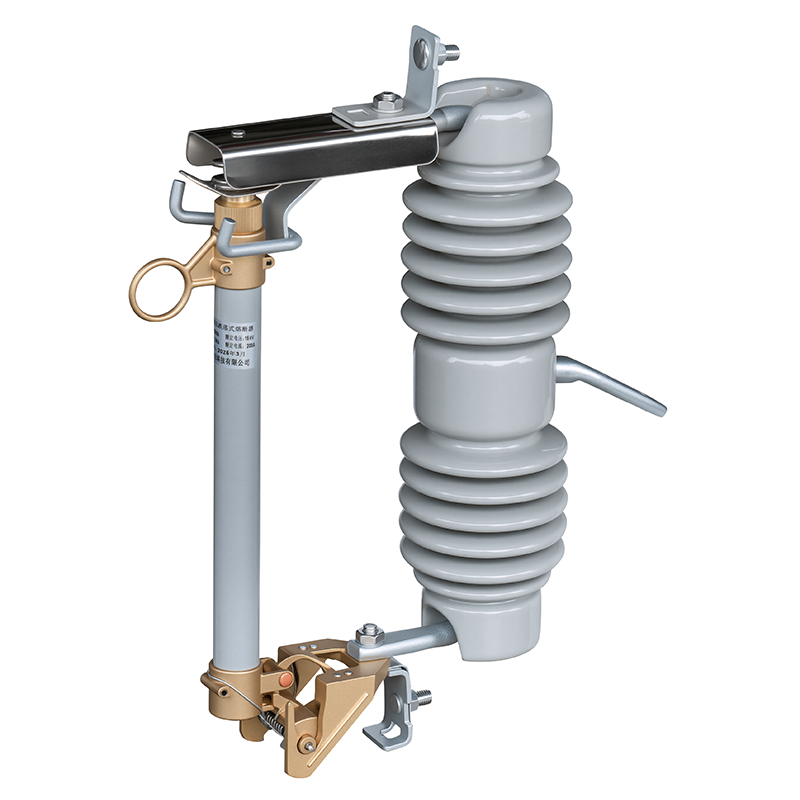
Expulsion fuse types and dropout fuses
What is an expulsion fuse and how it operates
An expulsion fuse is a medium‑ or high‑voltage fuse used mainly on overhead lines. It’s designed to clear large fault currents quickly and safely.
How it works in simple terms:
Inside the fuse tube there’s a fuse link (wire) and an arc‑quenching liner (often fiber).
When a fault or short circuit happens, the fuse link melts, creating an electrical arc.
The arc burns the liner, producing gas and vapor that blow the arc out (that “expulsion” is where the name comes from).
Once the arc is cleared, the circuit is fully open, and power stays off on that section until the fuse link is replaced.
These are not like small cartridge fuses. They’re built to handle thousands of amps at medium or high voltage levels out on the grid.
Dropout fuse basics on power poles
A dropout fuse is a type of expulsion fuse you usually see on wood poles or metal structures feeding a transformer or line tap.
Key points:
It has a hinged fuse holder (called a fuse cutout). When the fuse operates, the tube physically drops down.
That “dropout” gives a clear visible break so line crews can see from the ground that the fuse has blown.
It acts like a switch + fuse combo:
It opens automatically during a fault (blown fuse).
It can also be opened manually with a hot stick for isolation and switching.
You’ll see dropout fuses:
On distribution transformers (the “cans” on poles).
On branch lines feeding neighborhoods, farms, and industrial sites.
On overhead capacitor banks and small line equipment.
Where medium and high voltage fuses are used in the grid
Medium and high voltage fuse types like expulsion and dropout fuses show up across the distribution network, typically:
3.3 kV to 36 kV class systems (varies by country and utility).
On overhead line segments as protective points.
On pole‑mounted and pad‑mounted transformers (primary side).
For rural and semi‑urban networks, where fuses are simpler and more cost‑effective than breakers everywhere.
In industrial plants that receive medium‑voltage feeds and step them down on site.
Utilities choose these fuse types because they’re cheap, fast, and easy to replace compared with installing full breaker panels at every point.
Maintenance and safety for outdoor expulsion fuses
These are not DIY devices. They’re handled by trained lineworkers only. But it’s important to understand the basics:
Maintenance focus:
Visual checks for burned, cracked, or contaminated fuse tubes.
Proper fuse links installed to match system rating and fault level.
Cleaning and tightening of connections to avoid overheating and tracking.
Safety concerns:
Expulsion fuses can generate hot gases, noise, and sometimes flame when they operate.
Work is done de‑energized whenever possible, using insulated hot sticks and full PPE.
Wrong fuse rating or poor installation can lead to explosive failures, line damage, or fire.
If you’re a facility or site owner, your job is to keep people away from poles and gear, report damage, and let the utility or qualified contractor handle the rest.
Why these fuse types matter for reliability and blackout prevention
Expulsion and dropout fuse types are a big part of keeping the lights on globally:
They isolate faults locally, so only a small section of line loses power instead of taking down an entire feeder.
They protect transformers and cables from catastrophic failures, extending asset life.
Because they’re cheap and widely used, utilities can protect many more points on the network without massive cost.
The visible dropout cuts down on fault‑finding time—crews can spot the problem fuse and restore power faster.
In short, medium and high voltage expulsion fuses are a front‑line protection tool in the distribution grid. They don’t just blow; they prevent wider blackouts, protect equipment, and help utilities deliver more stable service to homes, EV chargers, data centers, factories, farms—everywhere power is needed.
Rewireable Fuse Types (Porcelain Kit-Kat Fuses)
What are rewireable porcelain fuses?
Rewireable fuse types (often called porcelain kit‑kat fuses) are old‑style household electrical fuse types that use a replaceable piece of fuse wire instead of a sealed cartridge. You still see them in parts of India, Africa, Southeast Asia, and older UK/Commonwealth installations.
Basic build:
Porcelain base – fixed to the board, with incoming and outgoing terminals
Porcelain fuse carrier – a removable “bridge” that holds the fuse wire
Fuse wire – thin copper/tin/lead alloy wire sized for a specific amp rating
Screws/clamps – hold the fuse wire in place between the terminals
When the current is too high, the wire melts and opens the circuit. Then someone has to manually replace that wire.
How the fuse wire is replaced in a kit‑kat fuse
Here’s the typical rewire process on a kit‑kat fuse:
Power off the main incomer (or full building if needed).
Remove the carrier from the porcelain base.
Take out the burnt wire and clean the terminals if they’re blackened.
Cut a proper fuse wire to the correct gauge and length for the rated amps.
Loop the wire through the carrier terminals and tighten the screws firmly.
Trim excess wire so nothing is hanging out.
Reinsert the carrier into the base and restore power.
This process seems simple, but it’s where most mistakes happen: wrong wire size, loose termination, or working with the power still on.
Where rewireable fuses are still common
You’re most likely to see rewireable porcelain kit‑kat fuses in:
Older residential homes in India, Pakistan, Bangladesh, Sri Lanka
Shops and small workshops across parts of Africa and South Asia
Some old UK consumer units and outbuildings that haven’t been upgraded
Older rental properties where panels haven’t been modernised
If your home fuse box type has white porcelain blocks with removable carriers and visible wire, you’re probably dealing with rewireable fuse types.
Disadvantages and safety risks of rewireable fuse types
These fuses “work”, but they have serious downsides compared to modern cartridge fuse vs breaker setups:
Easy to oversize: People often use thicker wire or even copper strands to “stop it tripping”. This defeats the whole point of overcurrent protection and is a major fire risk.
Inconsistent protection: The actual trip current depends on wire quality, length, and how tightly it’s screwed in. That means the real protection level rarely matches the label.
Exposed live parts: On many boards, live metal parts are easy to touch when changing fuse wire. This is a shock hazard, especially when people don’t fully isolate power.
Heat and burning: Terminals often get loose or corroded. That leads to hot spots, burning of the porcelain, and sometimes melted insulation around the fuse base.
No clear interrupting rating: Modern fuses list a fuse interrupting rating (how much fault current they can safely clear). Rewireable fuses don’t, so they may not safely clear high fault currents in today’s grids.
For most global customers and modern loads (ACs, EV chargers, inverter systems, appliances), these fuses are simply not reliable enough.
When to upgrade rewireable fuses to modern alternatives
If you still have porcelain kit‑kat fuses, I strongly recommend a phased upgrade plan. In general, upgrade when:
You’re adding high‑load appliances (AC units, EV charging, large motors)
Your board shows burn marks, loose contacts, or frequent fuse blowing
You rent, sell, or insure the property and must meet current electrical codes
You want safer overcurrent and short circuit protection with tested ratings
Realistic upgrade options:
For homes:
Replace kit‑kat fuses with MCBs (miniature circuit breakers) or MCB+RCD/RCCB combos in a modern distribution board.
Where allowed, use cartridge fuse types with proper bases as an interim step.
For small businesses / shops:
Move to a proper breaker panel with MCBs or MCCBs, sized to your load.
Use HRC fuse types only where code or equipment requires it (e.g., incomers, motors).
Until you can fully upgrade:
Always use correct gauge fuse wire (never “boost” it with thicker wire).
Keep connections tight and checked regularly.
Turn off the main switch before touching any fuse carrier.
If your rewireable panel looks old, crowded, or burnt, or if circuits keep blowing, that’s the point where I’d stop DIY and get a licensed electrician to quote for a proper upgrade. The cost is usually low compared to the risk of fire, shock, or damaged equipment.
Smart Fuse Types and Electronic Fuse Solutions
What are smart fuses and electronic fuse systems?
Smart fuses and electronic fuse solutions do the same basic job as any fuse (protect against overcurrent), but they add electronics, sensing, and control on top.
In practice, that usually means one of two setups:
Electronic fuses (eFuses / power switches)
Solid‑state ICs that limit current, shut down on faults, then auto‑retry.
Common in low‑voltage DC (USB, battery packs, telecom, servers).
Smart fuse systems / modules
A fuse or breaker combined with sensors + microcontroller + communication.
Mounted in a rail, panel, or power distribution unit (PDU), often network‑connected.
The goal: better protection, less downtime, and more data than a basic cartridge, glass, or blade fuse.
Digital monitoring, remote reset, and diagnostics
Modern smart fuse types focus on three big features:
Digital monitoring
Real‑time current, voltage, temperature, and energy data.
Alarms when a circuit is running “hot” but hasn’t blown yet.
Historical logs so you can see which line is a problem, not just “something tripped.”
Remote reset
Trip and reset over Ethernet, CAN, Modbus, or proprietary bus.
No need to walk to a cabinet or climb into a cramped rack.
Perfect for data centers, EV charging networks, and remote industrial sites.
Diagnostics
Distinguish between overload, short circuit, inrush, and ground fault.
Early warning on loose connections and aging equipment.
Helps maintenance teams fix the root cause instead of just swapping fuses.
Where smart fuse technologies are used today
You’ll already see electronic and smart fuse solutions in:
EVs and battery systems
Solid‑state fuses in high‑voltage battery packs and DC busbars.
Fast semiconductor protection for inverters and on‑board chargers.
Smart DC distribution with current monitoring per line.
Data centers and IT racks
Networked DC power distribution (48 V, 54 V, 380 V DC).
Intelligent PDUs with per‑outlet protection and metering.
Remote control for colocation racks and edge computing sites.
Industrial automation
Smart DC circuit protection on 24 V control circuits and I/O.
Integration with PLC/SCADA for alarms and load shedding.
Power distribution panels with selective, programmable tripping.
Telecom and base stations
Remote sites use electronic fuses to avoid truck rolls.
Detailed fault data for uptime‑critical networks.
For most homeowners, you won’t see “smart fuses” in your home fuse box yet, but you do see the same idea in smart breakers and smart panels.
Smart fuse vs traditional fuse types and breakers
Here’s the quick comparison:
Feature
Traditional fuse (cartridge, glass, blade)
Circuit breaker
Smart / electronic fuse
Reusable
No
Yes
Yes
Trip speed
Very fast (esp. semiconductor fuses)
Fast, but mechanical
Adjustable, very fast for DC
Monitoring
None
Basic (some smart breakers)
Detailed digital & remote
Reset method
Replace
Manual / sometimes remote
Remote or automatic
Cost per point
Low
Medium
Higher upfront
Best use
Simple, low‑cost protection
General building power
Critical loads, DC systems, remote sites
I see smart fuses as ideal when:
You need data (current, events, trends).
You can’t easily access the panel or equipment.
You’re running high‑value or high‑uptime systems (EV fleets, servers, production lines).
For simple home circuits or basic machinery, a standard cartridge fuse or breaker is still the most cost‑effective.
Future trends in electronic and programmable fuse protection
Global demand is moving toward more intelligence at the circuit level. Here’s where it’s heading:
Fully programmable trip curves
Set your own time‑current behavior in software.
One hardware platform, many protection profiles (motors, inrush‑heavy loads, electronics).
Integrated analytics and cloud
Circuit events tied into energy management, predictive maintenance, and dashboards.
Automatic alerts when a circuit trends toward failure.
More DC and EV‑focused fusing
High‑voltage DC fuses for EVs, solar, and battery storage with built‑in diagnostics.
Safer DC protection for home energy systems and microgrids.
Hybrid solutions (fuse + breaker logic)
Solid‑state “breakers” that behave like fuses in speed, but reset like breakers.
Selective coordination managed by software instead of just hardware curves.
If you’re designing or upgrading systems for EV infrastructure, data centers, telecom, or advanced industrial lines, smart fuses and electronic fuse types are already worth putting in your fuse selection guide—and in many cases, they’re becoming the default choice.
Electrical Fuse Types Comparison Table
Here’s a fast, side‑by‑side comparison of the main types of electrical fuses so you can match the right fuse to the job in seconds.
Sometimes replaced with high‑performance breakers, but not 1:1
7
Expulsion / dropout fuses
Medium/High voltage (kV range)
Dozens–hundreds of amps
Designed for fault clearing, not classic fast/slow
Overhead power lines, transformers, distribution poles
No, these are utility‑grade devices, not panel breakers
8
Rewireable porcelain (Kit‑Kat) fuses
~230–415 V AC
~5–100 A
Depends on wire; effectively time‑delay
Older homes and small commercial setups in India, Africa, parts of EU/UK
Yes, usually upgraded to MCBs/RCCBs/RCBOs
9
Smart / electronic fuses
Low to medium voltage (varies by system)
mA to hundreds of amps
Programmable; can emulate fast or time‑delay
EVs, data centers, industrial systems, DC fast chargers
Often integrated with digital breakers and smart protection systems
Fast‑Acting vs Time‑Delay Fuse Behavior
Fast‑acting fuses
Trip quickly on small overcurrents
Best for: sensitive electronics, semiconductor protection, control circuits
Examples: many glass tube, blade, and HRC semiconductor fuses
Time‑delay (slow‑blow) fuses
Handle short startup surges (motors, transformers) without blowing
Best for: HVAC, pumps, refrigerators, industrial motors
Examples: many cartridge fuses, plug fuses, some glass tube and resettable types
Which Fuse Types Can Be Replaced by Circuit Breakers?
In real‑world upgrades:
Commonly replaced with breakers
Plug fuses (old home fuse box types)
Rewireable porcelain fuses (Kit‑Kat style)
Many cartridge fuses in building distribution (with MCCBs / MCBs)
Sometimes replaced, depending on design
HRC fuses in industrial systems (specialized breakers only)
Glass tube fuses in equipment, when redesigned with breaker modules
Rarely or not replaced by breakers
Automotive blade fuses (12–24 V vehicle systems)
Resettable fuses (board‑level protection)
Expulsion/dropout fuses on poles and high‑voltage lines
Use this electrical fuse types chart as your quick fuse selection guide: check voltage, current, fast‑acting vs time‑delay, and where the fuse is installed before you decide to swap it, upgrade it, or move to a circuit breaker.
How to Choose the Right Type of Electrical Fuse
When I pick a fuse, I treat it like choosing a safety valve for the whole circuit. Here’s a simple, practical fuse selection guide you can actually use.
1. Match Fuse Voltage Rating to System Voltage
Never use a fuse with a lower voltage rating than your system.
Basic rule:
System voltage
Minimum fuse voltage rating
Notes
12–24 V DC
32 V DC blade / cartridge
Auto, RV, boat, small electronics
120 V AC
125 V AC fuse
North America home circuits, small gear
230–240 V AC
250 V AC fuse
EU/UK/Asia home and office
400–690 V AC
500–690 V industrial fuses
Motors, HVAC, industrial panels
Fuse voltage can be higher than system voltage, but never lower.
AC and DC ratings are not always interchangeable – check the datasheet.
2. Match Fuse Current Rating to Load and Cable Size
The fuse must protect the wire first, then the device.
Quick logic:
Find the continuous load current (amps).
Check the cable ampacity (what the wire can safely carry).
Choose a fuse that:
Is ≤ cable ampacity, and
Is about 125% of normal running current for many loads.
Example (home):
Circuit
Typical breaker/fuse
Cable size (approx.)
Lighting (US)
15 A
14 AWG
Outlets (US)
20 A
12 AWG
Sockets (EU/UK)
16–20 A
1.5–2.5 mm²
If you’re not sure, don’t upsize the fuse. Use the same rating that was installed originally or check the spec plate/manual.
3. Fast‑Acting vs Time‑Delay (Slow‑Blow) Fuses
This is where most people go wrong.
Fast‑acting fuse (quick‑blow)
Trips fast on small overloads.
Good for: electronics, lighting, sensitive equipment.
Bad for: loads with inrush current (motors, transformers, compressors).
Time‑delay fuse (slow‑blow fuse)
Handles short surges (start‑up) without blowing.
Good for: motors, HVAC, fridges, pumps, audio amps, power supplies.
Label often says: T, “Time-Delay”, “Slo-Blo”, “Motor‑Rated”.
Simple rule: If the load jumps high for a split second at startup (motors, compressors, power amps) → use a time‑delay fuse. If the load should never exceed its rating even briefly (electronics, LED drivers) → use a fast‑acting fuse.
4. Interrupting Rating and Fault Current
This is the safety rating most people ignore – and shouldn’t.
Interrupting rating (AIR, kAIC) = the maximum fault current the fuse can safely break without exploding.
You must have: Fuse interrupting rating ≥ available fault current at that point in the system.
Typical ranges:
Area / Use
Typical fault levels
Recommended fuse type
Home panels
5–10 kA
Standard cartridge / plug fuses
Small commercial
10–50 kA
High‑rupturing capacity (HRC)
Industrial switchgear
50–200 kA
HRC / semiconductor fuses
If you don’t know your fault current, follow local code and manufacturer guidance – especially for industrial and commercial gear.
5. Match Fuse Type to Application
Pick fuse style based on where it will live.
Application
Recommended electrical fuse types and uses
Home panels
Cartridge fuses, plug fuses (old), HRC for higher duty
Appliances / electronics
Glass tube fuses, mini blade fuses, resettable PTC fuses
DC‑rated HRC, semiconductor fuses, sometimes resettable elements
Don’t mix plug in fuse vs cartridge fuse styles. Replace like‑for‑like unless an electrician is upgrading the whole device or panel.
6. Local Electrical Codes (NEC, IEC, National Standards)
Fuse choice is not just “what fits” – it’s also about compliance.
NEC (North America)
Uses specific Class CC, J, RK, T, L cartridge fuse types.
Requires proper interrupting rating and listed components.
IEC / EU / UK / Global
Uses gG, gL, aM, gR, etc. fuse codes for industrial fuses.
Plug and rewirable fuses in old systems are often restricted or discouraged.
Some regions ban or limit rewireable porcelain kit‑kat fuses in new installs.
If the fuse protects a fixed installation (panel, distribution board, industrial machine), follow your local standard and manufacturer recommendations strictly.
7. When to Choose Specialty Fuses (HRC, Semiconductor, Resettable)
Sometimes a standard cartridge or blade fuse isn’t enough.
Use HRC fuses when:
You’re in industrial or high‑energy circuits.
Fault current levels are high.
You need High Rupturing Capacity (HRC) with sand‑filled bodies to safely break big faults.
Use semiconductor fuses when:
Protecting inverters, VFDs, rectifiers, UPS, EV chargers.
You need very fast, current‑limiting protection for IGBTs, SCRs, MOSFETs.
Equipment datasheet calls for “semiconductor protection fuses” or aR/gR fuses.
Use resettable fuses (PTC / Polyfuse) when:
Protecting low‑voltage electronics: USB ports, battery packs, telecom, IoT, chargers.
You want automatic reset after the fault clears.
You’re designing compact gear where a resettable fuse vs circuit breaker saves space and cost.
Quick Fuse Selection Checklist
When I specify a fuse, I run this list:
System voltage? → Choose fuse with equal or higher voltage rating (AC/DC correct).
Load and cable size? → Set fuse amp rating to protect the wire.
Inrush current? → Decide fast‑acting vs time‑delay.
Fault current level? → Check interrupting rating is high enough.
Local code? → NEC / IEC / national rules followed.
Special needs? → HRC, semiconductor, or resettable fuse if required.
If any of those answers aren’t clear, that’s the point where I bring in a licensed electrician or the equipment manufacturer.
Common Electrical Fuse Mistakes and Safety Tips
When it comes to different types of electrical fuse, the biggest risks usually come from how they’re used, not from the fuse itself. Here’s what I want you to avoid, and how to stay safe in a home, car, or industrial setup.
1. Never upsize or bypass a fuse
Upsizing a fuse (for example, swapping a 15 A for a 30 A) is one of the most common and dangerous mistakes.
The fuse rating is chosen to protect:
The cable
The device
The panel or board
If you install a higher‑amp fuse:
Wires can overheat and melt before the fuse blows
Insulation can burn, leading to fire
Equipment can be destroyed by excessive current
Bypassing is just as bad:
Wrapping wire around blown fuses
Bridging terminals with a metal strip
“Temporary” jumpers that never get removed
If a fuse keeps blowing, it’s telling you something is wrong. Fix the cause, don’t “cheat” the protection.
2. Avoid “penny-behind-the-fuse” and other hacks
Old house fuse types (especially plug fuses) sometimes attract old-school “tricks”:
Penny-behind-the-fuse in Edison-base plug fuses
Aluminum foil wrapped around glass tube fuses
Oversized Type T plug fuses in small circuits
Random metal jammed into automotive blade fuse slots
All of these:
Remove the safety function completely
Turn your panel, car, RV, or boat wiring into a fire risk
Will absolutely void most insurance coverage if there’s a fire
If you don’t have the correct replacement fuse, do not improvise. Power off and get the right part.
3. How to spot a blown fuse (visual + meter)
The exact look depends on the fuse type (cartridge fuse, blade fuse, glass tube fuse, plug fuse), but a quick check usually works.
Visual checks:
Glass tube fuse:
Look for a broken or vaporized metal element
Darkening, soot, or silver splatter inside the glass
Cartridge fuse:
Some have a small inspection window that goes dark
Others use an indicator pin or flag that pops out
Automotive blade fuse:
Clear plastic bodies show a broken metal strip
Some have built‑in LEDs that light up when blown
Plug fuse:
Some Type TL/SL have a small window or indicator that changes color
If you’re not sure visually, use a meter:
Set a multimeter to continuity or low resistance
Remove the fuse from the circuit completely
Touch a probe to each end:
Beep / very low ohms = fuse is OK
No beep / infinite resistance = fuse is blown
Never test the fuse while it’s still installed in a live circuit.
4. What a frequently blowing fuse really means
If a fuse blows once, it might be a random failure. If it keeps blowing, that’s a warning.
Common causes:
Overloaded circuit:
Too many appliances on one home circuit
Extra accessories on a car circuit (lights, audio, add‑on devices)
Faulty equipment:
Shorted motor, compressor, or heating element
Damaged charger, power strip, or adapter
Wiring issues:
Loose or corroded connections
Crushed, cut, or exposed cables
In short: if you keep replacing the same fuse, stop. Find the fault. Repeated trips are a safety signal, not a nuisance.
5. When to stop DIY and call an electrician
I keep things as DIY-friendly as possible, but some situations need a pro.
Call a licensed electrician (or qualified auto/industrial tech) when:
Fuses blow immediately after replacement
You see burning, melted plastic, or scorch marks at the panel or fuse holder
The panel feels hot or smells “electrical” (burning / fishy odor)
You have an old home fuse box you don’t fully understand (plug fuses, rewirable porcelain kit-kat fuse, mixed breaker/fuse panels)
You suspect incorrect fuse types or ratings for your country’s standards (NEC, IEC, local codes)
In cars, RVs, boats, or solar systems:
Call a pro if replacing a blade fuse doesn’t fix the issue
Or if fuses blow when you hit bumps, start the engine, or turn on specific loads (indicating shorts or wiring faults)
6. Basic personal safety when replacing any fuse
No matter which type of electrical fuse you’re dealing with (cartridge, plug, blade, glass, resettable), a few basic rules apply:
Always disconnect power:
Home: switch off the main breaker or main switch before opening a fuse carrier
Car / RV / boat: turn off ignition and, if needed, disconnect the battery negative terminal
Use the right replacement:
Match:
Voltage rating (AC vs DC rating matters)
Amp rating
Speed: fast-acting vs time-delay (slow blow)
Physical type: cartridge fuse vs blade fuse vs plug fuse, correct size and class
Never work with wet hands or on a wet floor
Use insulated tools if you must pull fuses from tight panels
Keep your face and body out of line with high-energy fuses (industrial HRC or semiconductor fuses)
Replace one fuse at a time and double-check labels before closing up
If anything feels off or unsafe, step back. A cheap fuse isn’t worth risking your life or your building.
Fuse vs Circuit Breaker and When to Upgrade
Key differences between fuses and circuit breakers
Both fuses and breakers protect wiring from overloads and short circuits, but they work differently:
Fuse (single‑use device)
Thin metal link that melts when too much current flows.
Once it blows, you must replace it.
Very fast, especially for sensitive gear (electronics, semiconductor protection fuses).
No moving parts, very reliable and cheap.
Circuit breaker (resettable device)
Internal mechanism that trips and opens the circuit.
You reset it by flipping the handle or pressing a button.
A bit slower than some fast‑acting fuse types, but good for most home and industrial loads.
Easier for non‑tech users to understand and manage.
In simple terms: Fuses sacrifice themselves. Breakers trip and can be reused.
Pros and cons of staying with fuse panels
If you have an old house fuse box or industrial fuse panels, here’s the trade‑off:
Pros of fuse panels
Excellent protection – Fuses can interrupt very high fault currents safely.
Low cost per device – A cartridge fuse or plug fuse is cheap.
No moving parts – Less to wear out compared with old breakers.
Precise protection – Especially for motors (time‑delay fuses) and electronics (fast‑acting fuses).
Cons of fuse panels
Inconvenient – Every blown fuse means a trip to buy a new one.
Easy to abuse – People oversize fuses, use Type S adapters wrong, or “penny behind the fuse” to stop nuisance blows. Very dangerous.
Harder to expand – Adding new circuits or EV chargers is more complex and often not code‑friendly with old panels.
Insurance pressure – In many markets, insurers don’t like old fuse boxes and may demand upgrades or charge more.
If everyone in your home or facility understands fuses and you have proper stock on hand, you can live with them. But for most global customers, especially with modern loads (ACs, EVs, servers, smart home gear), fuse panels feel outdated.
When it makes sense to replace fuses with breakers
Upgrading from fuses to circuit breakers is usually worth it when:
You’re renovating or adding big loads
Heat pumps, EV chargers, induction ranges, or large HVAC systems usually push old fuse panels to their limits.
You’ve got frequent blown fuses
Instead of constantly swapping cartridge fuses or plug fuses, a modern breaker panel is safer and easier to troubleshoot.
You have very old home fuse box types
Edison‑base plug fuses, rewirable porcelain kit‑kat fuses, or small, crowded panels are all red flags.
You want safer DIY operation
Breaker panels are more intuitive for non‑electricians. You flip a breaker instead of guessing which fuse type to buy.
You’re planning future upgrades
Solar, batteries, smart home tech, EV charging, and backup generators are all easier to integrate into a modern breaker panel.
Always get a licensed electrician to check your service size, grounding, and fault current before deciding. In many countries, code will nudge you toward breakers anyway.
Cost, insurance, and code considerations for panel upgrades
A panel upgrade from fuses to breakers is not just about convenience:
Cost range (very approximate, global view)
Small home upgrade: typically the cost of a new panel + breakers + labor.
Industrial/plant upgrades: can be far higher, especially for high voltage fuse types and main switchgear.
Insurance benefits
Many insurers view old fuse panels as higher risk.
A clean, modern breaker panel with labeled circuits can reduce risk and help with claims.
Code and compliance
Local standards (NEC, IEC, national wiring rules) often restrict:
Rewirable fuse types
Oversized plug fuses
Non‑rated adapters and DIY modifications
If your panel doesn’t support RCDs/GFCIs/RCBOs, it’s usually time to modernize.
The bottom line: if you’re spending money on serious electrical work, it’s often smarter to upgrade the panel once than keep patching an unsafe fuse setup.
How fuse type affects future upgrade options
Not all types of electrical fuses limit you the same way:
Plug fuses (Edison, Type S, Type T)
Fine for legacy circuits, but they’re a dead end for:
EV chargers
Heat pumps
Smart home and surge protection
At some point, you’ll almost always move to breakers.
Rewirable porcelain kit‑kat fuses
Common in some regions (India, Africa, older UK systems).
High risk of wrong wire size and bad connections.
If you want reliable power and modern devices, upgrade sooner rather than later.
Cartridge fuses in modern industrial panels
Often still part of the standard design—especially HRC fuses, semiconductor protection fuses, and time‑delay fuses for motors.
In these cases, you don’t “get rid of fuses”; you combine them with breakers, contactors, and relays for layered protection.
These stay in their own worlds: cars, electronics, telecom, battery packs, and low voltage fuse types.
They don’t impact your main house or building panel upgrade, but they do influence how you design or buy devices.
If you’re planning long‑term—solar, storage, EVs, or just a stable home or facility—your main panel should be built around breakers, with specialty fuse types used only where they truly add value.
Buying Replacement Fuses by Type
When you buy a new fuse, you’re not just shopping by amps. You need the right type of electrical fuse, or you risk damage, nuisance trips, or a real safety issue.
How to identify the exact fuse type you need
Before you click “buy,” match these details:
Physical style
Cartridge fuse (cylindrical, with metal end caps)
Plug fuse (screws in like a light bulb, Type S or Edison)
Blade fuse (flat automotive style, mini or standard)
Glass tube fuse (clear, small tube with visible wire)
Size / form factor
Measure length and diameter (cartridge, glass tube)
Automotive blade fuse color code (e.g. 10A = red, 15A = blue) + printed amp value
For 12–24V systems, use fuses rated for at least 32V; for newer 48–58V systems, use electronics-rated blade fuses
Industrial and commercial
Follow equipment manual and local codes (NEC, IEC, etc.)
Match HRC / semiconductor fuse types for drives, inverters, rectifiers
Pay attention to interrupting rating and AC vs DC usage
Never “upgrade” from fast-acting to slow-blow or increase amp rating just because a fuse keeps blowing. That’s treating the symptom, not the problem.
What to have ready before ordering any fuse type
Have this checklist handy to avoid the wrong buy:
Clear photo of the old fuse (side view + markings)
Measurements (length, diameter, width)
Voltage of your system (12V, 24V, 120V, 230V, 480V, etc.)
Current rating in amps (exact match)
Speed: fast-acting vs time-delay / slow-blow
Fuse class / series (Class CC, HRC, AGC, blade type, Type S plug, etc.)
Application:
Home circuits, motors, HVAC
Car / EV / RV / boat
Industrial drives, solar, battery storage, control panels
Once you have this info, you can quickly match types of electrical fuses and uses with the right replacement, whether it’s a cartridge fuse vs blade fuse, a plug-in fuse vs cartridge fuse, or a glass tube fuse in an old amplifier. This is how you keep protection correct, safe, and code-compliant.
Electric Fuse Tripping Basics When your electric fuse keeps tripping or a circuit breaker keeps tripping, it feels like your home is failing you. In reality, your electrical system is doing exactly what it was designed to do: protect you, your family, and your home from fire, shock, and electrical damage. Let me walk you through what’s really happening […]
Core Functions & Safety Imperatives A switch disconnector is essential for safely isolating electrical circuits, providing a visible and positive break to ensure zero energy flow. This isolation meets strict LOTO (Lockout-Tagout) compliance under OSHA 1910.147 and NFPA 70E, protecting personnel during maintenance by preventing accidental re-energisation. You’ll find two main operation types: A critical safety benefit is arc flash […]
If your car suddenly loses power to the radio, windows, headlights, or even refuses to start, there’s a good chance the problem starts at one place: the auto electrical fuse box. Most drivers know it exists… but not what it does, where it is, or how to fix it when something goes wrong. In this guide, you’ll quickly learn: We’ll walk you through diagnosing, testing, […]
We use cookies to enhance your browsing experience, serve personalised ads or content, and analyse our traffic. By clicking "Accept All", you consent to our use of cookies.