If you’re worried about that old electrical fuse box in your home, you’re not alone. Many older houses still rely on fuse boxes instead of modern breaker panels, and it’s normal to wonder if they’re safe, legal, or overdue for an upgrade.
Let’s start with the basics so you actually know what you’re looking at.
Simple Fuse Box Definition
An electrical fuse box (often called a fuse board or consumer unit in the UK) is the main control and protection point for your home’s wiring.
In plain language:
Power comes from the utility company into the fuse box.
The fuse box splits that power into separate circuits (lights, outlets, oven, AC, etc.).
Each circuit is protected by a fuse that’s designed to “sacrifice itself” and blow if something goes wrong.
Main purpose: Keep your wiring from overheating, starting a fire, or damaging appliances when there’s a fault, overload, or short circuit.
Short History of Electrical Fuse Boxes
Fuse boxes have been around for decades and were standard in homes built up to roughly the 1960s–1980s (varies by country).
Common older brands and types you might see:
Region
Typical Older Brands / Types
US
GE, Square D (older style), Federal Pacific, Bryant
UK
Wylex, MEM, MK, Crabtree (re‑wirable boards)
AU/NZ
HPM, NHP, Clipsal (older fuse boards)
If your box has ceramic or bakelite fuse carriers you pull out and rewire, it’s almost certainly an old system.
Main Components of a Typical Fuse Box
Most residential fuse boxes have a similar basic layout:
Part
What It Does
Main service fuse
Utility’s fuse; protects the whole supply before your box
Main switch / isolator
Lets you shut off power to the entire home
Individual circuit fuses
Protect each circuit (lighting, sockets, cooker, etc.)
Neutral and earth bars
Connection points for return and grounding conductors
Fuse carriers or holders
The removable parts that hold the actual fuse elements
You’ll usually see a row of individual fuses, each labeled (or at least meant to be) for a specific part of the house.
Cartridge Fuses vs Rewirable Fuses
Older fuse boxes often use two main types of fuses:
Fuse Type
What It Looks Like
Pros
Cons
Cartridge fuse
Small sealed tube or plug‑in cartridge
Reliable, preset rating, safer
Needs replacement parts, not reusable
Rewirable fuse
Ceramic body with holes for fuse wire
Cheap, you can “rewire” it
Easy to misuse with wrong wire, more risky
Warning: Rewirable fuses are one of the biggest DIY danger zones. Using the wrong thickness wire or random bits of metal is extremely unsafe and a major fire risk.
How a Fuse Protects a Circuit
A fuse is a weak link on purpose. Inside each fuse is a thin piece of metal wire or strip designed to melt when too much current flows.
Here’s what happens in an overload:
You plug in too many high‑demand appliances on one circuit.
The current rises above the fuse’s rating (say, 15A on a 10A fuse).
The fuse wire heats up.
When it gets hot enough, it melts (blows) and opens the circuit.
Power cuts off, stopping wires from overheating further.
In a short circuit (live touching neutral or ground):
Current spikes extremely fast.
The fuse blows almost instantly to prevent serious damage and fire.
You lose power on that circuit, but your wiring and home are protected. That’s the whole point.
Fuse Boxes vs Modern Circuit Breaker Panels
Modern homes usually use a breaker panel instead of a fuse box. Both do the same basic job—protect circuits—but they work differently.
Key differences:
Feature
Fuse Box
Circuit Breaker Panel
Protection device
Fuse (wire or cartridge)
Resettable breaker switch
Reset after a fault
Replace / rewire a fuse
Flip a switch back on
Accuracy and convenience
Depends on correct fuse wire
Factory‑set, easy to reset
Extra protection options
Limited (usually no RCD/GFCI/AFCI)
RCD/GFCI, AFCI, surge protection available
Typical age
Often 30–70+ years old
Usually newer and code‑compliant
With a breaker, you don’t replace anything; you just:
Find the tripped breaker.
Fix or unplug the problem.
Reset the breaker by flipping it fully OFF, then ON.
Limitations of Old Electrical Fuse Boxes
Old fuse boxes can still work, but they have clear downsides compared to modern breaker panels:
Higher fire risk if fuses are oversized, damaged, or badly rewired.
No or limited RCD/GFCI protection, meaning less protection from electric shock.
Harder to use – replacing fuses in the dark or under stress is not fun.
Easier to misuse – people often “cheat” with thicker wire or makeshift fixes.
Often overloaded – older boards weren’t designed for today’s loads (EV chargers, big AC units, hot tubs, etc.).
May not meet current electrical codes or insurer expectations, especially if 30+ years old.
Bottom line: A fuse box is an older style of electrical protection that can still function, but it’s less safe, less convenient, and less flexible than a modern breaker panel. If your home still has one, it’s worth understanding its limits and planning for a future upgrade.
Electrical Fuse Box vs Circuit Breaker Panel
What’s a Circuit Breaker Panel?
A circuit breaker panel does the same basic job as an old electrical fuse box: it splits power into separate circuits and protects each one from overloads and short circuits. The big difference is how it does that:
Fuse box – uses fuses that melt and need replacing once they “blow”
Breaker panel – uses resettable switches (breakers) that trip and can be turned back on
Modern breaker panels are the standard in new homes and renovations because they’re safer, easier to use, and easier to expand.
In industrial and utility setups, similar protection is handled by more advanced gear like vacuum circuit breakers, but for homes, a regular breaker panel is the norm.
Key Safety Differences
Fuse boxes (old style):
Often lack RCD/GFCI protection (shock protection)
Some have exposed live parts when you pull a fuse carrier
Rewirable fuses can be easily overloaded with the wrong wire
Connections can loosen over time, increasing fire risk
Breaker panels (modern):
Usually include RCD/RCCB/GFCI and often AFCI protection
Enclosed design with covered live parts
Safer, consistent tripping at the correct rating
Easier to add surge protection and new circuits
Bottom line: a breaker panel gives much better protection against both fire and electric shock.
Resetting a Breaker vs Changing a Fuse
Resetting a breaker
Find the breaker in the “OFF” or middle position
Turn it fully off, then back on
No parts to remove, no tools, no replacement parts
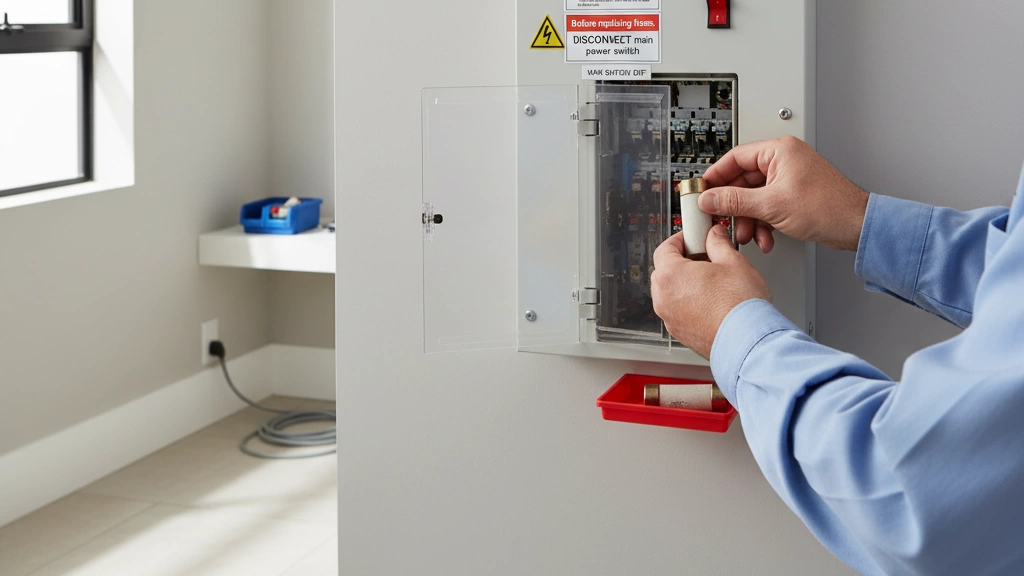
Changing a fuse
Turn off the main switch
Remove the fuse carrier or pull-out
Replace fuse wire or cartridge with the correct rating
Refit and test
Mistakes (wrong rating, loose fit, DIY hacks) are common and dangerous
Breakers are faster, cleaner, and don’t rely on you buying or fitting the right fuse every time.
Age and Lifespan: Fuse Box vs Breaker Panel
Most fuse boxes you see today are 30–60+ years old
Many have had DIY modifications and mixed wiring
Modern breaker panels/consumer units are usually designed for 25–40 years of service, but with periodic inspections
If your fuse box looks original to the house and the home is older than ~1980, it’s probably past the age where it’s considered “up to date” for everyday use.
Reliability and Everyday Convenience
Fuse box:
Blown fuse = power off until you replace it
You need spare fuses/fuse wire on hand
Harder for non‑technical users to handle safely
Labels are often missing or wrong
Breaker panel:
Tripped breaker = flip a switch
Easy to see which circuit is off
Better labelling and organisation
Easier to add circuits for EV chargers, HVAC, hot tubs, etc.
For daily life—working from home, streaming, charging devices—a modern panel is simply more user‑friendly.
Insurance and Compliance Issues
Many insurers and lenders are wary of old electrical fuse boxes:
Some may raise premiums or add conditions if your home still has a very old fuse board
In some areas, a new panel with RCD/GFCI protection is strongly recommended or indirectly required for:
Major renovations
New circuits (kitchen, bathroom, EV charger)
Rental properties
During home sales, an outdated fuse box can show up on inspection reports and become a negotiation point or a repair request
Always check your local electrical code and your insurance wording—they often assume a modern breaker panel as the baseline.
Typical Cost to Upgrade to a Breaker Panel (2025)
Prices vary by country, home size, and existing wiring condition, but here’s a rough guide:
United States:
Standard 100–200A panel upgrade: ~$1,500–$3,500+
More if you need service upgrades, grounding, or rewiring
United Kingdom (consumer unit replacement cost):
Typical RCD/RCBO consumer unit swap: ~£500–£1,200+
Higher if bonding, earth upgrades, or remedial work are needed
Australia:
Fuse box to modern RCD‑protected board: often AUD $1,200–$2,500+
Extras that can add cost:
New earthing/bonding
Surge protection devices
Additional circuits for EV chargers, air‑con, or extensions
Permits, inspections, and certification
Unrealistically cheap quotes usually mean corners cut—wrong gear, poor workmanship, or no proper testing.
When a Fuse Box Is Still Acceptable (and When It Isn’t)
A fuse box may still be acceptable when:
It’s in good physical condition
Circuits are properly rated and labelled
Wiring has been tested and certified recently
Local code does not require an upgrade yet
It’s not being asked to handle big new loads
You should strongly consider an electrical fuse box replacement when:
You see frequent blown fuses
There’s visible damage, scorching, or overheating
There’s no RCD/GFCI protection
You’re adding major loads (EV charger, hot tub, heat pump, full kitchen remodel)
You’re planning to sell, rent out, or heavily renovate the home
If you’re unsure, the safest move is to book an electrical safety inspection with a licensed electrician and let them test the actual condition of your fuse box and wiring.
Where Is My Electrical Fuse Box Located in the House?
If you’ve never had to touch it, finding your electrical fuse box (or breaker panel / consumer unit) can be confusing. Here’s how I’d track it down safely in a typical home.
Common Electrical Fuse Box Locations (US, UK, AU)
Older US homes (fuse boxes and panels often hide in):
Basement near the front of the house
Utility room or laundry room
Attached garage or carport wall
Inside a hallway closet or pantry (older installs)
Outside on an exterior wall near the electric meter (sunny side or driveway side)
UK homes (fuse boxes / consumer units are often found in):
Under the stairs
In the hallway near the front door
Inside a meter cupboard (sometimes outside by the front door)
In a utility room or garage
High up in a kitchen cupboard in older terraces/flats
Australian properties (switchboards and fuse boxes typically sit):
In the garage or carport
On an exterior wall near the electricity meter
In a laundry or utility room
In older houses, sometimes in a hallway or near the front entry
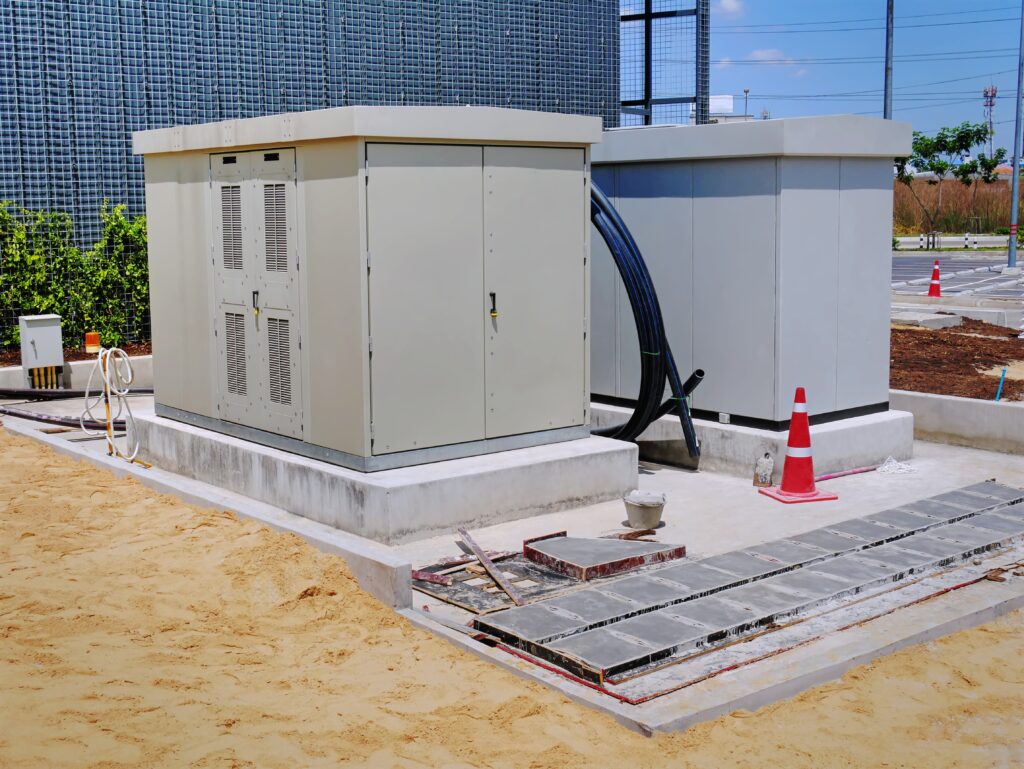
If your property also has outdoor power distribution equipment, it may look similar to a compact outdoor low‑voltage power distribution box, but your main household fuse box will still be placed where you can reach it reasonably easily.
How to Search for Your Electrical Fuse Box Safely
When you’re looking for your fuse box, do not touch any bare wires or open equipment. Do this instead:
Use a flashlight/phone torch so you don’t fumble in the dark.
Keep hands dry; don’t search right after a shower or in wet clothes.
Wear rubber‑soled shoes, especially in basements and garages.
Look for a closed metal or plastic box on a wall, usually chest height to eye level.
Avoid opening any box that has no cover, loose wires, or obvious damage—call a pro.
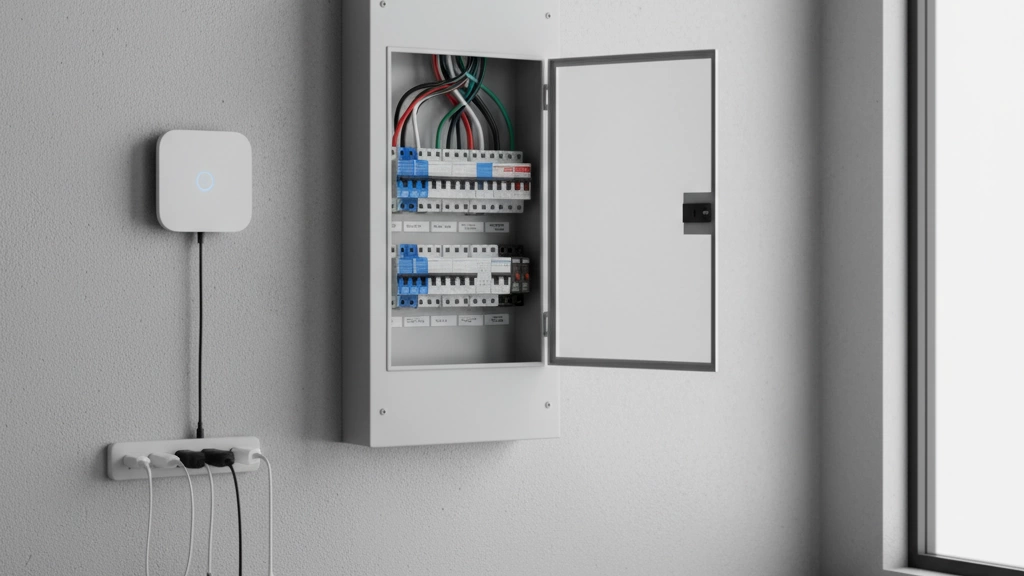
What an Electrical Fuse Box Usually Looks Like
Most residential fuse boxes or panels have:
A rectangular metal or tough plastic cover (often grey, white, or cream)
A swing‑open door or lift‑up flap
Labels or stickers like “FUSE BOX,” “CONSUMER UNIT,” “DISTRIBUTION BOARD,” or “MAIN SWITCHBOARD”
Inside:
Older gear: porcelain/ceramic fuse carriers or rewirable fuses
Newer gear: rows of switches (breakers, RCD/RCCB, GFCI, AFCI, etc.)
The size can vary, but a typical fuse box is roughly:
Small panel: about a sheet of A5 paper
Larger panel: about a sheet of A4 paper or a small laptop
Fuse Box vs Meter vs Other Electrical Boxes
To avoid confusion:
Electric meter
Has a digital or spinning dial display and numbers (kWh)
Usually sealed by the utility company
Often outside or in a meter cupboard
Fuse box / breaker panel / consumer unit
Has switches, breakers, or pull‑out fuses
You can usually open it and turn circuits on/off
May sit next to or under the meter, but not always
Other boxes (phone, internet, cable, security, solar inverters)
Often have brand logos (ISP, alarm company, solar brand)
Contain small electronics, not chunky fuses or breakers
If you open a box and only see a display with numbers, that’s the meter. If you see rows of switches or removable fuses, that’s the fuse box/panel.
If You Still Can’t Find Your Electrical Fuse Box
If you’ve checked the usual spots and still can’t locate it:
Ask your landlord, building manager, or previous owner if possible.
In apartments/condos, check:
Inside your unit hallway
In a shared service cupboard on your floor
In the garage or basement common area
Check any house plans, inspection reports, or survey docs if you have them.
If none of this helps and you truly can’t find it, do not start opening random boxes or panels.
When to Call an Electrician Just to Locate and Label the Panel
Calling an electrician just to find and label your electrical fuse box is absolutely reasonable, especially if:
You’ve just moved in and nothing is labelled.
You live in an older property that’s been remodeled multiple times.
The panel is in a hard‑to‑access area (loft, high wall, awkward cupboard).
You’re planning upgrades (EV charger, kitchen remodel) and need a clear layout.
A good electrician will:
Locate the main service disconnect and fuse box/panel
Confirm what each breaker/fuse controls
Label every circuit clearly (kitchen sockets, oven, lights, HVAC, etc.)
Flag any obvious safety issues (exposed live parts, damaged fuses, very old gear)
Having a properly labelled panel isn’t a luxury—it makes every future repair, upgrade, or emergency shut‑off faster and safer.
Signs Your Electrical Fuse Box Needs Attention or Replacement
If you’ve got an old electrical fuse box, you need to know when it’s becoming a safety risk instead of just “old but fine.” Here are the key warning signs I tell homeowners to watch for.
1. Frequent blown fuses or tripping
If fuses blow or circuits trip often, it usually means:
The circuit is overloaded (too many devices on one fuse).
There’s a wiring fault somewhere on that circuit.
The fuse box is worn out and no longer handling normal load well.
Replacing the fuse over and over is not a fix. It’s a clear sign you need an electrical safety inspection and, often, a panel upgrade.
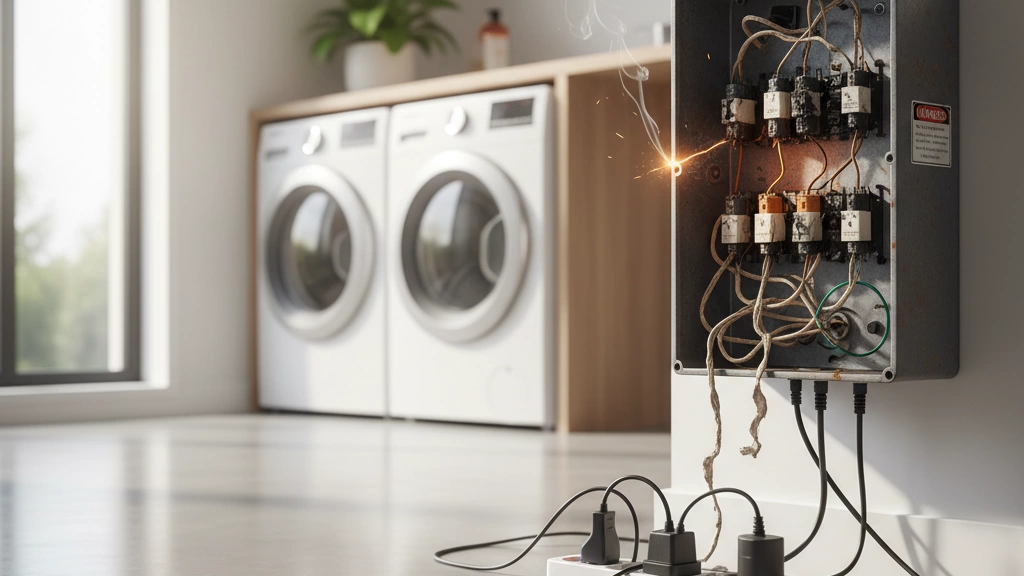
2. Scorch marks, burning smells, or buzzing
Any of these around the fuse box are serious red flags:
Brown or black scorch marks on the cover or fuse holders
A hot, “fishy” or burning plastic smell
Buzzing or crackling sounds when power is on
These often point to loose connections and overheating, which can start an electrical fire. If you notice this, turn off the main switch if it’s safe and call a licensed electrician immediately.
3. Loose, damaged, or brittle fuse holders
Old fuse carriers get:
Wobbly or loose when you pull them out
Cracked, chipped, or discolored
Brittle plastic that crumbles when touched
That poor contact creates heat, arcing, and unreliable protection. In many cases, it’s more cost‑effective and safer to replace the whole fuse box than to keep patching it.
4. DIY fuse wire and incorrect ratings
With rewirable fuses (common in older UK and some international homes), danger signs include:
Thick fuse wire or multiple wires twisted together
Random bits of copper wire, nails, or foil used as “fuses”
Fuse ratings that don’t match the circuit (e.g., 30A wire on a lighting circuit)
This completely defeats the purpose of a fuse and massively increases fire risk. Any DIY fuse wiring should be treated as an urgent safety issue.
5. Old asbestos flash guards
Many very old fuse boxes used asbestos flash guards behind or around the fuses to contain sparks. If you see:
Old, fibrous, grey/white pads or boards that look like insulation
A fuse board you know is from the 1950s–1970s
Do not disturb it. Asbestos is a health hazard when fibers become airborne. A qualified electrician should assess and, if needed, arrange safe removal and a full fuse box replacement.
6. No RCD / GFCI protection
Modern safety standards expect:
RCDs (in the UK and many regions)
GFCIs (in the US and similar systems elsewhere)
These devices cut power quickly if they detect earth leakage or shock risk, especially important for:
Bathrooms and kitchens
Outdoor sockets
Garages and workshops
If your fuse box has no RCD/GFCI protection, it’s outdated. It may still be “legal” in some places, but it’s not providing the level of safety we’d expect in 2025.
7. Overloaded circuits and heavy use of extension leads
If you rely on:
Power strips and extension cords in every room
Multiple high‑demand devices (heaters, ACs, kettles, dryers) on one outlet
Adapters stacked on adapters
…it’s a sign your fuse box doesn’t have enough circuits for how you live today. That overload can push old fuses and wiring past their limits. Upgrading to a modern breaker panel with more circuits is often the safest path.
8. Mixed old and new wiring on one old fuse box
You might see:
Some circuits in modern plastic-sheathed cable
Others in cloth‑covered or rubber‑insulated cable
New kitchen or EV charger circuits tied into a very old fuse board
Mixing new loads on a tired old fuse box is asking for trouble. A professional should check that the whole system works together safely and, in many cases, recommend a full consumer unit replacement rather than more piecemeal add‑ons.
9. Fuse box feels warm or hot
A slight warmth can be normal under heavy load, but:
Hot to the touch
Too hot to rest your hand on
Warm even when you’re not using much power
These are warning signs of overloading or bad connections. That heat is energy being wasted inside your panel – and it can ignite nearby materials over time.
10. Moisture, rust, or water damage
Watch for:
Rust on metal parts or screws
Flaking or bubbling paint around the box
White powdery deposits or corrosion
Signs of leaks from pipes, roofs, or condensation nearby
Electricity and water do not mix. Moisture increases shock risk and accelerates damage to connections. A damp or rusty fuse box should be checked and usually replaced, often along with fixing the source of moisture.
11. Insurance and compliance issues
Many insurers and lenders now treat an old electrical fuse box as a risk factor. You may face:
Higher premiums
Extra conditions or exclusions
Requests for an electrical report before policy renewal or sale
An outdated, overloaded fuse board can easily fail a modern electrical safety inspection, especially if it lacks RCD/GFCI protection and has visible defects.
12. Repair vs full replacement – how to decide
Rough guide:
Repair/maintenance might be enough if:
The fuse box is relatively modern
Issues are minor (e.g., one poor connection, one damaged fuse carrier)
Insulation resistance and safety tests pass
Full replacement is usually smarter when:
The board is 25–40+ years old
You see multiple warning signs from the list above
There’s asbestos, DIY wiring, or heavy scorching
You’re planning renovations or adding big new loads (EV charger, hot tub, new kitchen)
In many cases, a proper electrical safety inspection will highlight whether you just need targeted repairs or a full electrical fuse box replacement. For more technical background on how modern protective gear compares, you can explore resources on medium-voltage circuit breaker design, such as this detailed overview of a medium-voltage circuit breaker system: https://cnsovio.com/medium-voltage-circuit-breaker/.
If any of these warning signs sound familiar, don’t ignore them. Get a licensed electrician to inspect your fuse box and give you clear options before small issues turn into a fire or shock hazard.
How to Safely Change or Reset a Blown Fuse in an Electrical Fuse Box
If you still have an old electrical fuse box at home, you must treat it with respect. Fuses can protect you, but they can also be dangerous if you guess or rush.
Spotting a Blown Fuse
Common signs of a blown fuse in a fuse box:
Part of the house has no power, but the rest is fine
One lighting circuit or one set of outlets is dead
A cartridge fuse looks blackened or cloudy inside
A rewirable fuse has broken, melted, or missing wire
The same appliance (kettle, heater, microwave) kills power every time you switch it on
If everything is off, it might be a main supply issue or a utility fault, not just a single fuse.
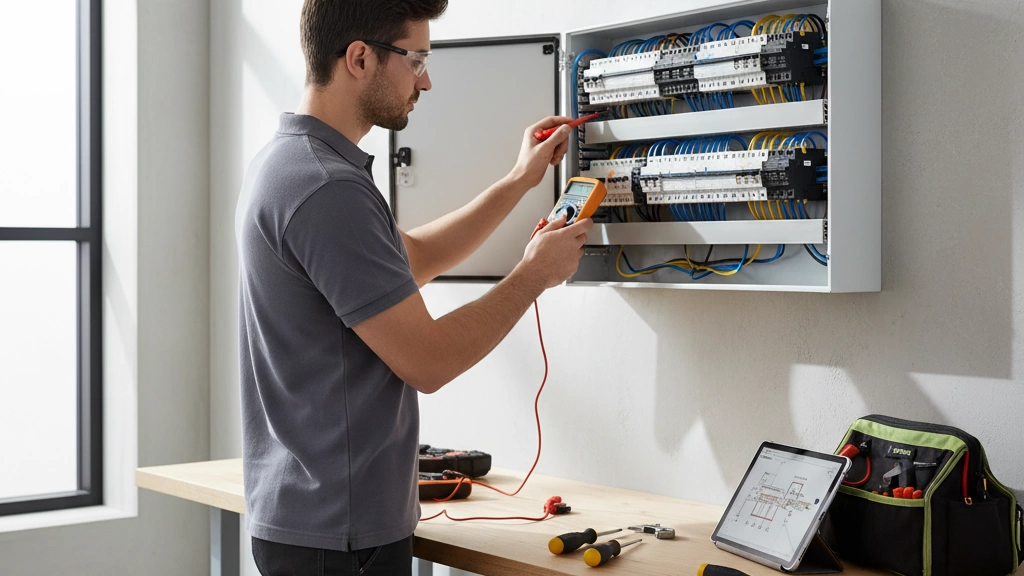
Quick Checks Before You Touch the Fuse Box
Before you open the fuse box:
Check if the appliance you were using is faulty (try another outlet).
Unplug or switch off anything high‑load (heaters, portable AC, EV charger, etc.).
Check neighbours or building common areas – it might be a wider power cut.
If you smell burning, hear crackling, or see smoke at the fuse box: Do not touch it. Turn off power at the main switch if safe, leave the area, and call an electrician.
Essential
Dangers of an Old Electrical Fuse Box
An old electrical fuse box isn’t just “a bit dated” – it can be a real safety risk for your home and family.
Why Old Fuse Boxes Increase Fire Risk
Older fuse boards were never designed for today’s power use (EV chargers, big AC units, induction hobs, etc.). That mismatch creates heat and stress:
Loose connections on old terminals cause arcing (tiny sparks), which can ignite plastic, dust, or wood nearby.
Overheated fuses and fuse holders can char, melt, or crack, turning the whole board into a hotspot.
Rewirable fuses are often “fixed” with the wrong wire or even foil, which stops the fuse from blowing when it should – and lets cables overheat in the walls.
In modern systems we use properly rated breakers and, at higher voltages, dedicated gear like a medium-voltage breaker to keep faults from turning into fires. Old domestic fuse boxes simply don’t offer that level of protection.
Electric Shock Risk With Old Fuse Boxes
Most old panels have no RCD/GFCI protection (the devices that trip fast if electricity flows through a person instead of the circuit). That means:
A fault to a metal appliance case can stay live for too long.
Damp areas (bathrooms, basements, outdoor sockets) are far more dangerous.
Exposed live parts inside a worn, open, or damaged fuse box increase the chance of accidental contact.
What the Statistics and Codes Tell Us
In many countries, fire services repeatedly point to outdated wiring and fuse boards as a key cause of electrical house fires. While numbers vary by region, the themes are the same:
They often use materials and designs that no longer meet current electrical codes.
Any board that’s 30–40+ years old is usually considered “beyond its expected service life” by inspectors.
Because of this, it’s common for modern regulations to push upgrades during major renovations, service increases, or when adding high‑load equipment.
How Insurers and Lenders See a 30+ Year‑Old Fuse Box
Insurance companies and mortgage lenders are getting stricter:
Some insurers will raise premiums or add exclusions if you still have an old fuse board with rewirable fuses.
Others may require an electrical safety inspection or a panel upgrade before offering full cover.
Surveyors and home inspectors often flag old fuse boxes as a condition for mortgage approval or as a bargaining point in home sales.
If your electrical system is clearly outdated, expect questions from both your insurer and any serious buyer.
Hidden Risks When You Add New Loads
Plugging modern life into an old fuse box can quietly overload it:
New EV chargers, hot tubs, electric ranges, and big HVAC units draw far more power than older circuits were designed for.
Extension leads, multi‑way adapters, and daisy‑chained power strips are a red flag that your circuits are already overloaded.
Old boards may not have enough capacity or spare ways for safe additions, so people “make do” in risky ways.
Everything might seem “fine” until a hot summer, a cold snap, or a big family gathering pushes the system over the edge.
Why Upgrading Matters for Kids and Older Adults
Children and older adults are more vulnerable to both fire and electric shock:
Kids are curious and more likely to touch or poke around areas they shouldn’t.
Older adults may react more slowly, have health issues, or rely on medical equipment that can’t “just lose power.”
A modern breaker panel with RCD/GFCI and AFCI protection cuts the risk and gives faster, safer disconnection in a fault.
If your household includes young kids, elderly family members, or anyone with limited mobility, an upgrade from an old fuse box to a modern panel is not just a “nice to have” – it’s a serious safety investment.
When to Upgrade an Electrical Fuse Box to a Modern Panel
If your home still runs on an old electrical fuse box, there’s a good chance it’s holding back safety, comfort, and even your property value. Here’s when I’d seriously consider upgrading to a modern breaker panel (consumer unit).
Typical Age for an Electrical Fuse Box Upgrade
As a rule of thumb:
Fuse box age
What it usually means
Action
20–30 years
Outdated protection, no AFCI in most cases
Plan an upgrade soon
30–40+ years
Often rewirable fuses, no RCD/GFCI
Treat as “end of life”
Unknown age
Mixed wiring, unknown safety
Get an electrical inspection ASAP
If your panel still uses rewirable fuses or looks “vintage”, it’s almost always time to upgrade.
Life Changes That Make an Upgrade a Smart Move
Upgrade your fuse box when you:
Start working from home with lots of IT equipment
Have kids or older relatives living with you
Turn a basement/attic/garage into a living space
Rent the property out (landlord standards are stricter in many regions)
You’re simply putting more demand and more people at risk on the same old hardware.
Renovations, Extensions, Kitchens & Bathrooms
Any serious remodel is the perfect trigger to modernize your panel:
In many regions, new work must meet current codes, which older fuse boxes can’t properly support.
Adding High‑Demand Appliances (EV Chargers, Hot Tubs, Heat Pumps)
If you’re adding any of these, your fuse box is likely not enough:
EV charger or dedicated EV supply equipment
Hot tub, spa, sauna, or swimming pool gear
Heat pump, large AC system, or electric boiler
Home workshop tools or powerful compressors
These loads often require a panel capacity check and sometimes a complete residential electrical panel upgrade.
Legal & Code Triggers for an Upgrade
You may be pushed into an upgrade by:
Local electrical code requirements for major remodels
Adding new circuits that exceed your existing panel capacity
Landlord or rental certification rules in your city/country
Failing an electrical safety inspection for the fuse box
Always ask your electrician what your local codes say about fuse box replacement and RCD/GFCI protection.
Benefits of RCD, GFCI & AFCI on New Panels
Modern panels offer built-in protection that fuse boxes simply don’t:
RCD / GFCI – Cut power fast if current leaks to earth/ground (shock protection).
AFCI – Detect arc faults from damaged cables or loose connections (fire prevention).
MCBs / breakers – Provide precise overcurrent protection and are easy to reset.
These are standard in many RCD protected consumer units and are considered basic safety in 2025.
Surge Protection & Modern Consumer Units
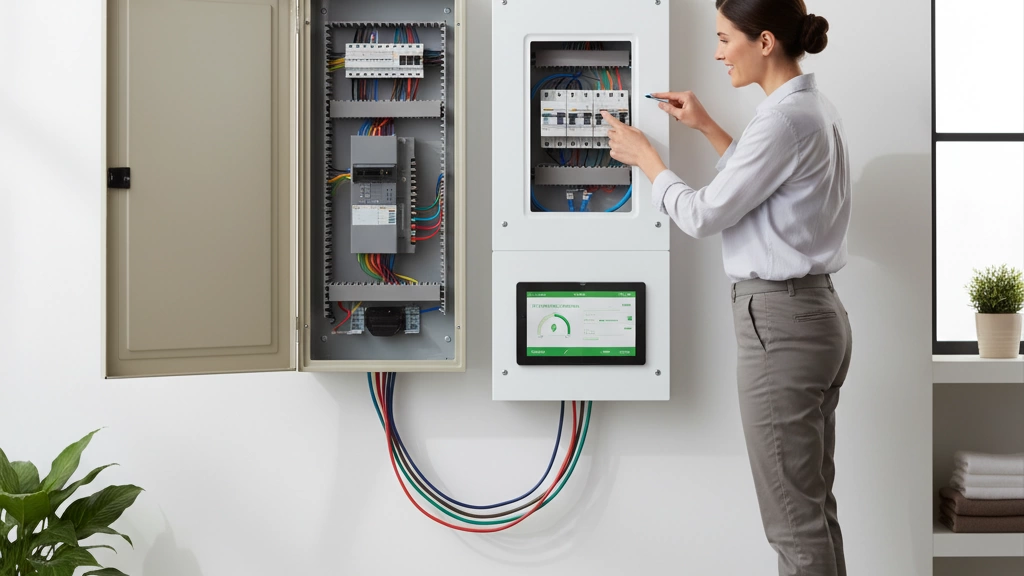
A good modern panel can also integrate:
Main surge protection devices to guard electronics
Protection modules for sensitive home office or entertainment setups
Better coordination with upstream and downstream low‑voltage switchgear, similar to what’s used in modern low-voltage switchgear systems
If you live in an area with frequent storms or unstable grids, surge protection is not optional anymore.
Future‑Proofing for New Tech
Upgrading now makes room for:
EV charging now or later
Solar PV and battery storage
Smart home systems and IoT devices
Heat pumps and other electrification projects
A properly sized, modern panel is your base platform for all of this.
Safety, Peace of Mind & Everyday Convenience
A panel upgrade gives you:
Lower fire and shock risk compared to an old fuse box
Clearly labeled circuits and easier fault troubleshooting
Simple breaker resets instead of hunting for fuse wire
Better chances of passing inspections and satisfying insurers
For many global customers, the long‑term safety and stability of a modern panel far outweigh the one‑time consumer unit replacement cost.
How an Upgrade Helps Home Value & Resale
Buyers and insurers both care about your electrical system. A modern breaker panel can:
Make inspections smoother and reduce renegotiations
Help with mortgage approvals and insurance acceptance
Act as a selling point: “Updated electrical panel with RCD/GFCI protection”
If I’m planning to hold or sell the property in the next 5–10 years, I treat an electrical fuse box upgrade as a strategic investment, not just a repair.
Electrical Fuse Box Replacement Cost in 2025
Upgrading an old electrical fuse box to a modern breaker panel (or consumer unit in the UK) is one of the most important safety upgrades you can make at home. Here’s what you can realistically expect to pay in 2025, and what affects the final price.
Partial rewiring of unsafe circuits (brittle or damaged cables, DIY junctions): Can easily add $500 – $2,000+ / £400 – £1,500+
Moving the panel to a new location or major meter work: Often pushes you to the top of the range or beyond
These extras are not “upsells” – in many regions they’re mandatory for safety and compliance.
Permits, Inspections, and Certification Costs
Depending on your area:
US:
Permits and inspections: typically $100 – $400
Paid to the city/county, often included in the electrician’s quote
UK:
Part P notification and certification usually included in the consumer unit replacement price
Additional full EICR (condition report) may be an extra £150 – £300
Always confirm whether these costs are included or separate.
Basic vs Premium Panel / Consumer Unit Pricing
You’ll usually see a choice between:
Basic panels / boards
Standard breakers, limited RCD coverage
No built‑in surge protection
Cheapest upfront, but less flexible for future upgrades
Premium solutions
Better brand hardware, more RCBOs, built‑in SPD (surge protection device)
Easier to expand for EV chargers, hot tubs, solar, heat pumps
Higher upfront cost but safer and more future‑proof
When you’re matching a premium board with upstream isolation or switching gear, pairing it with a quality switch‑disconnector can make maintenance safer and easier; for example, we use robust devices similar in function to those shown in this switch‑disconnector overview.
Timeline: How Long Does Fuse Box Replacement Take?
Typical timeline in 2025:
Site visit & quote: 30–60 minutes
Scheduling & permits: a few days to a couple of weeks (varies by area)
Actual replacement work: usually 1 working day
Complex jobs can run 1½ – 2 days
How Long You’ll Be Without Power
During the actual changeover:
Expect 4–8 hours without power for a standard home
Fridges and freezers usually cope fine if you keep doors shut
Plan ahead:
Fully charge phones and laptops
Avoid scheduling work calls in that window
Prepare for no Wi‑Fi, no cooking on electric hobs, etc.
Potential Insurance Savings After an Upgrade
Many insurers now look carefully at:
Age and type of your electrical fuse box / panel
Presence of RCD/GFCI/AFCI protection
Evidence of a recent professional upgrade
You may not always get a big discount, but benefits can include:
Access to better policy options
Fewer questions or exclusions about “old wiring”
Smoother claims process if anything electrical ever goes wrong
For some customers, insurers have asked for an electrical safety upgrade as a condition of renewal. A documented panel upgrade can solve that in one go.
How to Compare Quotes and Spot Unrealistic Low Prices
When you compare quotes:
Check what’s included:
New panel/board make and model
Number and type of breakers (MCB, RCBO, AFCI, GFCI)
Permits, testing, certification
Any bonding/grounding work
Beware of “too good to be true” prices:
Vague, one‑line quotes (“panel change – $800”)
No mention of testing or certification
Cash‑only offers, no paperwork or warranty
Look for:
Clear scope and itemised materials
Realistic labour time (a full, safe job is not a 1‑hour visit)
Proof of license, insurance, and good reviews
If you’re ready to budget your own upgrade, the simplest starting point is to get a professional quote based on your exact home setup. Reputable installers will inspect your current fuse box, discuss any future plans (EV charger, remodels), and then give you a fixed‑scope price. If you need help planning or want to ask specific pricing questions, you can always reach out through our direct contact page.
Choosing an Electrician for Your Electrical Fuse Box Work
When it comes to an old electrical fuse box, I treat it as critical safety gear, not a DIY project. The person you hire matters just as much as the new breaker panel or consumer unit you install.
Why use a licensed electrician for fuse box work
Fuse box replacement, upgrade, or repair should always be done by a licensed electrician because:
They understand local electrical code and insurance requirements
They can size your new breaker panel / consumer unit correctly
They know how to deal with old wiring, grounding, bonding, and RCD/GFCI upgrades
They can safely handle live services and coordinate with the utility where needed
You get proper paperwork for home insurance, resale, and inspections
Unlicensed fuse box wiring is one of the most common reasons I see insurance claims denied after a fire.
Certifications and licenses to look for
Exact names vary by country, but here’s what I’d always check:
Region
What to look for
Notes
US
State electrical contractor license, residential electrical license
Ask for license number and verify online
UK
NICEIC / NAPIT / ELECSA registered, Part P compliant
Ensure they issue an Electrical Installation Certificate (EIC)
EU
National electrical license, membership in recognized trade body
If they dodge license questions, I don’t hire them.
Key questions to ask before hiring
I always ask a few direct questions about electrical fuse box replacement or upgrade:
How many fuse box / breaker panel upgrades do you handle each month?
Are you familiar with consumer unit replacement, RCD/GFCI protection, and surge protection?
Will you handle permits, inspections, and certificates?
What’s included in the quote (new panel, breakers, RCDs, labor, testing, certification)?
What’s your warranty on parts and workmanship?
How long will my power be off during the fuse box upgrade?
If they can’t answer clearly, that’s a warning sign.
What a proper fuse box inspection should include
A serious inspection of an old electrical fuse box isn’t just a quick look at the cover. I expect:
Visual check for burn marks, overheating, corrosion, moisture
Check of fuse ratings vs. circuit cable size
Identification of reliable vs. unsafe rewirable fuses
Test of RCD/GFCI operation (if fitted)
Check of earthing/grounding and bonding to gas/water pipes
A simple load assessment: are circuits overloaded for how you live now?
Written notes or a short report with clear “OK / needs repair / needs replacement” items
Anything less and they’re guessing, not protecting you.
Red flags when talking to contractors
I walk away if I see any of these during fuse box upgrade discussions:
“We don’t need permits or inspections.”
“We can just put a bigger fuse in so it stops blowing.”
Cash‑only, no receipt, no paperwork for the electrical panel upgrade
No license number on their card, website, or vehicle
Quote given without even opening the fuse box cover
They push the cheapest possible panel with no mention of RCD/GFCI/AFCI protection
Cheap now usually means expensive later.
Why reviews and word‑of‑mouth still matter
For something as serious as fuse board fire hazard risks, I put a lot of weight on:
Local recommendations from neighbours, friends, or colleagues
Online reviews that mention panel upgrades, consumer unit replacements, EV charger installs
Photos or case studies of similar properties and old fuse box work
Consistent praise for punctuality, cleanliness, and clear communication is a good sign they’ll treat your home properly.
What a clear written quote should include
A proper quote for electrical fuse box replacement cost should spell out:
Type and brand of the new breaker panel / consumer unit
Number of circuits / ways included
Whether RCD, GFCI, AFCI, and surge protection are included
Any extra cost for grounding/bonding upgrades or new main disconnect
Cost of permits, inspections, and certificates
Start date, duration, and how long the power will be off
Total price, payment terms, and warranty details
If the quote is just “replace fuse box – $X / £X” with no detail, I ask for more or move on.
Benefits of using a trusted local electrical company
A solid local electrician or electrical company gives you:
Faster response if your breaker panel or fuse box ever has an issue
Better understanding of local code and home insurance expectations
Consistent support as you add EV chargers, kitchen remodels, or solar
Someone who can keep track of your system and advise on future‑proofing
For my own properties, I treat it as a long‑term relationship, not a one‑off job.
Ongoing maintenance and safety checks
Once your old electrical fuse box is upgraded, I like to keep things on a simple schedule:
Visual check by you once or twice a year: look for damage, moisture, or burning smells
Full electrical safety inspection by a licensed electrician every 3–5 years
RCD/GFCI test button pressed every 3–6 months
Extra check after big changes: new HVAC, EV charger, hot tub, or major remodel
That way, your modern breaker panel stays safe, compliant, and ready for whatever you plug in next.
Electrical Fuse Box FAQ
Can I legally replace a fuse myself at home?
In most places, you’re allowed to replace a blown fuse in your own electrical fuse box, as long as you:
Use the correct fuse rating (amps) for that circuit
Don’t modify wiring or the fuse box itself
Turn off the main switch first
What you normally can’t do without a licensed electrician:
Change the whole fuse box / consumer unit
Add new circuits
Upgrade from a fuse box to a breaker panel
If you’re unsure about local electrical code, or your home is in the US, UK, EU, or Australia, I always say: treat anything beyond a simple like-for-like fuse swap as electrician-only work.
What is the real difference between a fuse and a breaker?
Simple version:
Fuse:
One‑time device – it melts (blows) and must be replaced
Usually in older electrical fuse boxes
Cheaper, but less convenient and less flexible
Circuit breaker:
Can be reset with a switch, no parts to replace
Standard in modern breaker panels / consumer units
Often includes extra safety (RCD/GFCI, AFCI, etc.)
Both protect against overloads and short circuits. Breakers just do it in a smarter, safer, and more user‑friendly way.
Is it still legal to have an old electrical fuse box in 2025?
Yes, in most regions it’s still legal to have an old electrical fuse box in 2025, as long as:
It’s in safe, working condition
It hasn’t been hacked or “DIY‑modified”
Your local code or insurer hasn’t required an upgrade
But “legal” doesn’t always mean “ideal.” Many insurers, lenders, and buyers see old fuse boards as:
Higher fire risk
Not up to modern protection standards (RCD/GFCI)
A sign the rest of the wiring may also be dated
If your fuse box is 30+ years old, I’d treat an electrical panel upgrade as a safety and future‑proofing project, not just a legal box‑tick.
How long does a full fuse box or panel replacement usually take?
For a typical home:
On‑site time: around 4–8 hours for a straight swap
With extra work (bonding/grounding, tidy‑up wiring): sometimes 1 full day or more
Power off time: usually 3–6 hours for most standard jobs
In some countries (like the US, UK, Australia), you’ll also have:
Inspection or certification afterwards
Possible utility or inspector visit (timing depends on local rules)
A good electrician will tell you:
When they’ll cut the power
When you’ll be back up and running
What to prep (empty cupboards, clear access, etc.)
Do I need to upgrade my fuse box to sell my house?
Most of the time, you’re not forced by law to upgrade before selling. But:
Buyers’ inspectors often flag old fuse boxes as a safety concern
Lenders and insurers sometimes demand upgrades on very old systems
In some markets, a new breaker panel / consumer unit makes the property easier to sell and justify a higher price
Smart move:
Get an electrical safety inspection first
Be ready to negotiate: either you upgrade, or you adjust the price if the buyer wants it done
Will a new breaker panel lower my home insurance premium?
Sometimes, yes – but not always automatically.
What insurers usually like:
Modern breaker panel / RCD‑protected consumer unit
RCD/GFCI and AFCI protection where required by code
Updated bonding/grounding
Proof of recent professional work (certificates, invoices)
What to do:
Call your insurer before the upgrade and ask directly
Keep all paperwork from your electrician
Ask if they offer discounts for electrical safety upgrades
Even if the premium doesn’t drop much, a safer system reduces the real risk of a fire claim – which is the bigger win.
How often should an electrical fuse box be inspected?
Good general rule:
Every 5–10 years for an owner‑occupied home
Every 3–5 years for rentals or heavy‑use properties
After any major renovation or big new load (EV charger, hot tub, etc.)
Immediately if you notice:
Burning smells
Scorch marks
Buzzing, crackling, or frequent blown fuses
In the UK/EU, you’ll often hear “EICR every 5 years” as a standard. In the US, it’s more about regular electrical safety inspections. Either way, a scheduled check by a licensed electrician is cheap compared to a fire.
Is it safe to have my fuse box in a cupboard or closet?
Yes, as long as:
It’s easily accessible (you can reach it quickly in an emergency)
There’s enough space around it for an electrician to work
It’s not cramped with flammable stuff (coats, cardboard, chemicals)
It’s not in a damp or steamy spot (bathroom, directly over a cooker, etc.)
Bad signs:
Condensation or rust on the metal parts
Mould, water stains, or leaks nearby
The door can’t open fully because of stored items
Keep at least a clear area around the electrical fuse box and avoid turning that space into a storage cave.
What size fuse box or breaker panel does my home need?
This depends on:
Size of your home and number of rooms
Number of circuits (lighting, sockets, cooker, HVAC, EV charger, etc.)
Future plans: extensions, office, workshop, solar, battery, hot tub
Rough feel (very general):
Small flat/apartment: 6–10 circuits
Typical family home: 10–20 circuits
Larger home with EVs, solar, HVAC: 20+ circuits or multiple panels
Best approach:
Let a licensed electrician do a load calculation
Choose a panel/consumer unit with spare ways (empty spaces) for future circuits
Think future‑proof, not “bare minimum”
Who do I call if my fuse box is sparking or smoking?
Do this immediately:
Turn off the main switch if it’s safe to reach.
If there’s visible fire or heavy smoke, get everyone out and call emergency services (fire department).
Do NOT pour water on the fuse box.
Once safe, call a licensed electrician or emergency electrical service.
If you’re in a multi‑unit building (apartment, condo):
Alert building management or maintenance right away
Don’t ignore burning smells or a buzzing fuse board – these are early fire warning signs
Sparks, smoke, or burning smell from an electrical fuse box is never “normal.” That’s an urgent hazard, not a DIY job.
If you’ve ever opened a fuse box and stared at a mix of glass tubes, cartridges, and tiny plastic blades wondering what on earth they all do, you’re not alone. Even in 2025, understanding the types of electrical fuse is critical – whether you’re troubleshooting a tripping circuit at home, protecting sensitive electronics, or speccing protection for motors and […]
What Is an Auto Electrical Fuse Box? An auto electrical fuse box is the central hub that protects your vehicle’s electrical circuits from damage caused by overloads or short circuits. Think of it as a traffic controller for your car’s electricity—if too much current flows through a wire, the fuse “blows” or disconnects that circuit, preventing potential […]
We use cookies to enhance your browsing experience, serve personalised ads or content, and analyse our traffic. By clicking "Accept All", you consent to our use of cookies.