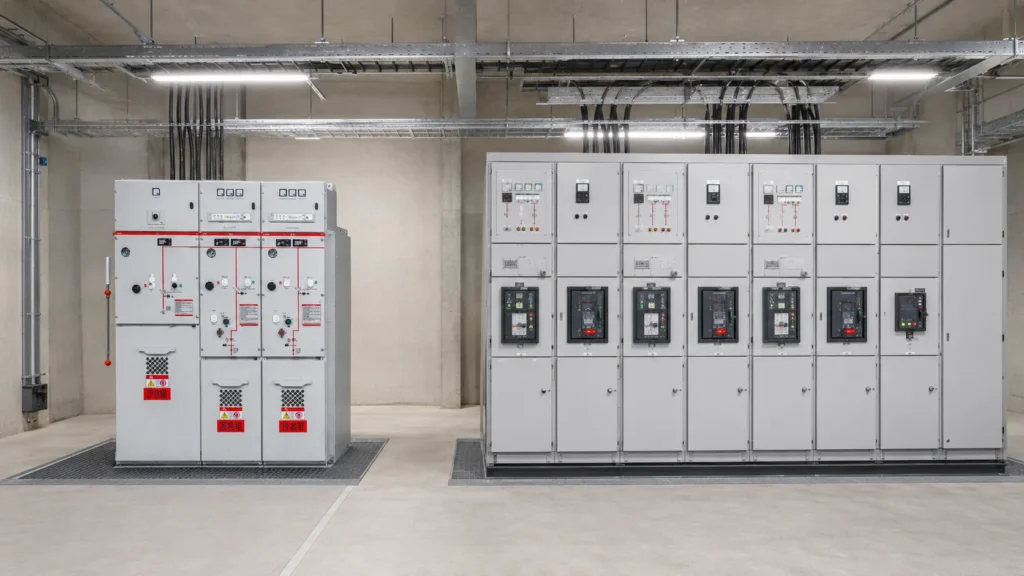
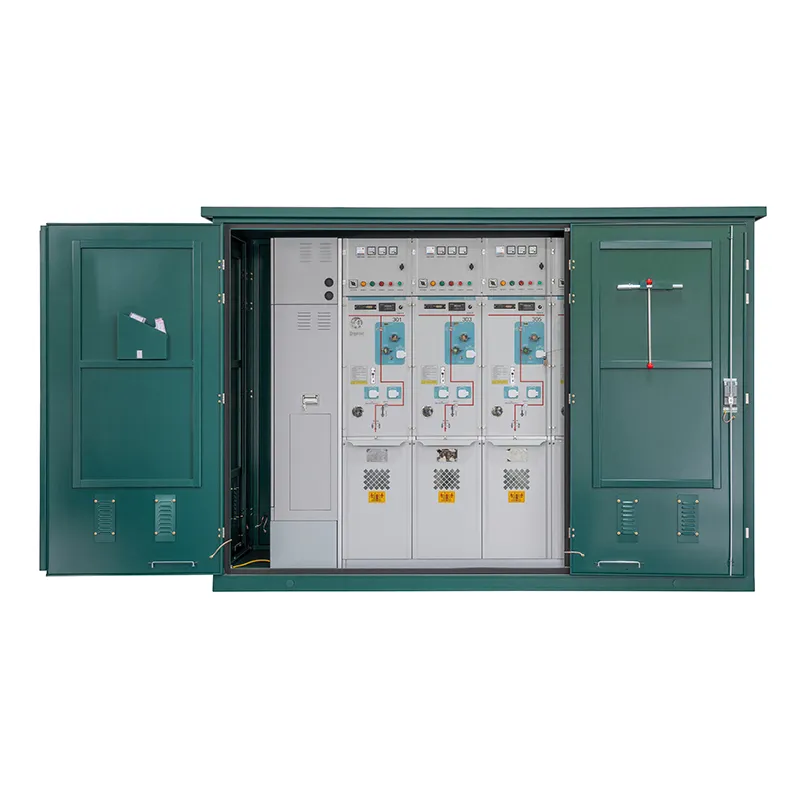
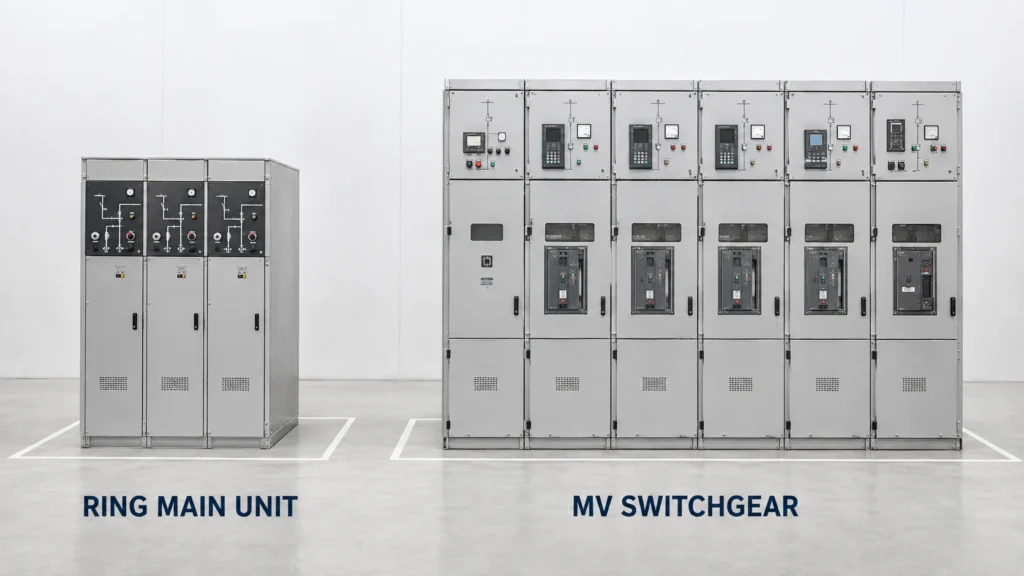
Ring Main Unit vs Switchgear is not a comparison between two completely separate equipment categories. A Ring Main Unit (RMU) is a compact, specialized type of medium voltage switchgear designed mainly for ring or loop distribution networks. witchgear is the broader term for assemblies that switch, control, protect, and isolate electrical circuits.
The practical choice is therefore between an RMU and a more conventional MV switchgear lineup. An RMU prioritizes a small footprint, ring-feeder continuity, and factory-integrated functions. Conventional switchgear is usually selected when a project needs more feeders, higher ratings, withdrawable breakers, complex protection, extensive metering, or greater future expansion. This guide explains the differences and shows where a vacuum circuit breaker and transformer fit into the same system.
What Is a Ring Main Unit?
A Ring Main Unit is a factory-assembled, metal-enclosed MV switching assembly installed at load connection points in a ring distribution network. A common three-way RMU has two load break switches for the incoming and outgoing ring cables and one tee-off way supplying a transformer or feeder. The tee-off may be protected by a circuit breaker and relay or by a switch-fuse combination.
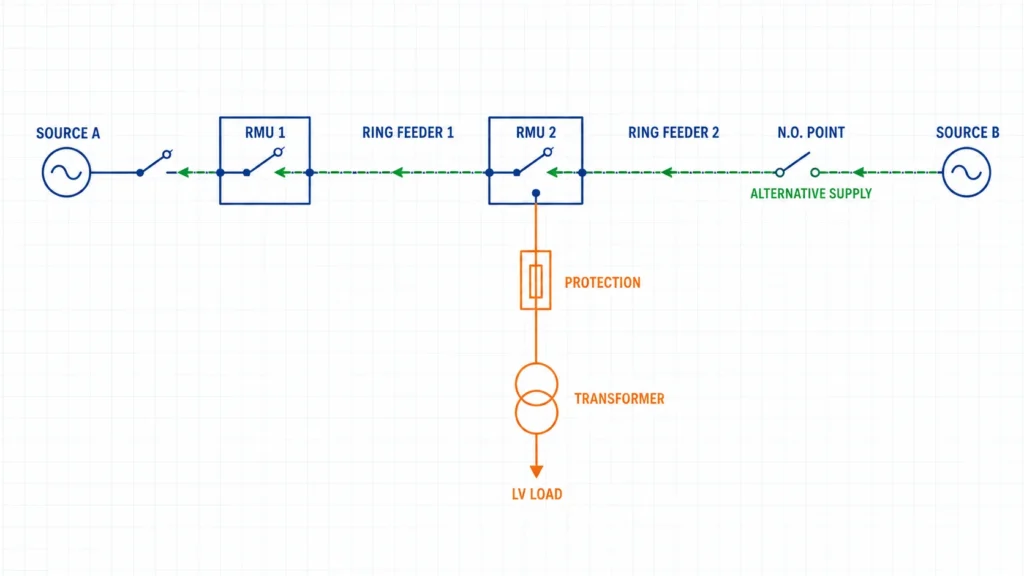
The ring main unit working principle is based on sectionalizing the distribution loop. If a cable section develops a fault, operators isolate it at both ends. After the network’s protection, capacity, and switching conditions are verified, healthy sections can be supplied from the other direction. This arrangement can reduce the number of customers affected and shorten restoration time, but the RMU alone does not guarantee uninterrupted service.
What Is Switchgear?
Switchgear is the collective term for electrical switching, protection, control, measurement, and isolation equipment. It may be used at low, medium, or high voltage. In MV systems, a switchgear lineup can include circuit breakers, disconnectors, earthing switches, busbars, current and voltage transformers, protection relays, meters, control devices, and cable compartments.
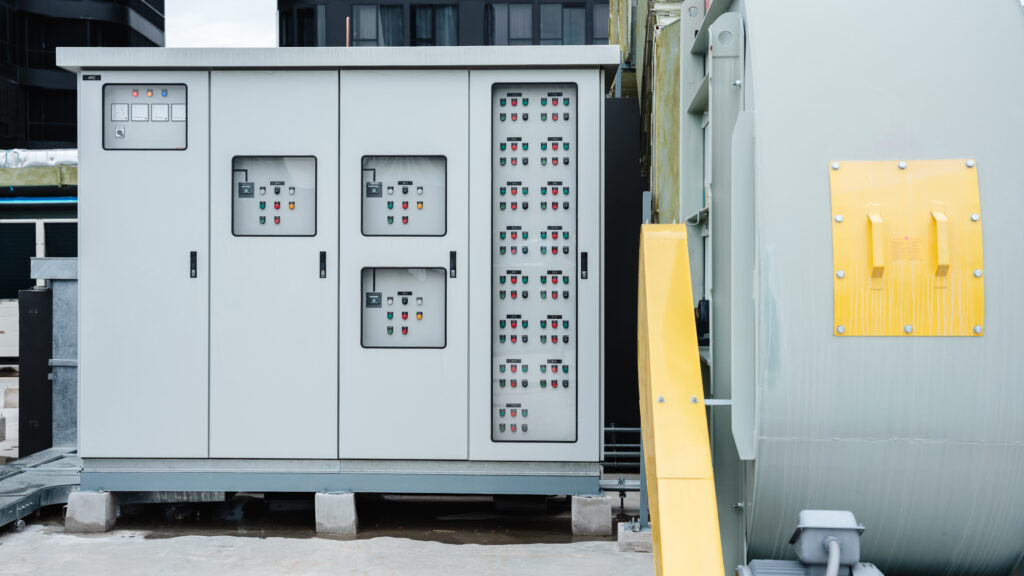
Conventional medium voltage switchgear often serves as a primary distribution hub in substations, power plants, factories, data centers, and large commercial facilities. It may handle incomers, multiple outgoing feeders, bus couplers, motors, capacitor banks, and sophisticated protection schemes. Its switching devices may be fixed or withdrawable, depending on the design.
Ring Main Unit vs Switchgear Key Differences
The most useful comparison is based on function and application rather than appearance. Both products can switch and isolate MV circuits, and both may contain circuit breakers. Their design priorities, however, are different.
Criterion
Ring Main Unit
Conventional MV Switchgear
Equipment category
A specialized type of MV switchgear
The broader family of MV switching and protection assemblies
Primary purpose
Ring-feeder switching, network sectionalizing, and local transformer or feeder protection
Main power distribution, feeder control, bus coupling, and complex protection
Typical topology
Ring or loop distribution; can also be used in some radial arrangements
Radial, double-bus, sectionalized bus, and other substation arrangements
Multi-panel lineup with fixed or withdrawable devices
Footprint
Generally smaller
Generally larger for equivalent functions
Protection
From switch-fuse protection to circuit breaker and relay schemes
Well suited to advanced feeder, bus, motor, transformer, and differential protection
Expansion
Fixed or extensible depending on model
Often offers greater flexibility for additional panels and bus extensions
Installation
Fast integration into compact substations and kiosks
More site assembly, secondary wiring, testing, and commissioning may be required
Typical users
Utilities, urban networks, commercial sites, renewable plants, and compact substations
Primary substations, power plants, mines, factories, and large infrastructure
Ratings must always be compared from actual technical data. It is unsafe to assume that every conventional panel has a higher current or fault rating than every RMU. The selected assembly must meet the system voltage, continuous current, short-circuit duty, insulation level, internal-arc requirements, and environmental conditions.
Ring Main Unit Diagram and Typical Configuration
A ring main unit diagram is normally presented as a single-line diagram. A basic three-way arrangement looks like this:
Ring cable A -- [Load Break Switch] -- BUS -- [Load Break Switch] -- Ring cable B
                                           |
                                  [Circuit Breaker
                                    or Switch-Fuse]
                                           |
                                       Transformer
The two ring switches carry normal feeder current and allow either side of the cable loop to be isolated. The tee-off way supplies the local transformer or outgoing circuit. Earthing switches, voltage indication, fault passage indicators, cable test points, protection sensors, and motorized mechanisms may be included.
This diagram explains why an RMU is more than one switching device. It is an integrated assembly of busbar, switching, isolation, grounding, protection, enclosure, and cable-interface functions. Four-way or extensible designs can add another transformer feeder, metering function, or future connection.
What is the difference between VCB and RMU?
A VCB is a vacuum circuit breaker: one switching and protection device that interrupts current and extinguishes the arc inside vacuum interrupters. An RMU is a complete switchgear assembly that can contain several functional ways, including load break switches, an earthing switch, busbars, cable connections, protection equipment, and sometimes a VCB.
Point
VCB
RMU
What it is
A circuit-interrupting device
A complete compact switching assembly
Main job
Makes, carries, and breaks normal and fault current within its rating
Connects, switches, isolates, grounds, and protects points in an MV network
Protection
Trips when commanded by a relay or associated release
May integrate a VCB and relay, or use a switch-fuse arrangement
Relationship
Can be installed inside switchgear or an RMU
May contain a VCB as one functional component
acuum describes the arc-interruption medium inside the breaker; it does not necessarily describe the insulation system of the complete RMU. An RMU with a vacuum breaker may use air, gas, solid dielectric, or hybrid insulation around other primary parts.
What is the difference between an RMU and a transformer?
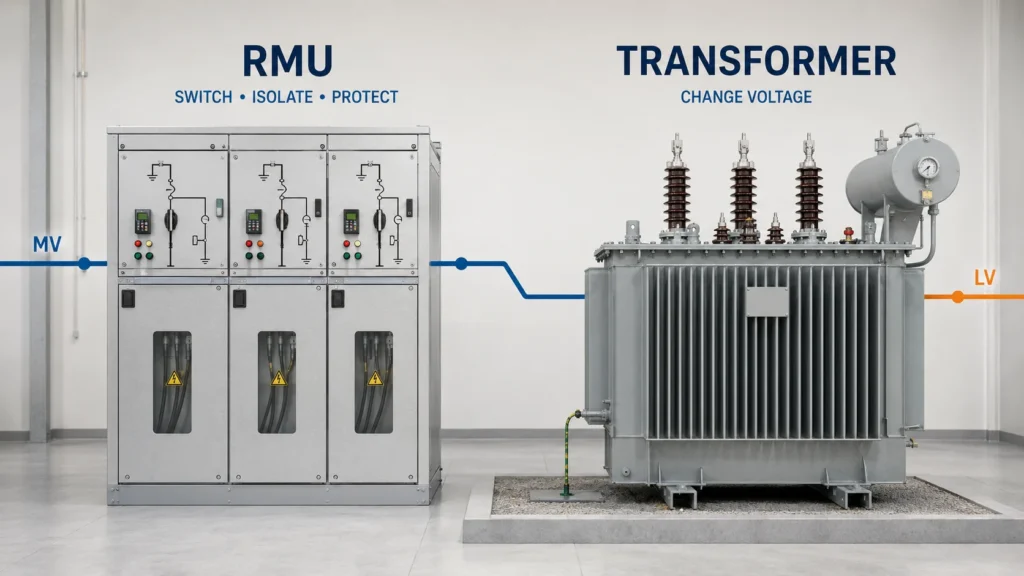
An RMU switches, isolates, and protects circuits; a transformer changes voltage through electromagnetic induction. In a typical secondary substation, the RMU receives the MV supply and controls the transformer feeder. The transformer then steps medium voltage down to the low voltage used by the building, plant, or local distribution system.
Point
RMU
Transformer
Main function
Switching, isolation, sectionalizing, grounding, and protection
Voltage conversion and electrical power transfer
Typical position
Upstream of the distribution transformer
Between MV switching equipment and the LV distribution board
Key components
Switches, breaker or fuses, busbar, earthing, protection, and cable interfaces
Magnetic core, primary and secondary windings, insulation, tank or enclosure, and cooling system
Does it change voltage?
No
Yes
The two are complementary, not substitutes. Transformer rating and protection requirements influence the RMU tee-off design, fuse selection, current-transformer ratios, and relay settings. Protection coordination should ensure the correct device clears a fault while limiting unnecessary outages.
How Do You Choose Between an Ring Main Unit vs Switchgear?
Start with the network study and approved single-line diagram. An RMU is often the better fit when the project needs a compact node on a ring feeder, has a limited number of ways, and values rapid installation. Conventional switchgear is generally more suitable when the system requires many feeders, higher bus duties, withdrawable breakers, complex relaying, extensive metering, or flexible future expansion.
Choose an RMU when:
the application is a secondary distribution ring or compact substation;
space is limited and a factory-integrated design is valuable;
the required number of ring and transformer ways is modest;
the specified ratings and protection scheme fit an available RMU design;
outdoor, kiosk, renewable-energy, or urban installations favor sealed construction.
Choose conventional MV switchgear when:
the installation is a primary distribution hub with numerous feeders;
highly customized protection, control, metering, or bus schemes are needed;
withdrawable breakers or extensive maintenance access are specified;
the lineup must support significant future expansion;
system ratings or utility rules fall outside the proposed RMU’s tested capability.
What Specifications Should You Compare?
Do not choose equipment from the label MU or witchgear alone. Compare the following project requirements against certified manufacturer data:
rated voltage, highest system voltage, frequency, and insulation level;
rated normal current and permissible temperature rise;
short-circuit making, breaking, and short-time withstand ratings;
internal-arc classification, pressure relief, interlocks, and earthing provisions;
circuit breaker, load break switch, fuse, and protection-relay functions;
fixed or extensible construction and the required number of ways;
indoor or outdoor service, ambient temperature, altitude, humidity, pollution, and IP rating;
cable sizes, connector interfaces, trench or plinth dimensions, and test access;
manual, motorized, or automated operation and SCADA communication;
type-test evidence, routine tests, drawings, manuals, spares, and service support.
Search phrases such as ring main unit Schneider are useful for finding a particular manufacturer’s family, but brand comparison should come after the technical specification. Evaluate equivalent configurations on ratings, verified tests, insulation technology, environmental impact, serviceability, local support, and total lifecycle needs.
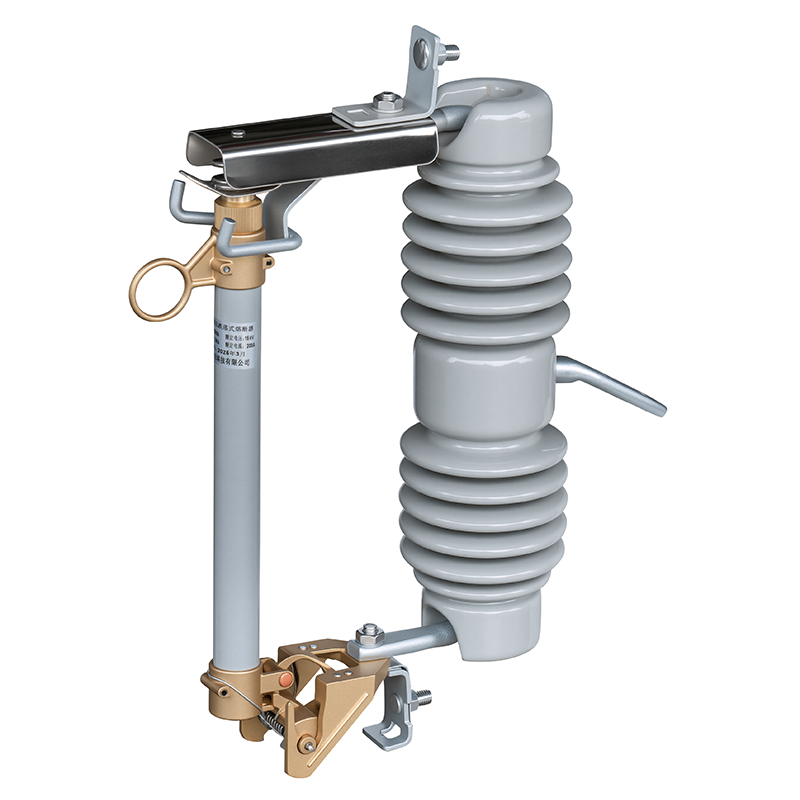
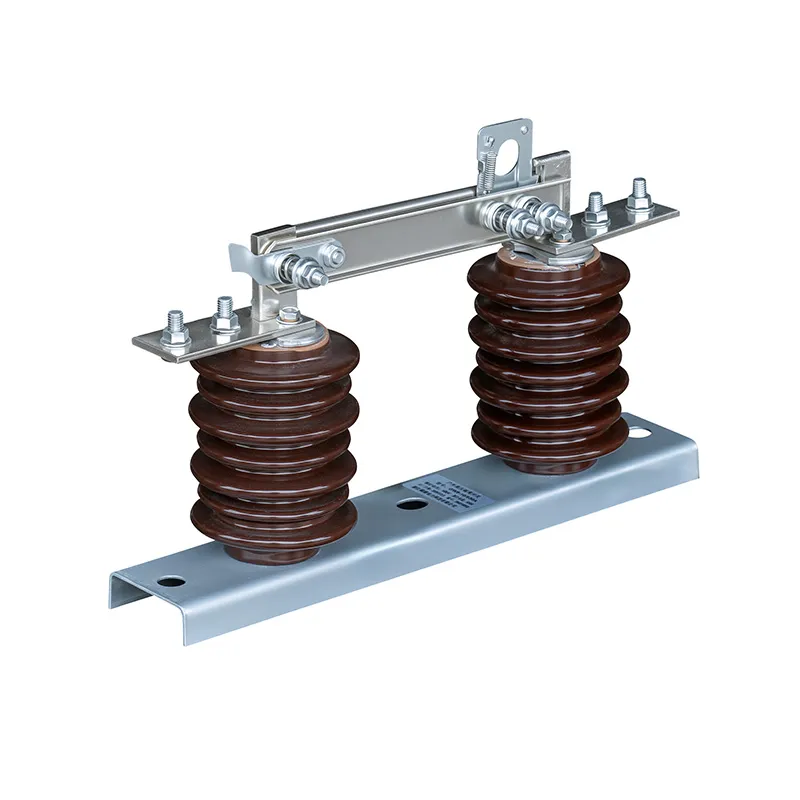
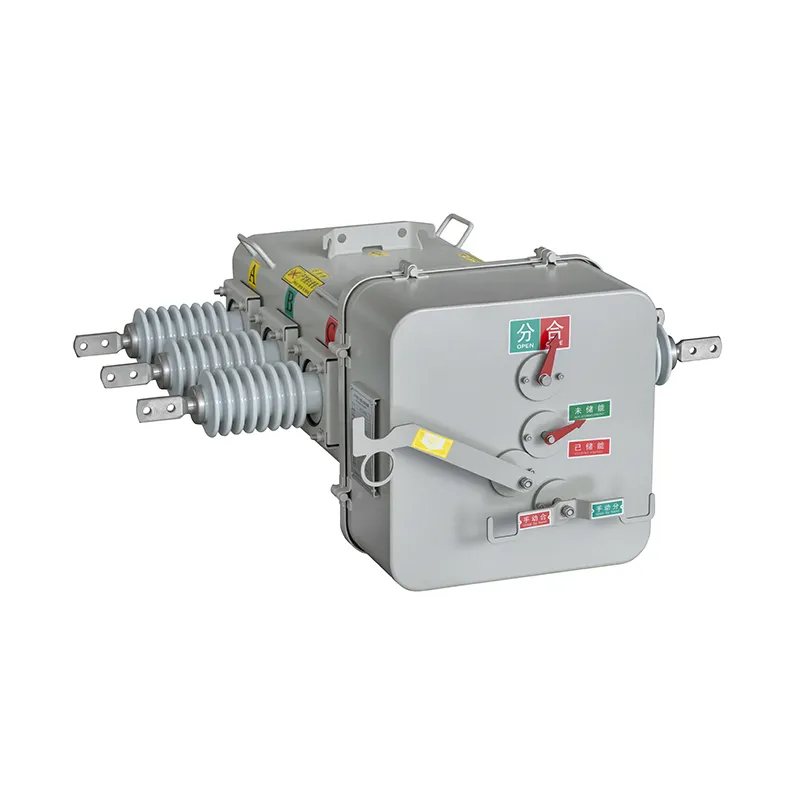
Other switchgear devices may be used elsewhere in the same system. The ZW32-12F outdoor vacuum circuit breaker provides outdoor feeder switching and protection, while the GW9 high-voltage isolator switch provides no-load isolation in suitable applications. They should only be selected and coordinated according to the complete protection and operating design.
In the Ring Main Unit vs Switchgear comparison, an RMU is best understood as compact MV switchgear optimized for ring-distribution nodes. Conventional switchgear covers a wider range of main-distribution, feeder, bus, protection, and control duties. The correct choice follows from network topology, ratings, protection complexity, space, expansion plans, and lifecycle requirements ot from equipment names alone.
Visit CNSOVIO’s Home page, review available power-distribution solutions, learn more about us, or contact us with your single-line diagram and technical specification for project-specific selection support.
FAQ
Is an RMU always gas-insulated?
No. RMUs may use gas, air, solid dielectric, or hybrid insulation. A vacuum interrupter may be used for breaking current regardless of the wider cabinet insulation technology.
Can an RMU be used in a radial network?
Yes, RMU equipment can be configured for some radial applications. However, the supply-restoration benefit associated with an RMU depends on having a suitable alternative path and an engineered switching scheme.
Does an RMU provide automatic fault protection?
It depends on the configuration. A circuit-breaker way with a relay can trip automatically for assigned faults. Ring load break switches normally require fault indicators, automation, or operator action to identify and isolate a cable section.
Is conventional switchgear more reliable than an RMU?
Ring Main Unit and Switchgear Reliability cannot be judged by the category name. It depends on equipment design, tested performance, system topology, protection coordination, environment, installation quality, maintenance, and operational practice.
What details should be included in an RFQ?
Include the single-line diagram, voltage and frequency, normal current, fault level and duration, number and type of ways, protection requirements, cable data, installation environment, automation needs, standards, and required documentation.
If you’ve ever wondered what keeps the power flowing safely and efficiently in factories or commercial buildings, low voltage switchgear is usually the unsung hero behind the scenes. Simply put, these are vital electrical distribution devices designed to control, protect, and isolate electrical equipment at low voltages, typically under 1,000 volts. Choosing the right low voltage switchgear […]
We use cookies to enhance your browsing experience, serve personalised ads or content, and analyse our traffic. By clicking "Accept All", you consent to our use of cookies.